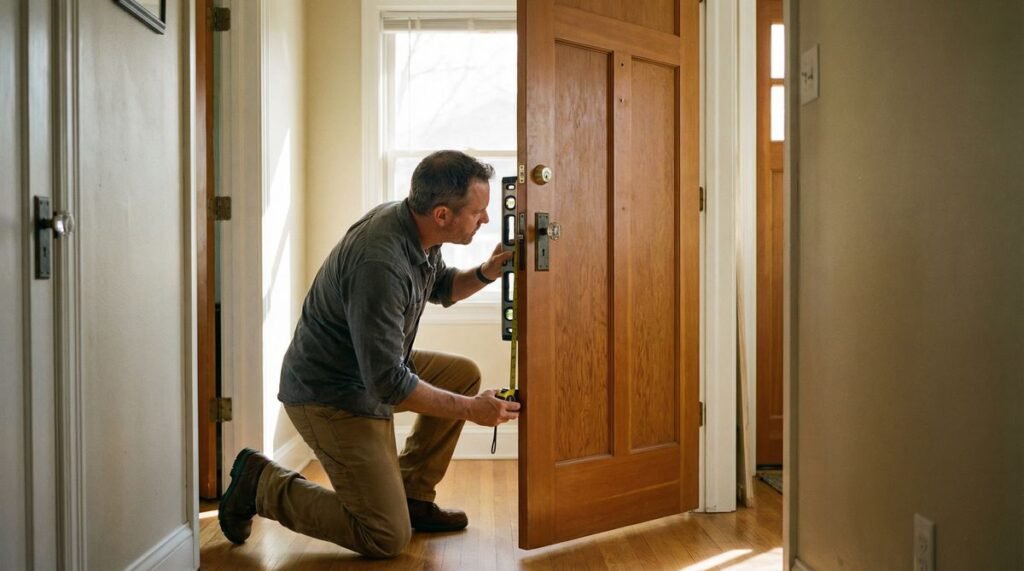
When a door refuses to close smoothly, it’s more than just a minor inconvenience; it’s a signal that something is amiss with its alignment or components. This guide will walk you through the common culprits behind a stubborn door and provide practical, step-by-step solutions to restore its proper function, enhancing both your home’s comfort and security.
Understanding the Root Causes: Why Your Door Isn’t Closing
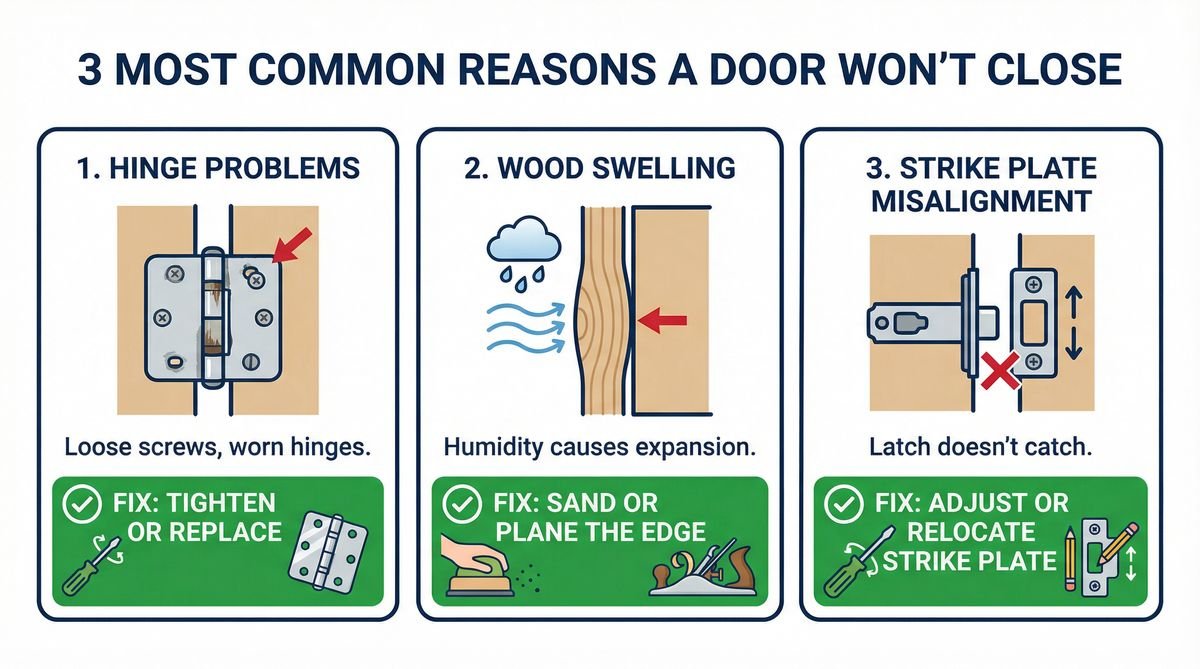
Loose hinges, misaligned strike plates, and environmental factors like humidity are primary reasons a door may fail to close properly. Identifying the specific cause, such as a sagging door or a door that rubs against the frame, is the crucial first step toward an effective and lasting repair.
Common Culprits: From Loose Hinges to Warped Wood
Doors, like any frequently used household component, are subject to wear and tear. The most frequent issues stem from the hardware itself or the door’s material integrity. Loose or sagging door hinges are perhaps the most common offenders, causing the door to drop out of alignment. Similarly, a misaligned latch and strike plate can prevent the door from securing properly. Beyond hardware, moisture damage can cause wooden doors to swell or warp. In more severe cases, a door might be inherently damaged beyond simple adjustment. Over time, even the house structure itself can settle, leading to uneven door frames. Worn-out hardware, such as stripped screws, also contributes to operational difficulties.
The Impact of Environmental Factors: Humidity and House Settling
Environmental conditions play a significant role in how a door functions. Fluctuations in humidity can cause wooden doors to expand and contract, leading to seasonal sticking. During periods of high humidity, wooden doors absorb moisture, causing the wood fibers to swell. This expansion can make the door rub against the frame. Furthermore, the natural settling of a house over many years can cause door frames to shift subtly, leading to permanent misalignment.
Diagnosing the Problem: A Step-by-Step Approach
A systematic diagnostic process is essential for pinpointing why a door won’t close. Start with simple visual checks for obstructions, then progress to hardware inspections like checking hinges and the latch alignment. This methodical approach saves time and prevents unnecessary adjustments to fix a door that won’t close properly.
Quick Checks: Obstructions and Lubrication
Before delving into complex adjustments, begin with the simplest solutions. First, thoroughly inspect the entire door frame and threshold for any debris. Clear any obstructions and test the door. Next, address any creaking or resistance by lubricating the hinges and the latch mechanism. Apply a silicon-based lubricant to the hinge pins and all moving parts of the latch. This can often resolve minor sticking issues.
Hinge Health: Tightening, Reinforcing, and Shimming
Often, the solution lies within the hinges. Begin by checking all screws on the hinge plates. Even a single loose screw can cause a sagging door. Tighten any loose screws. If a screw turns without tightening, the hole is stripped. To remedy this, remove the screw, fill the hole with wood glue and tightly packed wood slivers (like toothpicks), let it dry, and then reinsert the screw. For added stability, consider replacing one of the shorter hinge screws with a 3-inch screw that can reach into the wall stud. If the door still doesn’t hang straight, shimming the hinges can help.
Latch and Strike Plate Alignment: The “Lipstick Test” and Beyond
When the door closes but fails to latch, the strike plate is usually the culprit. The “lipstick test” offers a simple method to identify misalignment. Apply lipstick or chalk to the latch bolt and place masking tape over the strike plate. Gently close the door. The mark left on the tape will indicate the exact point of contact. If the mark is slightly off, you can file the strike plate opening. If it’s significantly off, you may need to reposition the strike plate entirely.
Advanced Solutions for Persistent Problems
For issues beyond simple adjustments, such as a warped door or persistent sticking due to humidity, more advanced techniques may be necessary. This can include planing the door, making seasonal adjustments, or in some cases, considering a full replacement to ensure long-term functionality and security.
Addressing Warped Doors: When to Repair, When to Replace
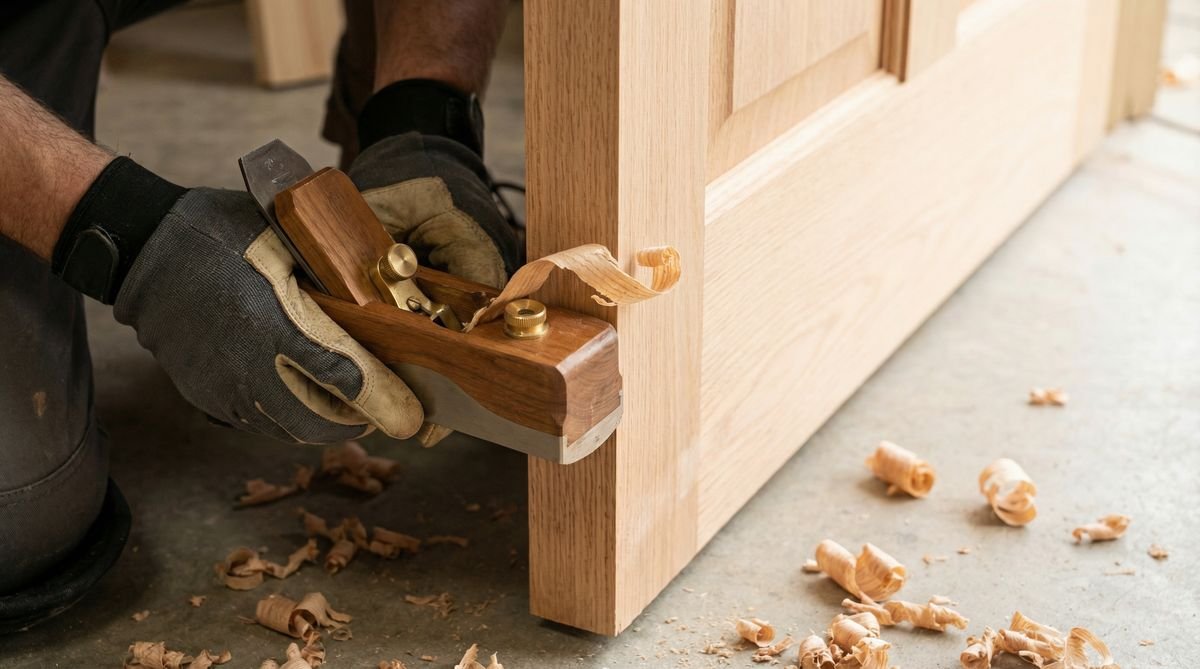
To determine if a door is warped, stand back and observe its edges for any bowing. For slight warping, adjusting hinges with shims can sometimes pull the door back into alignment. If the door is rubbing against the frame due to minor warping, carefully sanding or planing the affected edges can provide a solution. However, if the warp is significant, or if the door is cracked, investing in a new door is often the most durable solution.
Dealing with Swollen Wood: Seasonal Adjustments
Wooden doors that swell due to humidity can often be remedied by sanding the rubbing edges. Identify the sticking areas and use a sanding block to carefully remove a small amount of wood. It’s crucial to sand incrementally and test the door frequently. Once the door swings smoothly, seal the sanded edges with paint or wood sealer to protect against future moisture absorption. For a more comprehensive solution, consider using a dehumidifier to maintain stable indoor humidity levels.
Preventing Future Door-Closing Issues
Proactive maintenance is key to preventing future door-closing problems. Regularly cleaning and lubricating hardware, tightening screws, and ensuring the door is properly sealed against moisture can extend its lifespan and ensure smooth, reliable operation for years to come, preventing a door that won’t latch.
Regular Maintenance: A Proactive Approach
Implementing a routine maintenance schedule can significantly reduce the likelihood of a door developing closing issues. Regularly inspect your doors for any signs of wear, such as loose screws or squeaky hinges. Tighten hinge screws as needed, and apply lubricant to hinges and latches annually. Keep the door frame and threshold clear of debris. For wooden doors, consider applying a protective sealant to regulate moisture absorption.
Choosing the Right Hardware: Durability and Functionality
Selecting high-quality, durable hinges and latch mechanisms is a foundational step in preventing future door problems. When replacing hardware, opt for solid brass or steel hinges, as they are less prone to bending or wearing out. For exterior doors or those in high-humidity areas, consider rust-resistant finishes. Consulting with a professional about hardware choices can ensure you select components that are best suited to your door type and usage.
Frequently Asked Questions (FAQs)
Why is it important to fix a door that won’t close properly?
Fixing a door that won’t close properly is crucial not only for privacy and comfort but also for safety. A securely closing door can slow the spread of smoke and fire in an emergency, as emphasized by the National Fire Protection Association (NFPA) [1]. It also helps with climate control and noise reduction.
What tools are essential for door repair?
Basic door repair often requires a screwdriver set, a hammer, wood glue, and a utility knife. More complex issues might need a chisel, sanding block, shims, and a drill. A measuring tape and a pencil are also invaluable for assessing alignment. For adjusting strike plates, a metal file can be very useful.
How can I tell if my door is warped or just needs adjustment?
To check for warping, visually inspect the door’s edges for any bowing. If it appears straight, adjustments are likely sufficient. You can also lay the door flat on a level surface and look for gaps underneath. Minor warps might be corrected with shims or planing, but significant warps often necessitate replacement.
What are some quick fixes for a door that won’t close properly?
Quick fixes include tightening loose hinge screws, lubricating hinges and latches, clearing obstructions from the frame, and using the “lipstick test” to adjust a misaligned strike plate. These simple steps can often resolve minor issues like a door that won’t latch without requiring extensive tools or expertise.
Conclusion: Smooth Operation, Enhanced Comfort and Safety
A door that won’t close properly is a functional flaw that can compromise privacy, security, and safety. By systematically diagnosing the cause—whether it’s loose hinges, a misaligned strike plate, or environmental factors—you can apply targeted solutions. From simple adjustments to more involved repairs, the path to a perfectly closing door is often within reach. Proactive maintenance and informed hardware choices further ensure long-term functionality, transforming a source of daily frustration into an element of seamless comfort and enhanced peace of mind.
References
[1] National Fire Protection Association (NFPA). “Closing doors can help save lives.” https://www.nfpa.org/News-and-Research/Publications-and-media/NFPA-Journal/2022/Winter-2022/Features/Close-Before-You-Doze
