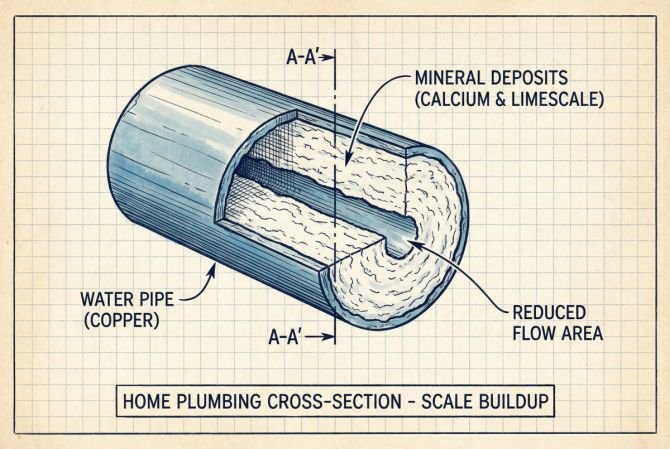
Preventing limescale buildup in household pipes is crucial for maintaining plumbing system efficiency and longevity, as mineral deposits from hard water can restrict flow and damage appliances over time. Addressing hard water at its source is the most effective strategy to safeguard your home’s plumbing infrastructure. This proactive approach minimizes costly repairs and ensures optimal water pressure throughout the property.
Understanding Limescale and Its Impact
Limescale is a hard, chalky deposit primarily composed of calcium and magnesium carbonates, which forms when hard water evaporates or is heated. This mineral accumulation can reduce water flow, decrease appliance efficiency, and potentially lead to costly plumbing repairs. Understanding its formation is key to effective prevention.
Limescale, a common issue in many households, is essentially a mineral deposit left behind by hard water. These deposits, predominantly calcium and magnesium carbonates, adhere to surfaces within plumbing systems and appliances. The presence of hard water, characterized by high mineral content, is the primary driver of limescale formation. According to Fresh Water Systems (2023), approximately 85% of American households contend with hard water, making limescale a widespread concern [1].
The impact of limescale on a home’s plumbing can be significant. Internally, pipes can experience reduced water flow due to the narrowing of their diameter, leading to decreased water pressure. This buildup can also contribute to corrosion over time, compromising the structural integrity of the pipes. For water-using appliances such as water heaters, dishwashers, and washing machines, limescale acts as an insulator, forcing them to work harder and consume more energy, ultimately shortening their lifespan and increasing utility costs.
Effective Whole-Home Prevention Strategies
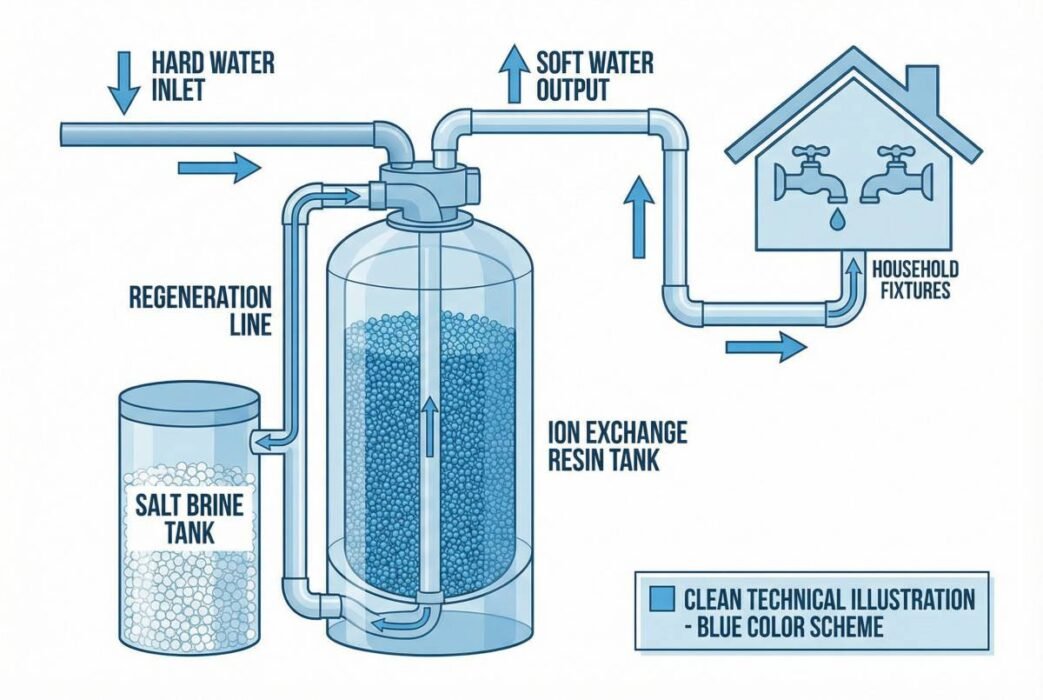
The most effective way to prevent limescale buildup throughout a home’s plumbing system is by treating hard water at its entry point. Whole-home solutions like water softeners or conditioners remove or neutralize hardness minerals before they can accumulate in pipes and appliances. This comprehensive approach ensures long-term protection and maintains plumbing integrity.
Implementing a whole-home water treatment system is the most proactive measure against limescale. These systems are installed where the main water supply enters the house, ensuring that all water distributed throughout the plumbing is treated. Two primary technologies are widely used: water softeners and water conditioners.
Water Softeners
Water softeners operate on the principle of ion exchange. They contain a mineral tank filled with resin beads that are negatively charged. As hard water passes through, positively charged calcium and magnesium ions are attracted to the resin beads and exchanged for sodium ions. This process effectively removes the hardness minerals from the water. Periodically, the resin beads need to be regenerated with a salt solution from a brine tank to restore their ion exchange capacity. Water softeners are highly effective at completely removing hardness minerals, providing truly soft water throughout the home.
Water Conditioners (Salt-Free)
Water conditioners, often referred to as salt-free water softeners, offer an alternative approach. Instead of removing hardness minerals, these systems crystallize the calcium and magnesium ions. This crystallization process alters the mineral structure, preventing them from adhering to pipes and surfaces. Water conditioners do not require salt for regeneration and do not discharge salty wastewater, making them a more environmentally friendly option and suitable for regions where salt-based softeners are restricted. Both systems offer distinct advantages depending on household needs and local regulations.
| Feature | Water Softener | Water Conditioner |
|---|---|---|
| Mechanism | Ion exchange (removes minerals) | Crystallization (prevents adhesion) |
| Salt Requirement | Yes (for regeneration) | No |
| Mineral Removal | Complete | Minerals remain, but do not stick |
| Environmental Impact | Discharges salty wastewater | No salty discharge |
| Maintenance | Salt replenishment | Minimal |
Targeted Maintenance for Existing Buildup
While whole-home systems prevent new limescale, targeted maintenance addresses existing buildup in specific fixtures and appliances. Regular cleaning with acidic solutions like vinegar can dissolve mineral deposits, restoring functionality and appearance. This approach is crucial for areas already affected by hard water, complementing broader prevention efforts.
Even with a whole-home prevention system, some existing limescale might remain or new deposits could form in specific, high-use areas. Targeted maintenance involves using readily available household products to dissolve these mineral accumulations. Acetic acid, found in white vinegar, is particularly effective at breaking down limescale.
Drains:
For clogged drains due to limescale, a combination of white vinegar and baking soda can be effective. Pour half a cup of baking soda followed by half a cup of white vinegar down the drain. Allow it to sit for 5-10 minutes, then flush with hot water. Exercise caution with boiling water, as it can damage PVC, CPVC, and PEX pipes, or crack porcelain sinks [1].
Faucets and Showerheads:
To descale faucets and showerheads, soak a cloth in white vinegar and wrap it around the affected fixture. Secure it in place and let it sit for several hours or overnight. For showerheads, submerging them in a bowl of vinegar can also work. Afterward, scrub gently to remove any loosened deposits.
Water Heaters:
Water heaters are highly susceptible to limescale due to constant heating. Draining and flushing the water heater annually with a vinegar solution can help. For significant buildup, professional assistance is recommended, as improper descaling can damage the unit. Addressing water heater limescale can significantly improve efficiency and extend appliance life.
Dishwashers and Washing Machines:
To descale these appliances, run an empty cycle with a cup of white vinegar in place of detergent. For dishwashers, place the vinegar in a dishwasher-safe container on the top rack. For washing machines, add it directly to the detergent dispenser. The hot water and vinegar will work to dissolve internal limescale deposits.
FAQ Section
What is hard water?
Hard water contains high concentrations of dissolved minerals, primarily calcium and magnesium. These minerals are naturally present in water sources and are responsible for limescale formation.
How does limescale affect water pressure?
Limescale buildup inside pipes reduces their internal diameter, restricting water flow and leading to a noticeable decrease in water pressure throughout the plumbing system.
Are magnetic descalers effective?
The effectiveness of magnetic water descalers is a subject of ongoing debate, with limited scientific evidence to conclusively support their claims of preventing limescale buildup.
How often should I descale my appliances?
The frequency of descaling depends on your water hardness and appliance usage. In areas with very hard water, monthly or quarterly descaling might be necessary for optimal performance.
Can limescale damage my water heater?
Yes, limescale can significantly reduce the efficiency and lifespan of water heaters by insulating heating elements, causing them to work harder and eventually fail.
Conclusion
Preventing limescale buildup in your home’s plumbing is an essential aspect of property maintenance, safeguarding both the efficiency and longevity of your water systems. By implementing whole-home solutions and engaging in targeted maintenance, homeowners can effectively combat the challenges posed by hard water. A proactive approach ensures clear pipes, optimal appliance performance, and avoids costly repairs, contributing to a well-maintained and functional home environment.
References
[1] Fresh Water Systems (2023). How to Prevent Limescale Buildup in Your Home. https://www.freshwatersystems.com/blogs/blog/how-to-prevent-limescale-buildup-in-your-home
