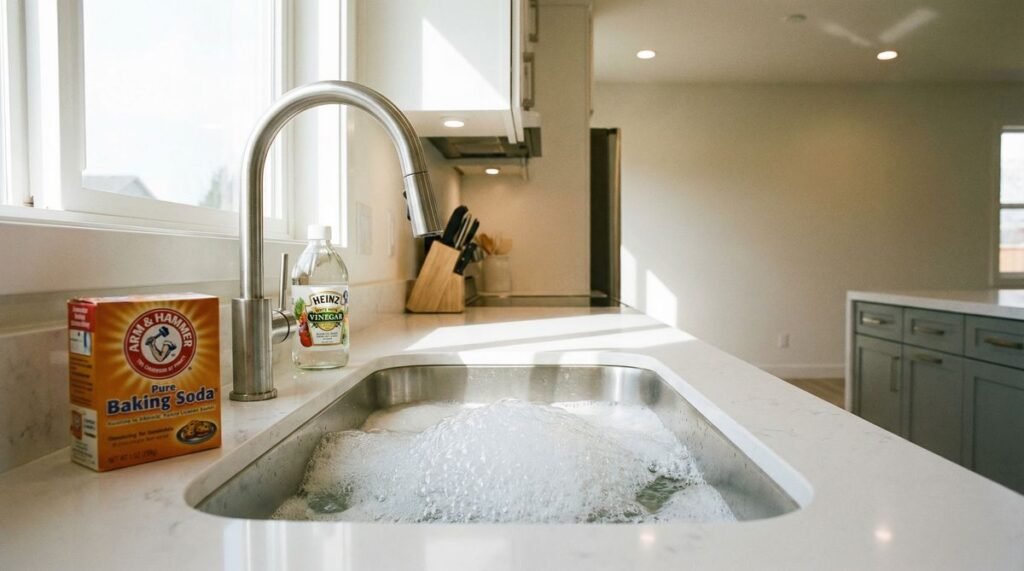
Introduction: The Frustration of a Clogged Sink and a Simple Solution
A clogged kitchen sink is a common household nuisance, disrupting daily routines. While chemical drain cleaners are an option, a simpler, eco-friendly solution often found in your pantry is baking soda and vinegar. This guide explores the science, provides a step-by-step approach to how to unclog a kitchen sink with baking soda and vinegar, offers advanced DIY techniques, and shares tips for preventing future clogs, empowering you to effectively unclog a kitchen sink with baking soda and maintain a free-flowing kitchen sink.
Understanding the Chemistry: Why Baking Soda and Vinegar Work (and When They Don’t)
Baking soda and vinegar create a chemical reaction that produces carbon dioxide gas, which can help dislodge minor clogs by physically breaking them apart and pushing them through the drain. This method is most effective for grease and soap scum blockages, but it is not a universal solution and may not work for severe obstructions or solid objects.
The Science Behind the Fizz
The interaction between baking soda (sodium bicarbonate) and vinegar (acetic acid) is an acid-base reaction. When combined, they produce carbonic acid, which quickly decomposes into water, a sodium salt, and carbon dioxide gas. This effervescent release creates a fizzing action. In a clogged kitchen sink, this bubbling acts as a gentle mechanical force, helping to unclog a kitchen sink with baking soda by breaking down and loosening accumulated grease, food particles, and soap scum. The pressure from the gas assists in pushing debris down the pipe, allowing water to flow freely, making it an effective way to unclog a kitchen sink with baking soda.
Limitations of the Baking Soda and Vinegar Method
While baking soda and vinegar are a popular first defense for minor clogs, understanding their limitations is crucial. This method primarily targets organic blockages like grease, soap residue, and small food particles. It’s typically insufficient for hair clogs or solid objects, which require stronger chemical solutions or mechanical removal. Forcing a severe clog with baking soda and vinegar might compact it further. The chemical reaction is milder than commercial drain cleaners. If a clogged sink persists after a few attempts, or if you’re trying to unclog a kitchen sink with baking soda and it’s not working, a different approach is necessary.
Step-by-Step Guide: Unclogging Your Sink with Baking Soda and Vinegar
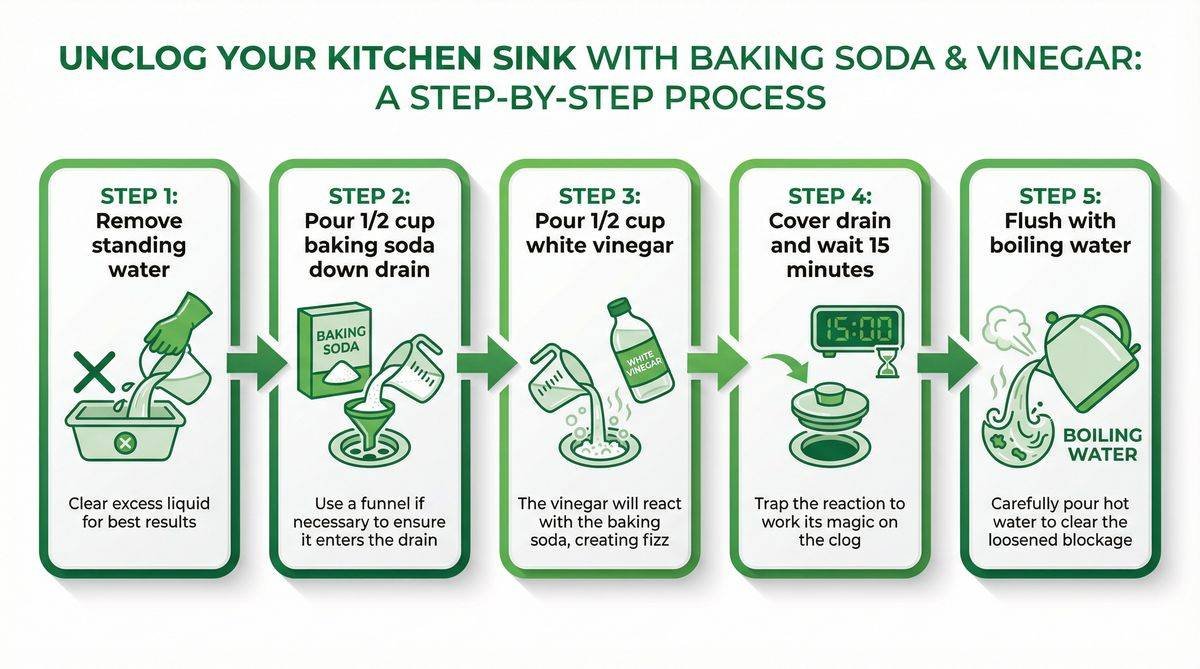
To effectively unclog a kitchen sink with baking soda and vinegar, begin by removing standing water, then pour one cup of baking soda followed by one cup of white vinegar down the drain. Allow the mixture to sit for 15-30 minutes, covering the drain to contain the reaction, and finally flush with hot water to clear the loosened blockage. This is the primary method for how to unclog a kitchen sink with baking soda, and a key step in learning how to unclog a kitchen sink with baking soda effectively.
Preparation: Safety First
Before starting, prioritize safety. Wear rubber gloves to protect your hands. Remove any standing water from the sink basin to ensure direct interaction between the baking soda and vinegar and the clog. If you have a double sink, seal the second drain to maximize pressure. Gather one cup of baking soda, one cup of white vinegar, and hot (not boiling) water. Avoid boiling water with PVC pipes to prevent damage.
The Application Process
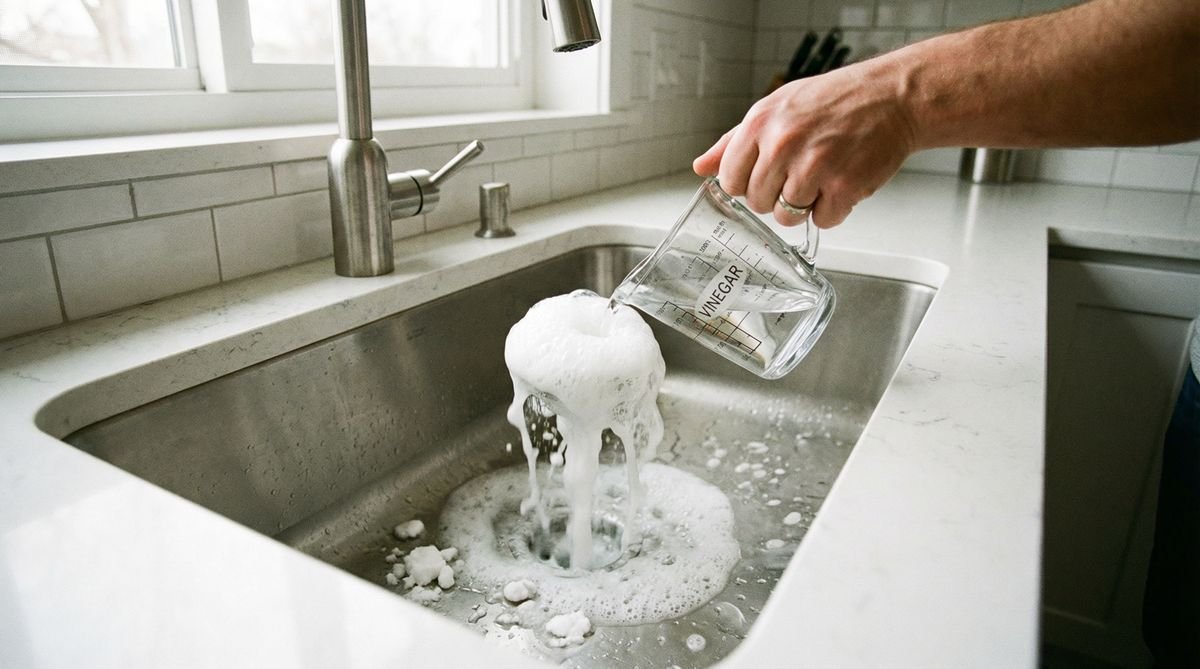
The application is straightforward. Pour one cup of baking soda directly down the clogged drain, followed by one cup of white vinegar. A vigorous fizzing and bubbling reaction will occur as carbon dioxide gas is released, working to break down the clog. Immediately cover the drain with a stopper or plate to contain the reaction and direct pressure downwards. This concentrates the gas’s dislodging action on the blockage. The bubbling will continue for several minutes.
Waiting and Flushing
Let the baking soda and vinegar drain cleaner mixture sit for 15 to 30 minutes, or longer for stubborn clogs. This allows the mixture to break down grime. After waiting, remove the stopper and slowly pour hot water down the drain to flush away loosened debris. If the drain is still slow, repeat the process. If two attempts fail, the clog is likely more severe, requiring alternative methods for your clogged kitchen sink.
Beyond the Fizz: Advanced DIY Techniques for Stubborn Clogs
When baking soda and vinegar prove insufficient, a plunger can often dislodge deeper clogs through hydraulic pressure. For blockages within the P-trap, manual cleaning is effective, while a plumber’s snake is essential for reaching and breaking up obstructions further down the drainpipe.
The Power of a Plunger
If baking soda and vinegar don’t clear the drain, consider other methods to unclog a kitchen sink with baking soda and other tools. Use a plunger, which dislodges clogs with vacuum and hydraulic pressure. For kitchen sinks, a cup-style plunger is best. Ensure enough water covers the plunger’s rubber cup for a tight seal. Place the plunger firmly over the drain, sealing any other drains in a double sink. Pump vigorously for 20-30 seconds, then pull sharply. Repeat if needed. If water still doesn’t drain, the clog may be beyond the plunger’s reach, and you might need to explore other ways to unclog a kitchen sink with baking soda.
Inspecting and Cleaning the P-Trap
For deeper clogs, especially in the P-trap (the curved pipe beneath your sink), manual cleaning is necessary. The P-trap collects debris. Place a bucket under it to catch water and gunk. Loosen the slip nuts on both ends with a wrench, then remove the trap. Empty its contents and clear any blockages with a brush or wire. Reattach the P-trap, tightening nuts securely but not excessively to avoid cracking plastic pipes. Run water to check for leaks and proper drainage.
When to Consider a Plumber’s Snake
When DIY methods fail, a plumber’s snake (drain auger) is effective for deep, stubborn clogs. This flexible metal wire reaches far into drainpipes, breaking up or retrieving obstructions. Feed the cable into the drain opening (or wall pipe if the P-trap is removed). Push until you feel resistance, indicating the clog. Tighten the thumbscrew and crank the handle to rotate the tip, boring through the clog. Work the snake back and forth until clear. Retract and flush with hot water. If unsure or facing difficulty, consult a professional plumber to prevent pipe damage.
Preventing Future Clogs: Best Practices for a Healthy Kitchen Drain
Proactive measures are key to preventing kitchen sink clogs, including adopting daily habits like flushing with hot water, using drain screens, and being mindful of what goes down the drain, particularly avoiding grease, coffee grounds, and fibrous food waste.
Daily Habits for a Clear Drain
Preventing kitchen sink clogs is simpler than clearing them, starting with daily habits. Regularly flush your drain with hot water after washing dishes to melt and flush away grease. Install drain screens or strainers to catch food particles and debris, disposing of them in the trash. Clean these screens regularly. A weekly or bi-weekly flush of baking soda and hot water (without vinegar) can also help maintain clear pipes, further assisting in how to unclog a kitchen sink with baking soda by preventing buildup.
What NOT to Pour Down Your Sink
Knowing what not to put down your kitchen sink is crucial for preventing clogs. Grease and cooking oils solidify when cool, clinging to pipes and forming blockages; always dispose of them in the trash. Coffee grounds accumulate into a sludgy mass. Fibrous food waste like celery, potato peels, and fruit rinds can tangle and obstruct drains. Pasta and rice expand when wet, contributing to blockages. Diligent disposal significantly reduces future clogs and maintains a healthy plumbing system.
Frequently Asked Questions (FAQs)
Does the baking soda and vinegar method actually work?
Yes, the baking soda and vinegar method can be effective for minor clogs, particularly those caused by grease and soap scum. The chemical reaction produces carbon dioxide gas, which helps to break down and dislodge soft blockages. However, it is not a guaranteed solution for all types of clogs, especially severe ones or those caused by solid objects, so understanding how to unclog a kitchen sink with baking soda effectively is key.
How long should I let the baking soda and vinegar sit?
For best results, allow the baking soda and vinegar mixture to sit in the drain for at least 15 to 30 minutes. For more stubborn clogs, you can extend this period to an hour or even overnight to give the reaction more time to work on the blockage, making it easier to unclog a kitchen sink with baking soda.
What types of clogs are best treated with baking soda and vinegar?
The baking soda and vinegar method is most effective for minor clogs composed of organic materials such as grease, cooking oils, soap scum, and small food particles. It is generally less effective for hair clogs or blockages caused by solid objects, highlighting the specific applications for how to unclog a kitchen sink with baking soda.
Are there any risks to using baking soda and vinegar in my sink?
Baking soda and vinegar are generally safe for most plumbing systems and are a non-toxic alternative to harsh chemical drain cleaners. However, avoid using boiling water with PVC pipes, as it can cause damage. Also, do not mix baking soda and vinegar with commercial drain cleaners, as this can create dangerous chemical reactions when trying to unclog a kitchen sink with baking soda.
What are the signs it’s time to call a professional plumber?
It’s time to call a professional plumber if your clogged kitchen sink remains clogged after multiple attempts with DIY methods like baking soda and vinegar, plungers, or drain snakes. Other signs include foul odors persisting, multiple drains backing up, or water leaking from pipes, indicating a more serious plumbing issue that cannot be resolved by simply trying to unclog a kitchen sink with baking soda.
Conclusion: Empowering You to Tackle Sink Clogs
A clogged kitchen sink can be frustrating, but many issues are resolvable with the right approach. The baking soda and vinegar method provides a simple, eco-friendly first step for minor blockages, offering a natural way to unclog a kitchen sink with baking soda. For persistent problems, a plunger or P-trap cleaning can be effective. For stubborn clogs, a plumber’s snake is a powerful DIY tool. Beyond immediate fixes, preventative habits like mindful waste disposal and regular drain maintenance are crucial. Understanding these techniques and knowing when to call a professional plumber ensures a healthy, functional plumbing system and a hassle-free kitchen, especially when considering how to unclog a kitchen sink with baking soda.
References
U.S. Environmental Protection Agency. (2025, August 28). How to Care for Your Septic System.
