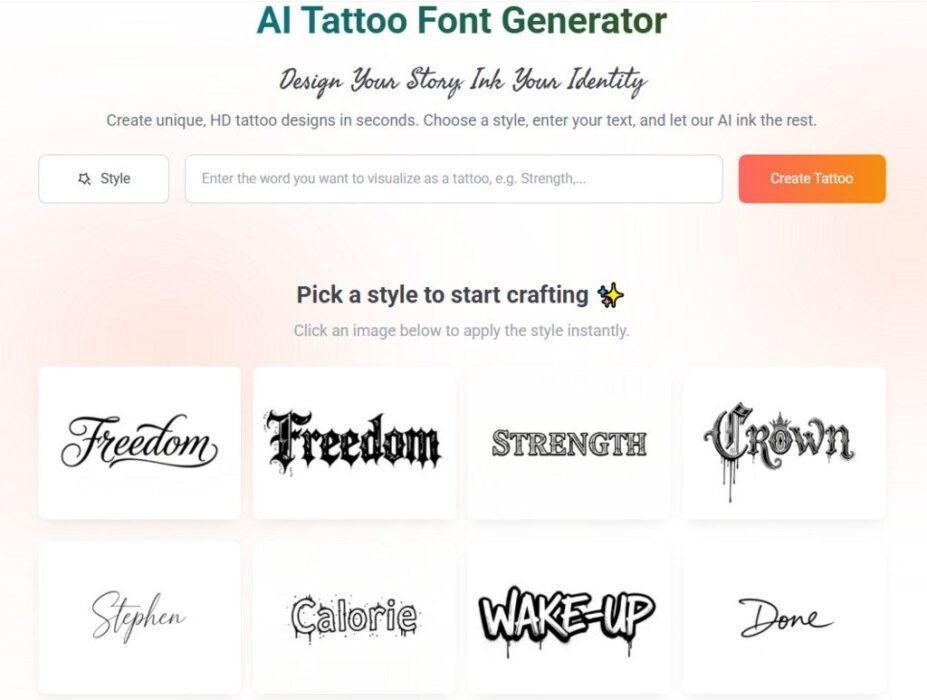
The world of body art is currently experiencing a vibrant renaissance of 1960s and 70s aesthetics, reimagined through the lens of modern technology. Among the most captivating of these trends is Psychedelic Art—a style characterized by distorted visuals, vibrant “breathing” patterns, and a sense of fluid motion. For tattoo enthusiasts looking to capture this “trippy” essence, the challenge has always been the lettering. Standard fonts are far too static; they lack the “melted” quality required for a truly psychedelic piece. To bridge this gap, a specialized tattoo font generator powered by AI is now providing creators with the tools to turn rigid text into liquid masterpieces.
The Aesthetic Struggle: Why Static Typography Fails the Psychedelic Vibe
Psychedelic art is rooted in the idea of sensory expansion. It is meant to mimic the visual illusions of a fluid, ever-changing reality. When a collector decides to get a “trippy” tattoo, they often find that traditional “cool” fonts—like standard scripts or block letters—clash with the organic, swirling nature of the surrounding artwork.
The primary pain point for users is finding a font that feels like it is “melting” into the skin. If the lines are too sharp or the weight is too uniform, the illusion of motion is broken. A high-quality tattoo font generator addresses this by allowing for extreme distortion and “oozing” effects. This ensures that the typography doesn’t just sit on top of the art, but flows within it like a liquid.
5 Trending Topics for Creative Marketers and Artists
- The Return of “Melted” Typography: Why high-distortion fonts are the top choice for Gen Z collectors.
- Color Blending in Fluid Ink: How to use gradients to enhance the “breathing” effect of psychedelic text.
- Digital Distortion Tools: A guide to using AI to simulate the “fisheye” and “liquid” filters in body art.
- The Geometry of Hallucination: Balancing symmetrical patterns with fluid, chaotic lettering.
- E-E-A-T in Creative Design: Why using professional-grade tools is essential for maintaining design integrity in complex tattoos.
Engineering the “Drip”: How AI Creates Fluidity
Designing a font that looks like it’s dripping or flowing requires a deep understanding of weight and gravity. In the past, tattoo artists had to hand-draw these “trippy” letters, which led to inconsistencies in legibility. Today, utilizing a tattoo font generator allows for the precise manipulation of “liquid dynamics.”
By using AI algorithms, these tools can apply “stress” to specific parts of a letter, causing them to sag, stretch, or swirl. This creates a sense of tension and release that is essential for the psychedelic aesthetic. For someone getting a large rib or back piece, the ability to preview these fluid transitions ensures the text complements the body’s natural curves rather than fighting them.
Breaking the Rules of Kerning and Leading
In traditional typography, “kerning” (the space between letters) is meant to be balanced and invisible. In psychedelic design, we throw those rules out the window. Letters can overlap, intertwine, or vary wildly in size to create a sense of visual “vibration.”
When you input your text into a tattoo font generator, look for the ability to randomize the “slant” and “bulge.” This creates a rhythm that feels musical. For a tattoo of a band name or a philosophical mantra, this rhythmic distortion acts as a visual representation of sound waves or altered states of consciousness. It transforms the message from a piece of information into a sensory experience.
The Technical Reality: Keeping “Trippy” Ink Legible
While the goal is distortion, the ultimate enemy of a psychedelic tattoo is “The Blob.” Because these fonts often feature heavy, thick lines and overlapping elements, there is a risk that the ink will blur together as it ages.
To maintain E-E-A-T (Experience, Expertise, Authoritativeness, and Trustworthiness) in your design, follow these technical standards:
- Negative Space Management: Ensure that even the most “melted” letters have clear internal gaps (the holes in ‘e’, ‘a’, or ‘g’).
- Stroke Contrast: Use a generator that allows for varying stroke weights. Having some thin “threads” connecting thick “blobs” helps the eye track the letters individually.
- Anatomy of the Swirl: Align the “melt” of the font with the downward pull of gravity based on where the tattoo is placed. A “dripping” font on the calf should drip toward the ankle, not the side.
Beyond the 1960s: The Neo-Psychedelic Movement
We are no longer just looking at retro posters for inspiration. The “Neo-Psychedelic” movement incorporates elements of glitch art, digital distortion, and biomechanical flow. It is a style that feels both ancient and futuristic.
For the modern enthusiast, a tattoo font generator is the gateway to this “glitchy” reality. You can take a classic serif font and apply a “liquify” effect that makes it look like a digital error. This creates a fascinating contrast: the permanence of a tattoo representing the fleeting nature of a digital glitch. It is a powerful way to express the “Binary Soul” or the “Digital Life” philosophy that many tech-savvy collectors embrace.
Practical Steps for Designing Your Liquid Tattoo
- Select the “Fluid” Filter: Start with a base font that already has some organic movement.
- Max Out the Distortion: Use the generator’s sliders to stretch the terminals of the letters.
- Check the “Silhouette”: Squint your eyes at the design. Can you still recognize the word? If not, dial back the distortion by 10%.
- High-Resolution Export: Ensure you get a sharp vector file. Any “blur” in the digital file will be amplified ten-fold by the tattoo needle.
The Psychology of the “Wavering” Word
Why are we drawn to letters that look like they are vibrating? Psychologically, fluid fonts suggest a lack of rigidity. They represent a mind that is open, flexible, and perhaps a bit rebellious. When someone chooses a “trippy” font for their ink, they are signaling a rejection of the “straight and narrow” path.
Using a tattoo font generator to craft these designs allows for a deeper level of self-expression. You aren’t just choosing a font from a list; you are actively “distorting” your reality. The act of sliding a bar to watch a word melt is a creative exercise that mirrors the artistic intent of the tattoo itself. It is a collaboration between human desire and AI capability.
Conclusion: Let the Ink Flow
Psychedelic tattoos are a celebration of the extraordinary. They challenge our perceptions and turn our bodies into canvases of impossible motion. To successfully execute such a bold vision, the typography must be just as dynamic as the imagery.
By embracing the power of a tattoo font generator, you move away from the limitations of static, boring text and enter a world of liquid possibilities. Whether you want a design that drips with the intensity of 70s rock or swirls with the digital complexity of modern glitch art, the right tools ensure your vision is rendered with both artistic flair and technical precision. Your tattoo should be a trip worth taking—make sure your font is ready to lead the way. Don’t settle for letters that stand still; choose a script that moves with you.
