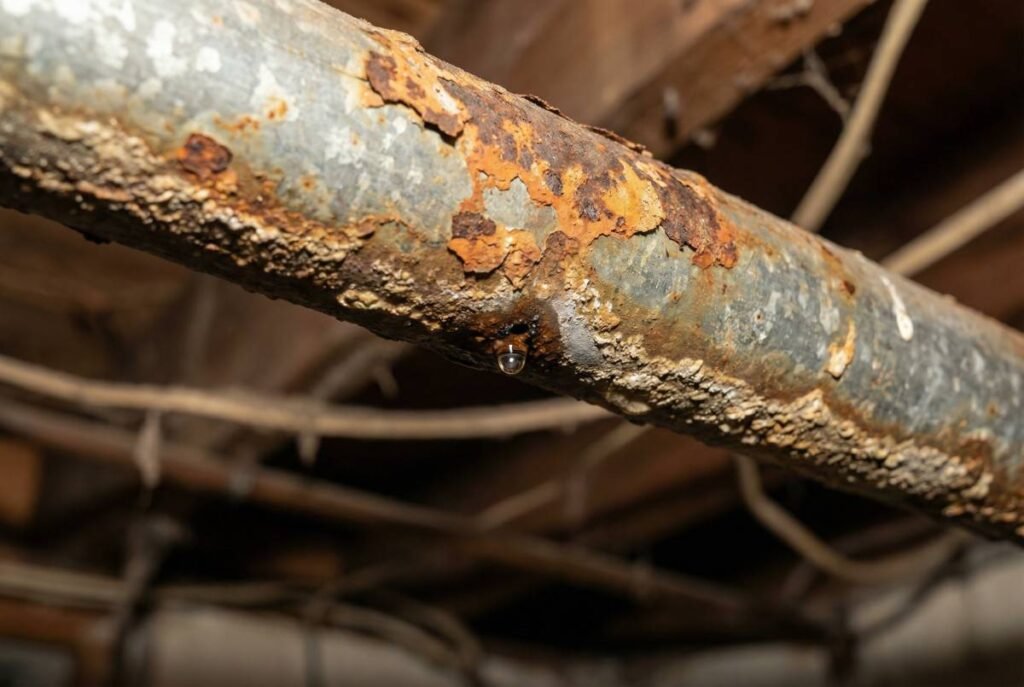
Identifying the early signs that your home’s plumbing pipes require replacement is crucial for preventing extensive water damage and costly emergency repairs, ensuring the long-term integrity of your property’s water system.
Frequent Leaks and Water Damage
Frequent leaks or recurring water damage are critical indicators that your home’s plumbing system may be failing and requires professional assessment for potential replacement. An occasional drip might not be a major concern, but if you find yourself calling a plumber more than once a year for leaks, especially in multiple locations, it signals deteriorating pipes. According to Roto-Rooter, multiple leaks often point to aging, brittle pipes that are corroding from the inside out [1].
Even small, undetected leaks behind walls or under floors can lead to significant issues such as mold growth, structural damage to drywall, and an increase in utility bills over time. Addressing these issues promptly can mitigate further damage and preserve your home’s value.
Discolored Water and Corrosion
The presence of discolored water, appearing rusty, yellow, or brown, is a strong sign of internal pipe corrosion, indicating that your plumbing system may need replacement. This discoloration typically results from rust buildup inside old galvanized steel or iron pipes, which then flakes off and mixes with the water supply. This not only affects the water’s taste but can also stain fixtures and laundry. Precision Today notes that if water discoloration persists across multiple faucets, it is a clear sign that pipes are corroding or rusting internally [2].
Corrosion can also manifest as visible green stains on copper pipes or flaking rust on steel pipes. These visible signs suggest that the pipes are weakening and becoming more susceptible to leaks and bursts.
Aging Plumbing Systems
The age of your home’s plumbing system is a significant factor in determining the need for pipe replacement, as most materials have a finite lifespan. Plumbing systems installed before the 1970s are often past their expected operational life, making them prime candidates for replacement. Different pipe materials have varying lifespans; for instance, galvanized steel typically lasts 40-60 years, while cast iron can last 60-75 years [1].
| Pipe Material | Typical Lifespan (Years) |
|---|---|
| Galvanized Steel | 40-60 |
| Cast Iron | 60-75 |
| Brass | 50+ |
| Copper | 50+ |
| PVC | 50-70 |
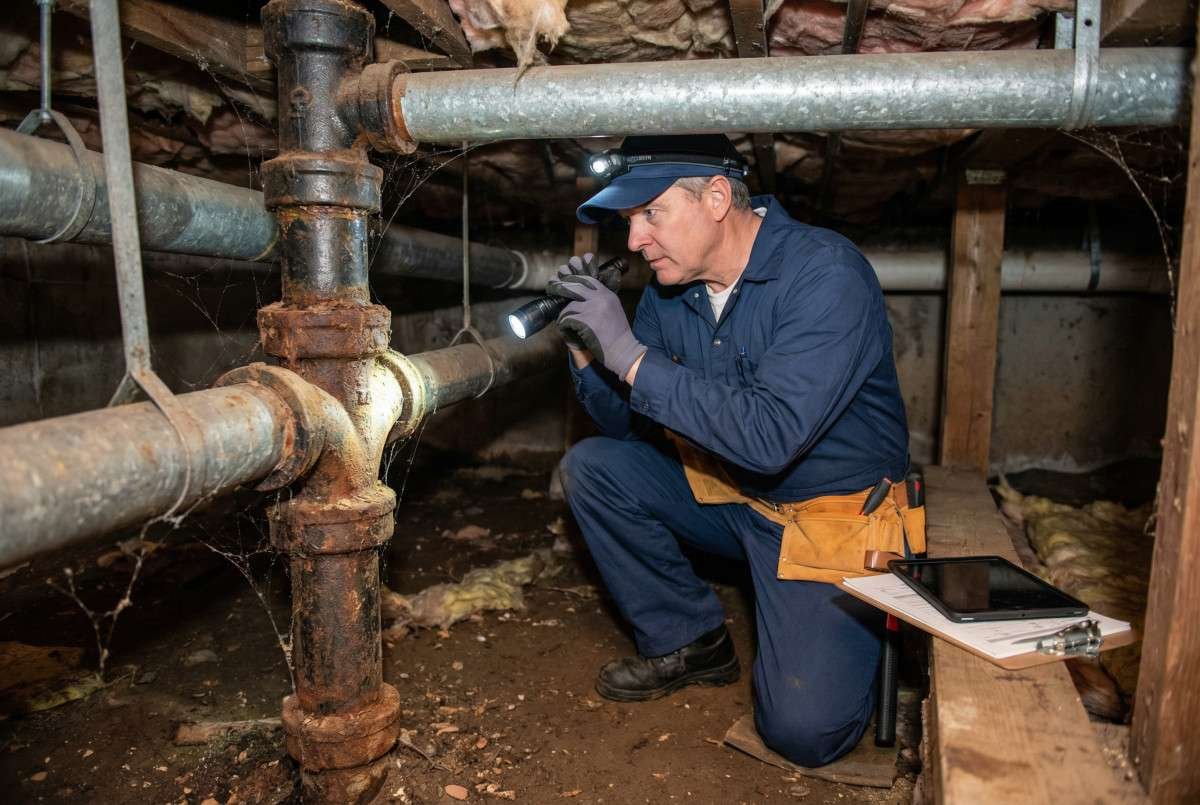
If your home is older and has not undergone a plumbing overhaul, it is advisable to consider a comprehensive inspection to assess the condition of your pipes, especially if you are experiencing other plumbing issues.
Decreased Water Pressure
A noticeable and persistent decrease in water pressure throughout your home can indicate underlying issues within your plumbing system, potentially signaling the need for pipe replacement. While local water supply problems can sometimes cause low pressure, consistent low pressure across all faucets often points to internal pipe blockages or narrowing due to mineral buildup or corrosion. According to Precision Today, if decreased water pressure is a constant issue, it might be your plumbing system’s way of indicating that new pipes are necessary to deliver adequate water flow [2].
Over time, sediment and mineral deposits accumulate inside pipes, reducing their internal diameter and restricting water flow. This not only impacts daily activities like showering and washing dishes but also puts additional strain on your plumbing system, potentially leading to further damage.
Unusual Noises from Pipes
Strange noises emanating from your plumbing, such as rattling, banging, or whistling, can be a clear indication of underlying problems that may necessitate pipe replacement. These sounds often suggest issues like loose pipe fittings, air trapped within the lines, or significant mineral buildup restricting water flow. Roto-Rooter explains that while an isolated noisy pipe might be a minor issue, frequent and widespread noises throughout your home warrant a closer inspection of the entire plumbing system [1].
Banging noises, often referred to as “water hammer,” can occur when water flow suddenly stops or changes direction, putting stress on pipes and connections. Persistent whistling or rattling can also indicate that pipes are loose or that their internal integrity is compromised, making them more prone to leaks or bursts.
FAQ
How often should pipes be inspected?
It is generally recommended to have your plumbing system inspected every 3-5 years, or more frequently if your home is older or you notice any of the warning signs mentioned above. Regular inspections can help identify potential issues before they escalate into major problems.
What are the risks of not replacing old pipes?
Failing to replace old or damaged pipes can lead to significant risks, including severe water damage, mold growth, structural compromise to your home, increased water bills due to leaks, and potential health hazards from contaminated water. Catastrophic pipe bursts are also a major concern.
Can I replace pipes myself?
While minor plumbing repairs might be suitable for a DIY approach, replacing entire sections or your home’s main plumbing system is a complex task best left to licensed professionals. Improper installation can lead to leaks, code violations, and further damage. Professional plumbers have the expertise and tools to ensure the job is done correctly and safely.
What is the average cost of pipe replacement?
The cost of pipe replacement varies widely depending on factors such as the type of pipes, the extent of the replacement (partial vs. whole-home), accessibility, and regional labor rates. It is best to get multiple quotes from qualified plumbers for an accurate estimate.
How long does pipe replacement take?
The duration of pipe replacement depends on the scope of the project. A partial replacement in a small area might take a day or two, while a whole-home repiping project could take several days to a week or more, especially if walls or floors need to be opened and repaired.
Understanding the critical signs that indicate your home’s pipes need replacement is essential for proactive home maintenance and protecting your investment. Addressing issues like frequent leaks, discolored water, aging systems, decreased water pressure, and unusual noises promptly can prevent costly damage and ensure a reliable water supply for years to come. Consulting with a qualified plumbing professional for a thorough inspection and expert advice is always recommended when these warning signs appear.
[1] Roto-Rooter. (n.d.). 6 Signs It’s Time to Replace the Pipes in Your House. https://www.rotorooter.com/blog/pipes/how-to-know-when-its-time-to-replace-your-pipes/
[2] Precision Today. (2021, July 21). Is It Time for a Pipe Replacement? 7 Signs to Look Out For. https://www.getprecisiontoday.com/blog/2021/july/is-it-time-for-a-pipe-replacement-7-signs-to-loo/
