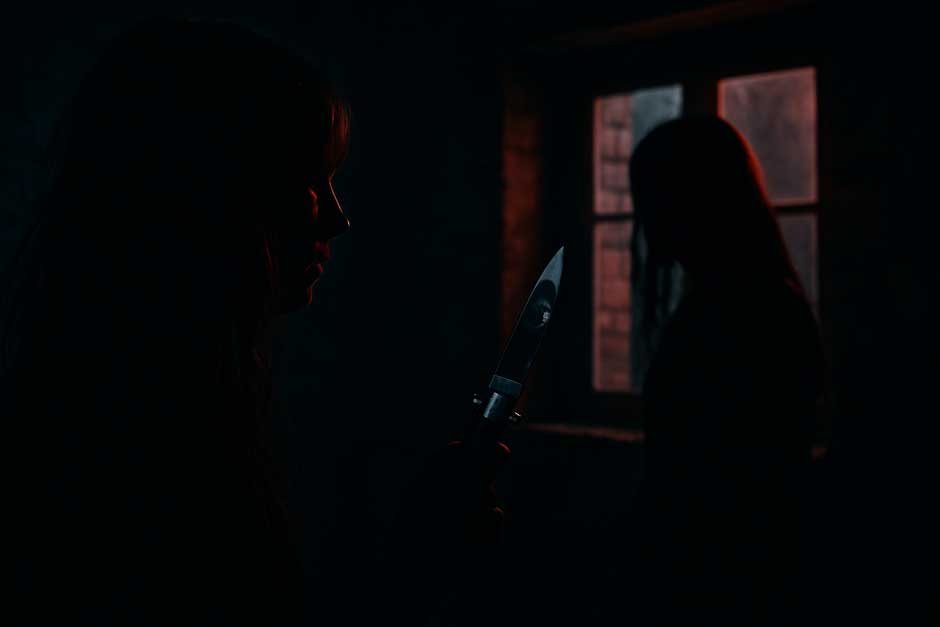
Is it possible for a single horror film to be both a masterpiece of tension and a deeply flawed, controversial piece of cinema? The 2003 French slasher, known internationally as Switchblade Romance, or Haute Tension in its native France and High Tension in the US, certainly makes a compelling case.
From its visceral gore to its mind-bending final twist, the film has carved out a unique, yet divisive, legacy in modern horror.
It is a movie that demands a reaction, whether it be shock, admiration, or outright rejection from its audience.
The French Extremity Movement’s Bloody Calling Card
Switchblade Romance arrived at a time when French cinema was pushing boundaries with a wave of brutal, uncompromising films that critics dubbed the “French Extremity” movement.
Director Alexandre Aja, then only 25, delivered a work that was relentlessly violent and technically polished, immediately establishing him as a major voice in the genre.
The film’s multiple titles reflect its turbulent journey to international audiences, but all point to the same core experience: an exercise in pure, unadulterated terror.
The Unrelenting Tension: Plot and Pacing
A Weekend Getaway Gone Wrong
The premise is deceptively simple. Two college friends, Marie and Alex, travel to Alex’s secluded family farmhouse for a quiet weekend of studying.
The tranquility is shattered almost immediately by the arrival of a hulking, menacing killer driving a dilapidated truck.
The attack is swift and brutal, establishing a tone of shocking realism and extreme violence that rarely lets up throughout the runtime.
The Cat-and-Mouse Chase
What follows is a desperate, claustrophobic game of cat-and-mouse. Marie, the more outwardly masculine and resilient of the two, manages to evade the killer and takes on the role of the protector.
She becomes the audience’s surrogate, a resourceful “Final Girl” fighting to save her friend, who has been taken captive by the maniac.
The film’s pacing is masterful, relying on long stretches of silence and suspense punctuated by sudden, explosive bursts of gore, keeping the viewer constantly on edge.
The Twist That Changed Everything (and Divided Everyone)
The Revelation of the Killer’s Identity
The film’s climax delivers a narrative gut-punch: the killer Marie has been fighting is not a separate entity, but a manifestation of her own fractured psyche.
The shocking truth is that Marie herself is the one who committed the atrocities against Alex’s family.
This revelation forces the audience to re-evaluate everything they have witnessed, turning the slasher into a psychological horror. Aja cleverly plants subtle clues throughout the narrative, such as Marie’s strange dream at the beginning, but the twist still requires a significant suspension of disbelief.
Logical Flaws and Suspension of Disbelief
While shocking, the twist introduces numerous logical inconsistencies, particularly concerning the killer’s interactions with other characters and the logistics of the murders.
For many viewers, these plot holes undermine the film’s narrative integrity, leading to a polarizing reaction that continues to define its reputation.
The Double-Edged Legacy: Plagiarism and Tropes
The Shadow of Dean Koontz’s ‘Intensity’
Perhaps the most damaging controversy surrounding Switchblade Romance is the accusation of plagiarism. The film bears striking similarities to Dean Koontz’s 1995 novel, Intensity.
The opening sequence, the farmhouse setting, and the core dynamic of a young woman hiding from a killer who has taken her friend captive mirror the novel closely.
Koontz himself reportedly chose not to pursue legal action, stating he did not want his work associated with the film, a fact that has only fueled the debate among fans and critics.
The “Evil Lesbian” Trope: A Step Backward for Representation?
Beyond the plagiarism claims, the film has been heavily criticized for its use of the “evil lesbian” trope.
Marie’s murderous delusion is triggered by her repressed, unrequited desire for Alex, suggesting that her homosexuality is the source of her madness and violence.
This narrative choice has been seen by many as a regressive and harmful depiction, relying on an outdated horror convention that villainizes queer identity.
Enduring Impact and Reassessment
A Modern Slasher Classic?
Despite its controversies, Switchblade Romance remains a significant piece of modern horror cinema. It is a technical marvel of suspense and practical effects that influenced a generation of filmmakers.
The film’s relentless energy and shocking violence cemented Alexandre Aja’s place in Hollywood, leading to remakes like The Hills Have Eyes.
Ultimately, the film’s legacy is a complex one: a visually stunning, heart-pounding horror experience that is inseparable from the ethical and narrative questions it raises. It is a must-watch, if only to participate in the ongoing debate about its merits and its flaws.
Conclusion: The Unsettling Power of “Switchblade Romance”
The power of Switchblade Romance lies in its ability to unsettle and provoke. It is a film that challenges the viewer not just with gore, but with a narrative that self-destructs in its final moments.
Whether one views it as a brilliant subversion of the slasher genre or a problematic, derivative shock-fest, its impact on the landscape of 21st-century horror is undeniable.
