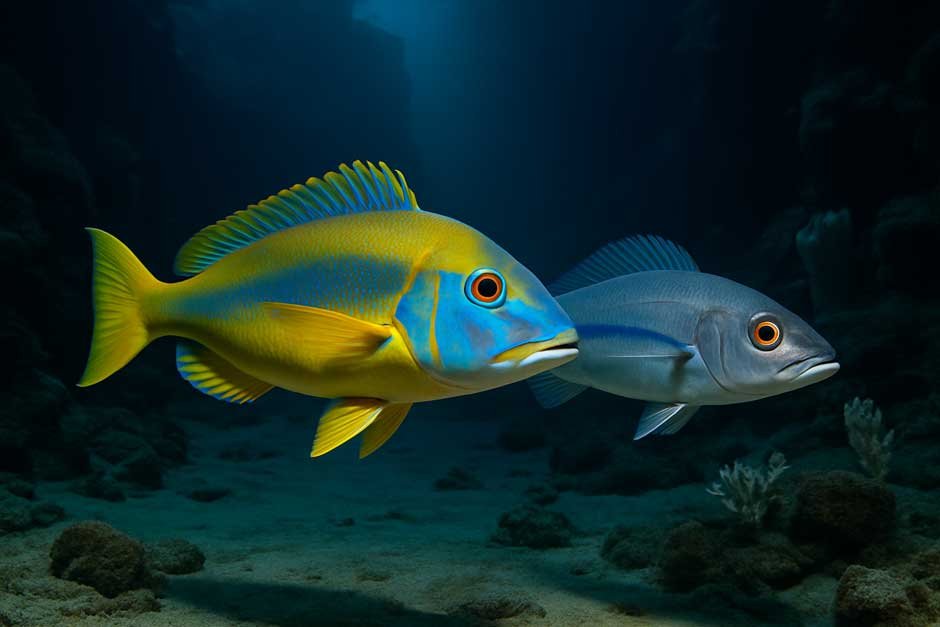
The Enigmatic Tilefish Fish: A Deep-Sea Treasure
Have you ever wondered about the vibrant, deep-dwelling fish sometimes nicknamed “the clown of the sea”? This is the Tilefish Fish, a fascinating group of marine creatures that are as colorful as they are mysterious.
These fish belong to the family Malacanthidae and are primarily found along the outer continental shelf and slope of the Atlantic Ocean. They are highly prized in the culinary world for their delicate flavor and firm texture.
However, the allure of the Tilefish comes with a critical consideration: the varying health advisories associated with its consumption, particularly concerning mercury levels. Understanding this deep-sea treasure requires a look at its different species, habitat, and the important safety guidelines.
Golden vs. Blueline: Distinguishing the Tilefish Species
The term “Tilefish” most commonly refers to two distinct species: the Golden Tilefish and the Blueline Tilefish. While both share the family name, they possess notable differences in appearance, habitat, and size.
Appearance and Identification
The Golden Tilefish (Lopholatilus chamaeleonticeps) is the more visually striking of the two. It boasts an iridescent blue-green back, numerous spots of bright yellow and gold, and a pearly white belly. A key distinguishing feature is the large, fleshy crest, or adipose flap, located on its head.
In contrast, the Blueline Tilefish (Caulolatilus microps) is more subdued. It has a dull olive-gray body with a white underside. Its name comes from a narrow gold stripe underlined in blue that runs from its snout to the tip of its eye. Unlike its golden cousin, the Blueline Tilefish lacks the prominent head crest.
Habitat and Range
These fish are bottom-dwellers, but their preferred depths and temperatures vary. The Golden Tilefish inhabits deeper, colder waters, typically found between 250 to 1,500 feet, where temperatures range from 49 to 58°F . They are known for their unique behavior of burrowing into mud or sand sediment within submarine canyons.
The Blueline Tilefish prefers slightly shallower, warmer waters, generally residing at depths of 98 to 774 feet with temperatures between 59 to 73.4°F . They tend to live around irregular bottoms, ledges, and crevices, and are also known to burrow head-first into cone-shaped piles of sand for shelter.
Life in the Abyss: Biology and Behavior
The Tilefish is a remarkably long-lived species. Golden Tilefish, in particular, can live for up to 50 years, making them a slow-growing and late-maturing fish . This long lifespan is a significant factor in their biology and management.
Their deep-sea existence is characterized by their shelter-seeking behavior. They are known to create complex burrows in the soft bottom of the continental shelf, which serve as protection from predators and a home base. These burrows often become micro-habitats, attracting other fish and crustacean species.
As opportunistic feeders, Tilefish primarily hunt during the day. Their diet consists mainly of bottom-dwelling invertebrates, including shrimp, crabs, clams, snails, worms, and sea cucumbers . This diet contributes to their distinct, highly-valued flavor profile.
A Culinary Delicacy: Flavor Profile and Preparation
The Tilefish is a favorite among chefs and seafood enthusiasts, often commanding a high price. Its flesh is lean, pearl-white, and firm, with a large, moist flake.
The flavor is notably mild and sweet, frequently compared to the taste of lobster or crab, a characteristic attributed to its diet of crustaceans. This makes it a versatile fish that stands up well to various cooking methods.
It is excellent when pan-seared, baked, or broiled, with the firm texture preventing it from falling apart. The high quality of the meat also makes it a popular choice for sushi and sashimi in some markets.
The Critical Health Question: Tilefish and Mercury
Despite its culinary appeal, the consumption of Tilefish, particularly those from the Gulf of Mexico, is subject to serious health advisories due to elevated mercury levels. Mercury is a heavy metal that can accumulate in the fish’s tissue over its long lifespan.
Understanding the FDA/EPA Advisory
The U.S. Food and Drug Administration (FDA) and the Environmental Protection Agency (EPA) provide specific guidance on fish consumption based on mercury content. They categorize fish into “Best Choices,” “Good Choices,” and “Choices to Avoid.”
Tilefish from the Gulf of Mexico is explicitly listed in the “Choices to Avoid” category due to its high mercury concentration . Atlantic Tilefish generally has lower levels, but caution is still advised. Vulnerable populations, including pregnant women, nursing mothers, and young children, are strongly advised to avoid all Tilefish consumption to prevent potential neurological damage to developing fetuses and children .
Hooking the Deep-Water Clown: Fishing Techniques
Catching the Tilefish requires specialized gear and techniques due to its deep-water habitat. Commercial fishing for Tilefish primarily utilizes bottom longline gear, which is effective for targeting fish on the ocean floor .
Recreational fishing, while smaller, has been growing. Anglers use heavy tackle, electric reels, and specialized rigs to drop bait to depths of several hundred feet. The most effective baits mimic the Tilefish’s natural diet, such as squid and cut fish.
Sustainable Seas: Management and Conservation
Given their slow growth and long lifespan, Tilefish populations are carefully managed to ensure sustainability. In the U.S., the fishery is managed by regional councils, including the Mid-Atlantic, South Atlantic, and Gulf Councils .
Management measures include annual catch limits, permit requirements, and, in some areas, Individual Fishing Quota (IFQ) programs. These regulations are designed to prevent overfishing and protect the deep-sea habitats where Tilefish reside, making U.S. wild-caught Golden Tilefish a responsibly harvested choice, provided the mercury advisories are heeded.
Frequently Asked Questions (FAQ) About Tilefish Fish
Is Tilefish safe to eat?
Consumption safety depends heavily on the source. Tilefish from the Gulf of Mexico should be avoided due to high mercury levels. Atlantic Tilefish has lower levels, but vulnerable groups (pregnant women, nursing mothers, young children) should avoid all Tilefish . For the general population, moderation is key, and checking local advisories is recommended.
What does Tilefish taste like?
Tilefish has a mild, sweet flavor and a firm, flaky, white texture. It is often compared to the taste of lobster or crab, which is a result of its diet of crustaceans and other bottom-dwelling invertebrates.
Where are Tilefish found?
Tilefish are found along the outer continental shelf and slope of the U.S. East Coast and in the Gulf of Mexico. They are deep-water fish, with Golden Tilefish preferring depths up to 1,500 feet and Blueline Tilefish found in slightly shallower waters.
What is the difference between Golden and Blueline Tilefish?
The main differences are appearance and habitat. Golden Tilefish are colorful with a large crest on their head and live in deeper, colder waters. Blueline Tilefish are duller, have a blue and gold stripe near the eye, lack the crest, and live in shallower, warmer waters.
