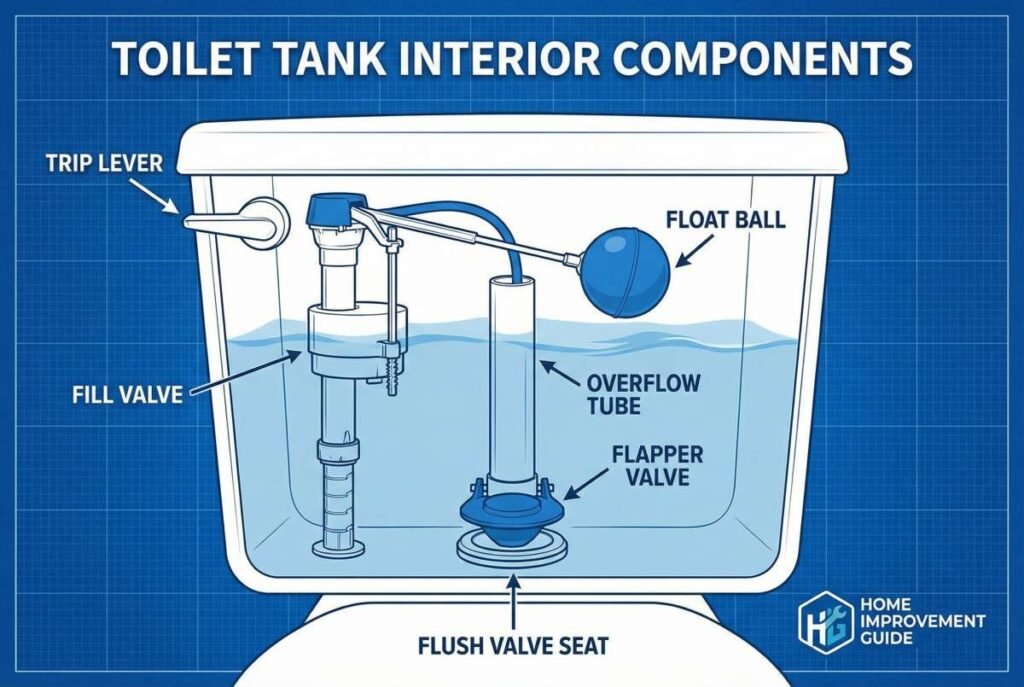
A toilet that continuously runs can waste hundreds of gallons of water daily, leading to significantly higher utility bills and unnecessary strain on plumbing systems. Addressing this common household issue promptly can prevent water wastage and maintain the efficiency of your home’s water fixtures.
Diagnosing the Problem: Identifying the Source of a Running Toilet
To determine the cause of a running toilet, begin by observing the water level and listening for sounds within the tank. A constant filling of the tank without water flushing quickly through the bowl typically indicates a fill valve issue, while water flushing through quickly often points to a stuck flapper or flush valve. Water running intermittently suggests a slow leak, potentially from the flapper, flush valve, or an external connection. According to This Old House (2024), understanding these initial symptoms is crucial for accurate diagnosis and effective repair [1].
Flapper and Flush Valve Issues: Common Causes and Solutions
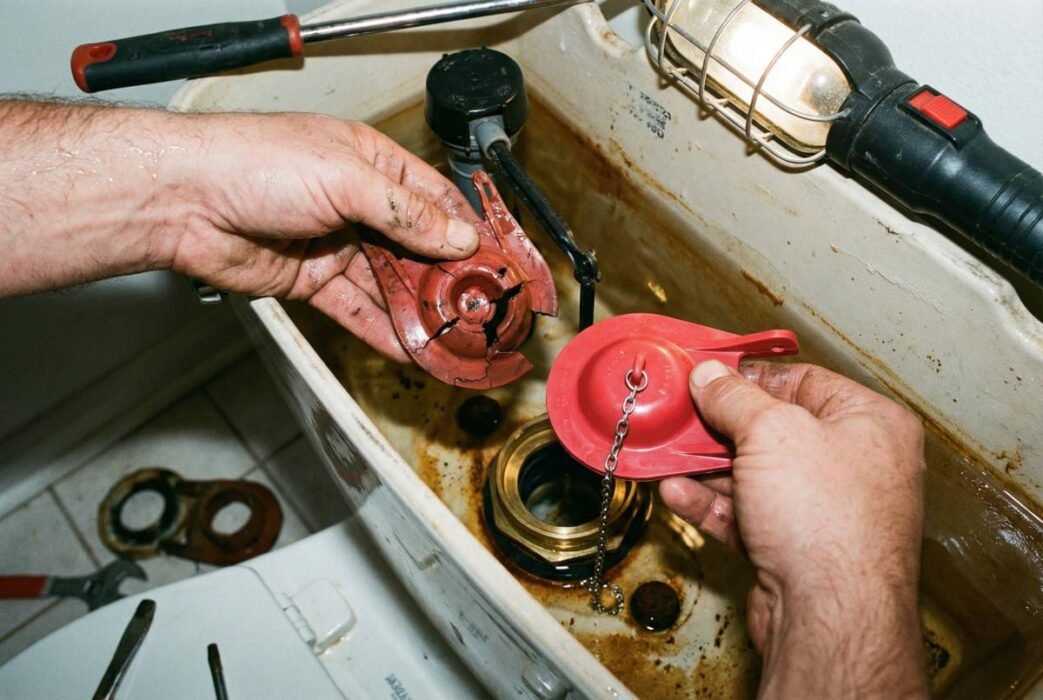
The flapper, a rubber or plastic seal at the bottom of the tank, is a frequent culprit in running toilet scenarios. Over time, flappers can become worn, warped, or accumulate mineral buildup, preventing a complete seal. A misaligned or tangled flapper chain can also hold the flapper open. Home Depot (2023) advises that replacing a damaged flapper is often a quick and inexpensive fix [2].
- Turn off the water supply to the toilet.
- Flush the toilet to drain the tank.
- Unhook the chain from the flush lever and remove the old flapper.
- Clean the flush valve seat thoroughly.
- Install a new flapper, ensuring it is compatible with your toilet model.
- Reattach the chain with a slight amount of slack.
- Turn the water supply back on and test the flush.
Fill Valve and Float Adjustments: Maintaining Proper Water Levels
The fill valve controls the water entering the tank, and the float regulates the water level. If the fill valve is malfunctioning or the float is improperly adjusted, the tank may continuously overfill, causing water to drain into the overflow tube. Adjusting the float mechanism can often resolve this. According to This Old House (2024), ensuring the float is positioned correctly is vital for preventing constant refilling [1].
- Remove the tank lid.
- Lift the fill valve arm; if the water stops, the fill valve needs adjustment.
- Adjust the fill valve screw until the water level is approximately 1/4 inch below the top of the overflow tube.
- Flush the toilet to test the new adjustment.
- If the water does not stop, the fill valve may need cleaning or replacement.
Other Potential Leaks: Overflow Tube and Tank-to-Bowl Connections
Less common but equally problematic issues can include a cracked overflow tube or leaks from the tank-to-bowl connection. A damaged overflow tube allows water to continuously flow into the bowl, while a faulty tank-to-bowl gasket can cause external leaks. Inspecting these components for visible damage or corrosion is essential for a comprehensive repair. Home Depot (2023) recommends checking for water around the base of the toilet as an indicator of external leaks [2].
| Problem Area | Symptoms | Solution |
|---|---|---|
| Flapper | Constant running, slow leak into bowl | Replace worn flapper, adjust chain |
| Fill Valve | Tank overfilling, constant running | Adjust float, clean or replace fill valve |
| Overflow Tube | Water continuously flows into bowl | Check for cracks, ensure proper water level |
| Tank-to-Bowl Connection | External leaks around toilet base | Tighten nuts, replace gasket |
Preventive Maintenance: Avoiding Future Toilet Issues
Regular maintenance can significantly extend the life of your toilet components and prevent future running toilet problems. Avoiding harsh chemical cleaners, which can degrade rubber parts, and annually cleaning the tank to prevent mineral buildup are effective strategies. Promptly replacing worn-out components and regularly inspecting the toilet for signs of wear or damage can help maintain its efficiency. According to This Old House (2024), consistent upkeep minimizes potential issues and conserves water [1].
Frequently Asked Questions
Q: Why does my toilet keep running after flushing?
A: Your toilet likely keeps running after flushing due to a faulty flapper that isn’t sealing properly, an improperly adjusted fill valve, or a float that is set too high, causing the tank to continuously refill.
Q: How do I know if my flapper is bad?
A: To check your flapper, add a few drops of food coloring to the toilet tank. If the color appears in the bowl without flushing, your flapper is likely worn out and needs replacement.
Q: Can a running toilet increase my water bill?
A: Yes, a running toilet can significantly increase your water bill by wasting hundreds of gallons of water per day, depending on the severity of the leak.
Q: Is it easy to fix a running toilet myself?
A: Many running toilet issues are simple DIY repairs that can be fixed with basic tools and minimal plumbing knowledge, such as replacing a flapper or adjusting a float.
Q: When should I call a plumber for a running toilet?
A: You should call a plumber if you’ve attempted basic DIY fixes without success, if there are visible cracks in the toilet tank or bowl, or if you’re uncomfortable performing the repair yourself.
Conclusion
Resolving a running toilet issue is a straightforward task that can save water and reduce utility costs. By systematically diagnosing the problem and addressing common culprits like faulty flappers, misaligned fill valves, or improper float settings, homeowners can restore their toilet’s efficiency. Regular maintenance and timely repairs are key to preventing future problems and ensuring a well-functioning plumbing system.
References
- [1] This Old House. (2024). How To Fix a Running Toilet. https://www.thisoldhouse.com/plumbing/how-to-fix-a-running-toilet
- [2] Home Depot. (2023). How To Fix a Running Toilet. https://www.homedepot.com/c/ah/how-to-fix-a-running-toilet/9ba683603be9fa5395fab90138bd8691
