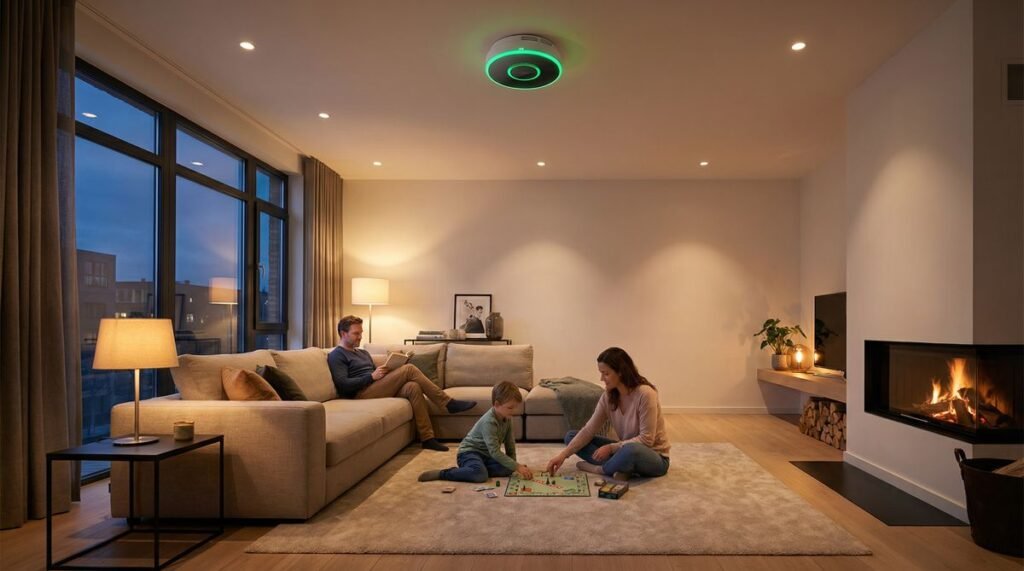
In an era where technology seamlessly integrates into every facet of our lives, home safety has evolved beyond traditional alarms. The best smart smoke detectors represent a significant leap forward, offering not just an audible warning but a connected, intelligent layer of protection for your home. This article delves into the world of smart smoke detection, exploring how these devices enhance safety, their underlying technologies, essential maintenance, and what the future holds for this vital segment of smart home security. We aim to provide a comprehensive guide for homeowners seeking to make informed decisions about safeguarding their most valuable asset with reliable smart smoke detectors.
Why Upgrade to a Smart Smoke Detector?
Smart smoke detectors offer a proactive and integrated approach to home safety, providing real-time alerts, remote monitoring capabilities, and seamless integration with other smart home devices, significantly enhancing traditional fire and carbon monoxide detection systems. These advanced features move beyond the basic audible alarm, offering peace of mind through constant connectivity and intelligent responses to potential threats.
Beyond the Beep: Advanced Notifications and Remote Monitoring
Traditional smoke alarms, while essential, are limited to sounding a local siren. Smart smoke detectors, however, leverage Wi-Fi or other wireless protocols to send instant notifications directly to your smartphone, no matter where you are. This means you can be alerted to a potential fire or carbon monoxide leak even when away from home, allowing for quicker response times and potentially mitigating damage. Many models also offer voice alerts, specifying the type of hazard and its location, which can be crucial in an emergency. This remote monitoring capability transforms a passive warning system into an active guardian, keeping you informed and in control. These smart smoke detectors with app control provide crucial alerts and peace of mind.
Integrated Safety: Connecting with Your Smart Home Ecosystem
The true power of smart smoke detectors lies in their ability to integrate with your broader smart home ecosystem. Imagine a scenario where a smart smoke detector not only sounds an alarm but also triggers your smart lights to flash, unlocks smart doors for easier escape, and even shuts down your HVAC system to prevent the spread of smoke. Devices compatible with platforms like Google Home, Amazon Alexa, or Apple HomeKit can create a synchronized safety network. This interconnectivity ensures that all your smart devices work in concert to protect your home and family, offering a level of coordinated response that traditional alarms cannot match. This makes smart smoke detectors that work with Google Home, Nest, Alexa, or Apple HomeKit highly desirable.
Decoding Smart Smoke Detector Technology
Understanding the technological underpinnings of smart smoke detectors, including their sensor types and power sources, is crucial for selecting a device that offers optimal protection tailored to your home’s specific needs and existing infrastructure. Different sensor technologies excel at detecting various types of fires, while power options dictate installation flexibility and long-term maintenance.
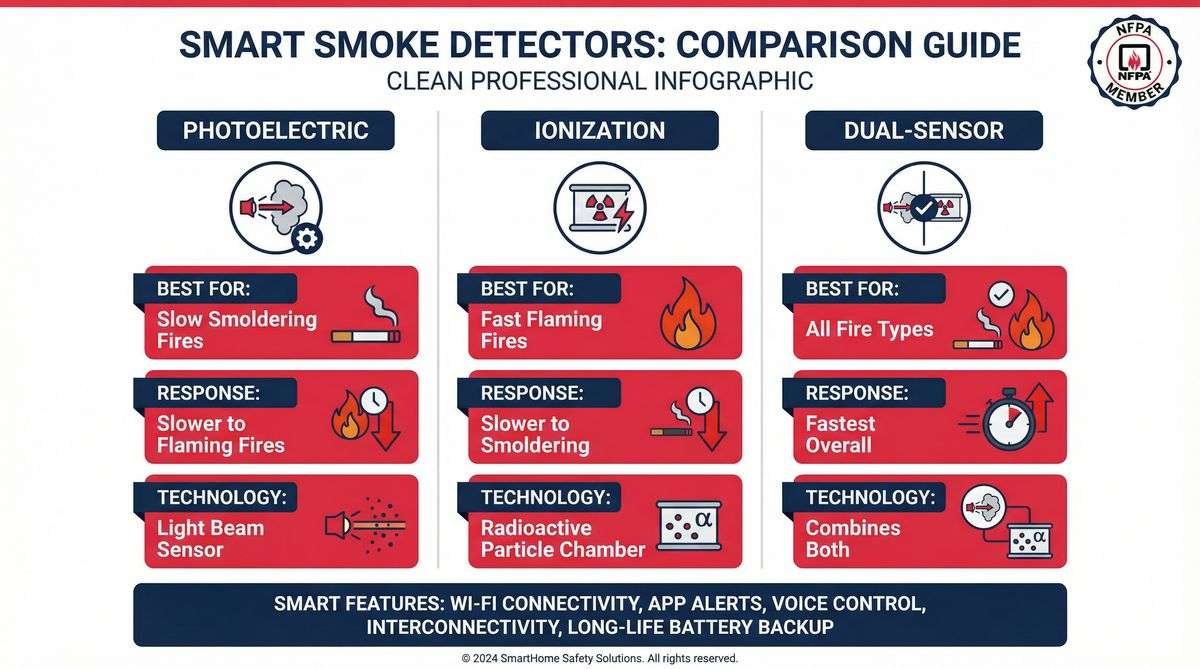
Sensor Showdown: Photoelectric vs. Ionization vs. Dual-Sensor
Smoke detectors primarily utilize two types of sensors: photoelectric and ionization. Photoelectric sensors are generally more effective at detecting slow, smoldering fires that produce large amounts of smoke, such as those caused by cigarettes or electrical wiring. Ionization sensors, conversely, are quicker to respond to fast, flaming fires that produce less visible smoke but more invisible combustion particles, like kitchen grease fires. For comprehensive protection, many experts recommend installing both types or opting for a dual-sensor model that combines both technologies. Some advanced smart detectors also incorporate split-spectrum sensors, which use two wavelengths of light to detect a wider range of smoke particles, offering enhanced accuracy and fewer false alarms.
Powering Your Protection: Wired, Battery, and Plug-in Options
Smart smoke detectors come with various power options, each with its own advantages. Hardwired detectors are integrated into your home’s electrical system, often with a battery backup, ensuring continuous power. These are common in newer constructions and offer reliable, long-term operation without frequent battery changes. Battery-powered models offer flexibility in placement, as they don’t require electrical wiring, making them ideal for older homes or areas without existing wiring. These typically use replaceable batteries (9-volt or AA) or sealed lithium batteries designed to last up to 10 years. Plug-in detectors, similar to hardwired, draw power from an outlet but also include battery backup. The choice of power source often depends on your home’s existing setup and your preference for installation and maintenance. Consider wired vs. battery-powered smart smoke detectors based on your home’s needs.
Smart Smoke Detector Maintenance and Longevity: A Long-Term View
Effective maintenance and an understanding of the lifespan of smart smoke detectors are paramount to ensuring their continuous and reliable operation, extending beyond simple battery replacements to encompass regular cleaning, testing, and timely upgrades. Proactive care guarantees that these critical safety devices remain vigilant guardians of your home.
Beyond Battery Changes: Ensuring Optimal Performance
While smart smoke detectors often alert you to low battery levels, maintenance extends beyond just swapping out power sources. Regular cleaning is essential to prevent dust and debris from accumulating in the sensor chambers, which can lead to false alarms or, worse, impaired detection. Manufacturers typically recommend gently vacuuming or wiping the exterior of the detector. Monthly testing, usually by pressing a test button, confirms that the alarm and its notification systems are functioning correctly. Additionally, checking for firmware updates is crucial for smart devices, as these updates often include security patches, performance enhancements, and new features that keep your detector operating at its best. Smart smoke detectors with low battery alerts are a key feature for proactive maintenance.
The Lifespan of Safety: When to Replace Your Smart Detector
Like all electronic devices, smart smoke detectors have a finite lifespan. Most manufacturers and safety organizations recommend replacing smoke detectors every 10 years, regardless of whether they appear to be working. This recommendation is based on the degradation of internal components and sensors over time, which can reduce their effectiveness. Carbon monoxide sensors often have a shorter lifespan, typically 5-7 years. It is vital to check the manufacturing date on your device and adhere to replacement guidelines to ensure your home remains protected by fully functional equipment. Ignoring these recommendations can leave your home vulnerable to undetected hazards.

The Future of Fire Safety: Emerging Trends in Smart Detection
The landscape of smart smoke detection is rapidly evolving, with advancements in artificial intelligence, the Internet of Things, and predictive analytics poised to revolutionize how we anticipate and respond to fire and carbon monoxide threats. These innovations promise not just detection, but proactive prevention and comprehensive environmental monitoring, moving towards more intelligent and holistic home safety solutions.
AI, IoT, and Predictive Analytics: The Next Generation
Future smart smoke detectors are expected to integrate even more sophisticated AI and machine learning algorithms. These systems could learn your home’s unique environmental patterns, differentiating between cooking smoke and a genuine fire, thereby drastically reducing false alarms. The Internet of Things (IoT) will further enhance interconnectivity, allowing detectors to communicate seamlessly with a wider array of smart devices and even local emergency services. Predictive analytics could analyze data from various sensors—temperature, humidity, air quality—to identify potential fire risks before they escalate, offering early warnings based on subtle environmental changes. This shift from reactive detection to proactive prediction will redefine home safety. Smart smoke detectors that monitor air quality will become increasingly common.
Air Quality Monitoring: A Holistic Approach to Home Health
Beyond fire and carbon monoxide, emerging smart detectors are beginning to incorporate comprehensive air quality monitoring. These devices can detect volatile organic compounds (VOCs), particulate matter, and other airborne pollutants, providing a holistic view of your home’s indoor environment. By integrating air quality data with fire safety, these next-generation detectors offer a more complete picture of home health and safety. For instance, poor air quality could trigger ventilation systems or alert you to potential issues that, while not immediately life-threatening, contribute to long-term health concerns. This integrated approach transforms the smoke detector into a central hub for environmental awareness and protection.
Frequently Asked Questions About Smart Smoke Detectors
How do smart smoke detectors work?
Smart smoke detectors operate by using sensors to detect smoke or carbon monoxide, then wirelessly connecting to your home’s Wi-Fi network to send alerts to your smartphone and integrate with other smart home devices. They typically employ photoelectric or ionization sensors for smoke, and electrochemical sensors for carbon monoxide, providing both audible alarms and digital notifications.
Do smart smoke detectors detect carbon monoxide?
Many smart smoke detectors are combination units designed to detect both smoke and carbon monoxide (CO), utilizing separate sensors for each threat to provide comprehensive protection. It is important to check the product specifications to confirm if a particular model includes CO detection capabilities.
Can smart smoke detectors be interconnected?
Yes, most smart smoke detectors can be interconnected, either wirelessly or through hardwiring, ensuring that when one alarm detects a hazard, all connected alarms in the system activate simultaneously. This feature is crucial for larger homes, providing earlier and more widespread warnings.
What features should I look for in a smart smoke detector?
Key features to consider include dual smoke and carbon monoxide detection, reliable smartphone notifications, voice alerts for hazard identification, integration with your existing smart home ecosystem, and a long-lasting battery or hardwired option. Additional features like nightlights, air quality monitoring, and easy hush functions can also enhance usability and safety.
How do I install a smart smoke detector?
Installation typically involves mounting the device on a ceiling or high on a wall, connecting it to power (either hardwired or battery), and then pairing it with your home’s Wi-Fi network and a companion smartphone app for setup and monitoring. Always follow the manufacturer’s specific instructions for safe and effective installation.
Conclusion
Investing in smart smoke detectors is a pivotal step towards fortifying your home’s safety infrastructure. These devices transcend the limitations of conventional alarms, offering a sophisticated blend of immediate alerts, remote accessibility, and seamless integration with the smart home ecosystem. By understanding the nuances of sensor technology, power options, and the critical importance of regular maintenance and timely replacement, homeowners can select and deploy systems that provide unparalleled protection. As technology continues to advance, the future promises even more intelligent and proactive safety solutions, ensuring that our homes remain not just smart, but supremely safe. The peace of mind that comes with knowing your home is continuously monitored and protected by cutting-edge technology is, ultimately, invaluable. For a comprehensive smart smoke detector buying guide, consider these factors.
References
National Fire Protection Association (NFPA) – Smoke Alarms: Facts and Figures
Centers for Disease Control and Prevention (CDC) – Carbon Monoxide Poisoning
Underwriters Laboratories (UL)
Intertek Electrical Testing Labs (ETL)
