
Investing in rental properties can be a lucrative venture, offering a steady stream of income and potential for long-term appreciation. However, success hinges on a clear understanding of your investment’s financial performance, notes Gregory Property Management specialists. The key metric for this is Return on Investment (ROI).
Knowing how to calculate rental property ROI is fundamental for any real estate investor. It helps you evaluate potential acquisitions, assess the performance of existing properties, and make informed decisions to maximize your profits. This guide will walk you through the essential steps and formulas to accurately determine your rental property’s ROI.
What is Rental Property ROI?
Return on Investment (ROI) is a performance measure used to evaluate the efficiency or profitability of an investment. In real estate, it quantifies the financial gain or loss in relation to the initial cost of the investment. A higher ROI generally indicates a more profitable investment.
Calculating ROI allows investors to compare different investment opportunities and allocate capital wisely. It’s a critical tool for assessing the financial viability of a rental property before and after purchase.
Key Components for Calculating ROI
To accurately calculate rental property ROI, you need to consider several financial components. These typically fall into two main categories: initial investment costs and ongoing income/expenses.
Initial Investment Costs
- Purchase Price: The actual price paid for the property.
- Closing Costs: Fees associated with the purchase, such as legal fees, title insurance, and loan origination fees.
- Renovation/Repair Costs: Any expenses incurred to make the property ready for rental.
- Down Payment: The initial cash payment made towards the property purchase.
Ongoing Income and Expenses
- Rental Income: The total rent collected from tenants.
- Operating Expenses: Regular costs like property taxes, insurance, property management fees, maintenance, and utilities (if paid by the owner).
- Vacancy Rate: The percentage of time a property is vacant and not generating income.
Methods to Calculate Rental Property ROI
There are several common methods to calculate rental property ROI, each offering a slightly different perspective on your investment’s performance. The two most widely used are the Capitalization Rate (Cap Rate) and the Cash-on-Cash Return.
1. Capitalization Rate (Cap Rate)
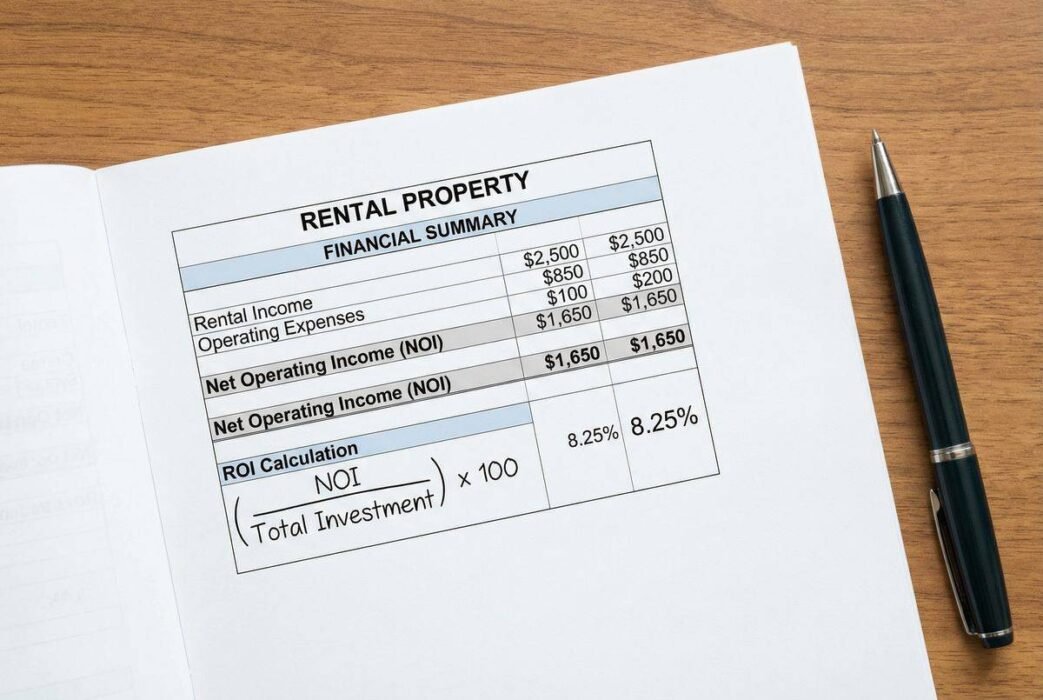
The Cap Rate is a quick way to estimate the potential return on an investment property. It’s particularly useful for comparing similar properties and is calculated by dividing the net operating income (NOI) by the property’s current market value or purchase price.
Formula:
Cap Rate = Net Operating Income / Current Market Value (or Purchase Price)
Example:
If a property generates an NOI of $15,000 per year and its purchase price was $200,000, the Cap Rate would be:
$15,000 / $200,000 = 0.075 or 7.5%
2. Cash-on-Cash Return
Cash-on-Cash Return measures the annual pre-tax cash flow generated by the property against the actual cash invested. This method is especially relevant for investors who use financing, as it focuses on the cash outlay rather than the total property value.
Formula:
Cash-on-Cash Return = Annual Pre-Tax Cash Flow / Total Cash Invested
Example:
Suppose your annual pre-tax cash flow is $10,000, and your total cash invested (down payment + closing costs + renovation) is $50,000. The Cash-on-Cash Return would be:
$10,000 / $50,000 = 0.20 or 20%
Advanced ROI Considerations
While Cap Rate and Cash-on-Cash Return provide excellent foundational insights, a comprehensive understanding of rental property ROI involves considering additional factors that can impact your returns over time.
Leverage and Financing
Using borrowed money (leverage) can significantly amplify your ROI. While it increases potential returns, it also introduces risk. Understanding how mortgage payments and interest rates affect your cash flow is crucial for an accurate ROI calculation.
Appreciation and Equity Growth
Beyond rental income, properties can appreciate in value over time, increasing your equity. While not a direct cash flow, this growth contributes to your overall wealth and should be considered in long-term ROI assessments. However, it’s important to note that appreciation is not guaranteed and can fluctuate.
Tax Benefits
Rental property ownership often comes with various tax deductions, such as depreciation, mortgage interest, and property taxes. These benefits can reduce your taxable income, effectively increasing your net returns. Consulting with a tax professional is advisable to fully understand these advantages.
Common ROI Calculation Mistakes to Avoid
Even experienced investors can make errors when calculating ROI. Being aware of these pitfalls can help ensure your calculations are as accurate as possible.
| Mistake | Impact on ROI Calculation | How to Avoid |
|---|---|---|
| Ignoring Vacancy Rates | Overestimates rental income and thus ROI. | Factor in a realistic vacancy rate (e.g., 5-10%) based on local market conditions. |
| Underestimating Repair Costs | Inflates net operating income and ROI. | Budget for unexpected repairs and ongoing maintenance. Consider a capital expenditure reserve. |
| Forgetting Closing Costs | Understates total cash invested, leading to an artificially high Cash-on-Cash Return. | Include all closing costs in your initial investment calculation. |
| Not Accounting for Property Management Fees | Overstates net operating income if you plan to use a property manager. | Include property management fees as an operating expense if applicable. |

Frequently Asked Questions about Rental Property ROI
How often should I calculate rental property ROI?
It’s advisable to calculate ROI annually to track performance and make adjustments. You should also calculate it before purchasing a property and after any significant renovations or changes in market conditions.
Is a high ROI always good?
While a high ROI is generally desirable, it’s essential to consider the associated risks. Sometimes, higher returns come with higher risks. A balanced approach, considering both return and risk, is crucial.
What is a good ROI for rental property?
A “good” ROI can vary significantly based on location, property type, market conditions, and investor goals. Many investors aim for a cash-on-cash return of 8-12% or higher, but this is not a universal benchmark. It’s best to compare against similar properties in your target market.
Does ROI include property appreciation?
Traditional ROI calculations like Cap Rate and Cash-on-Cash Return primarily focus on cash flow. While property appreciation contributes to overall wealth, it’s often considered separately or as part of a broader total return calculation, as it’s not a guaranteed annual income.
Conclusion: Empowering Your Investment Decisions
Understanding how to calculate rental property ROI is more than just crunching numbers; it’s about empowering yourself with the knowledge to make strategic investment decisions. By diligently assessing initial costs, ongoing expenses, and potential income, you can accurately gauge the profitability of your real estate ventures.
Whether you’re a seasoned investor or just starting, mastering these calculations will provide a clear financial picture, helping you identify lucrative opportunities and mitigate risks. Use these tools to build a robust and profitable rental property portfolio.
