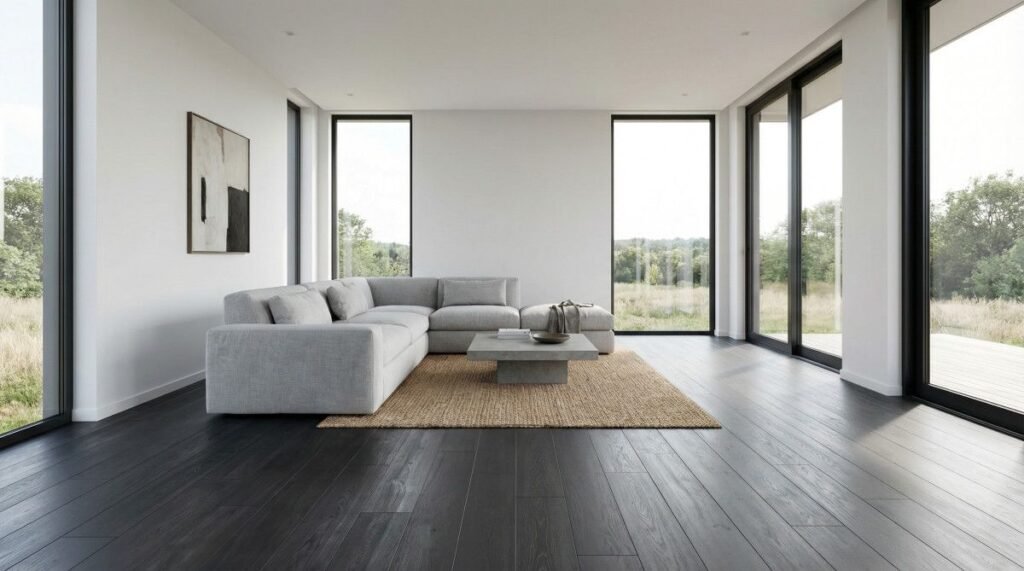
Dark flooring does not inherently make a room look smaller, provided it is balanced with light walls and adequate illumination. While dark colors absorb more light than lighter shades, they also provide a strong visual anchor that can make walls appear to recede. When paired with high-contrast elements, dark floors create a sense of depth and sophisticated openness in any space, observes Real Property Management Peace specialists.
The perception of room size is a complex interaction between color, light, and contrast. Many homeowners fear that choosing a dark walnut or deep charcoal floor will result in a cramped, cave-like atmosphere. However, interior designers often use dark flooring to ground a room, allowing the eye to focus on the vertical space and the brightness of the ceiling and walls.
To achieve a spacious feel with dark floors, one must consider the entire color palette of the room. A dark floor acts as a foundation, and when the surrounding surfaces are significantly lighter, the contrast creates a visual boundary that defines the space without shrinking it. This technique is particularly effective in modern and minimalist designs where clean lines and open layouts are prioritized.
The Role of Contrast in Spatial Perception
Contrast is the most critical factor in determining whether dark flooring makes a room feel smaller or larger. When dark floors are paired with dark walls, the space can feel enclosed and intimate, which may be perceived as smaller. Conversely, pairing dark floors with light-colored walls and ceilings creates a stark contrast that pushes the boundaries of the room outward visually.
High contrast between the floor and the walls helps the human eye distinguish between different planes of the room. This distinction prevents the surfaces from blending together, which is often what causes a room to feel “closed in.” By keeping the walls in shades of off-white, light gray, or soft beige, the dark floor becomes a dramatic feature that enhances the overall sense of scale.
The following table illustrates how different contrast levels between floors and walls impact the perceived size and atmosphere of a room.
| Floor Color | Wall Color | Perceived Room Size | Atmospheric Effect |
|---|---|---|---|
| Dark Espresso | Pure White | Larger / Open | Modern and Airy |
| Deep Charcoal | Light Gray | Neutral / Balanced | Sophisticated and Grounded |
| Dark Walnut | Navy Blue | Smaller / Intimate | Cozy and Enclosed |
| Black Oak | Soft Beige | Larger / Defined | Elegant and Spacious |
Using a light-colored area rug can also break up a large expanse of dark flooring. This adds another layer of contrast and prevents the floor from feeling like a heavy, monolithic block. Rugs with subtle patterns or textures can further enhance the visual interest without overwhelming the small space.
How Lighting Counteracts Dark Floor Absorption
Lighting plays a pivotal role in how dark flooring affects the perceived dimensions of a room because dark surfaces absorb light rather than reflecting it. To prevent a room from feeling small, it is essential to supplement the space with multiple light sources, including natural sunlight, overhead fixtures, and accent lighting. Bright, well-distributed light ensures that the dark floor does not create shadows that shrink the room.
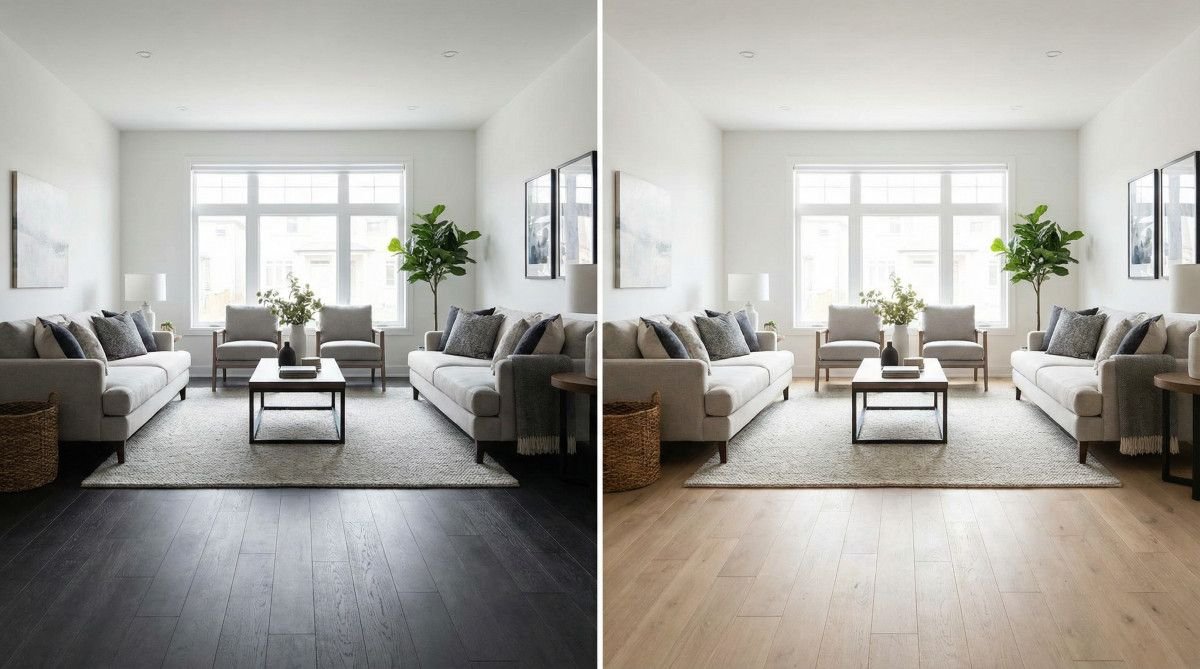
Natural light is the most effective tool for opening up a space with dark floors. Large windows or glass doors allow sunlight to wash over the dark surface, highlighting the natural grain and texture of the material. This illumination prevents the floor from appearing as a flat, dark void and instead gives it a rich, three-dimensional quality that adds character to the room.
Artificial lighting should be layered to provide even coverage across the entire space. Recessed ceiling lights can provide broad illumination, while floor lamps and wall sconces can target specific areas to eliminate dark corners. Using bulbs with a higher lumen count and a neutral color temperature can mimic the effects of natural daylight, further enhancing the spacious feel of the dark flooring.
Mirrors are another excellent way to bounce light around a room with dark floors. Placing a large mirror opposite a window or a light source can double the amount of light in the space. This reflection not only brightens the room but also creates a visual illusion of more depth, effectively counteracting any light absorption from the dark floor.
Best Wall Colors to Pair with Dark Flooring
Selecting the right wall color is essential for maintaining a sense of space when installing dark flooring in a small room. Light, cool-toned colors are generally the best choice because they reflect the most light and appear to recede from the viewer. This creates a visual gap between the dark floor and the walls, which helps the room feel more expansive and less restricted.
While white is a classic choice, other light shades can also work effectively to balance dark floors. Soft blues, pale greens, and light lavenders can add a touch of color while still providing the necessary contrast. These cool tones have a calming effect and can make the walls feel further away than they actually are, which is a key strategy in small-space design.
The table below compares various wall color categories and their specific impact when paired with dark flooring materials.
| Wall Color Category | Recommended Shades | Impact on Dark Floors | Best For |
|---|---|---|---|
| Cool Neutrals | Cool Gray, Icy Blue | Maximizes perceived space | Small Bedrooms |
| Warm Neutrals | Cream, Sand, Beige | Adds warmth and balance | Living Rooms |
| Pure Whites | Alabaster, Snow | Highest contrast and brightness | Modern Kitchens |
| Soft Pastels | Mint, Pale Rose | Subtle color without shrinking | Nurseries or Offices |
Avoid using mid-tone colors that are too close in value to the dark floor. If the walls and floors are both medium-to-dark, the room will lack the necessary contrast to define its boundaries. This lack of definition is what leads to the perception of a smaller, more cramped environment. Stick to the extremes of the color spectrum for the best results.
Impact of Plank Width and Installation Direction
The physical dimensions and layout of the flooring material can influence room perception just as much as the color itself. For dark flooring, using wider planks can actually make a small room look larger because there are fewer seam lines to clutter the visual field. Fewer lines mean a cleaner, more continuous surface that allows the eye to move across the room without interruption.
The direction in which the planks are installed also matters significantly. Laying the boards parallel to the longest wall in the room can draw the eye along the length of the space, making it feel longer. Alternatively, installing flooring diagonally can trick the eye into seeing a wider space, as the longest lines in the room are now the diagonal ones.
In very small or narrow rooms, consider the “lead-in” effect. This involves laying the planks so they lead away from the entrance of the room. This orientation encourages the viewer to look deep into the space as soon as they enter, creating an immediate sense of depth. When combined with a dark color, this technique provides a sophisticated and intentional look that feels expansive.
Consistency is another key factor in making a home feel larger. Using the same dark flooring throughout multiple connected rooms creates a seamless transition that blurs the boundaries between spaces. This lack of visual breaks makes the entire floor plan feel like one large, continuous area rather than a series of small, disconnected boxes.
Practical Considerations for Dark Floors in Small Areas
While the aesthetic impact of dark flooring is a primary concern, practical maintenance also plays a role in how the floor is perceived over time. Dark floors tend to show dust, pet hair, and scratches more easily than lighter floors. In a small room, these imperfections can become more noticeable and may contribute to a cluttered or unkempt feeling if not properly managed.
Choosing a flooring material with a matte or satin finish can help hide some of these daily messes. High-gloss finishes reflect every speck of dust and every footprint, which can be distracting in a compact space. A matte finish provides a more contemporary look and is much more forgiving when it comes to minor wear and tear, keeping the floor looking clean and expansive.
Regular cleaning is essential for maintaining the deep, rich look of dark floors. Microfiber mops and specialized cleaners for wood or laminate can keep the surface free of debris without leaving streaks. By keeping the floor pristine, you ensure that its dark color remains a deliberate design choice that enhances the room rather than a source of visual clutter.
Protecting the floor from scratches is also vital, especially in high-traffic small rooms. Using felt pads on the bottom of furniture legs and keeping pet nails trimmed can prevent the surface from becoming marred. A well-maintained dark floor retains its elegance and continues to provide the grounding effect that makes a room feel sophisticated and well-proportioned.
Frequently Asked Questions
Do dark floors make a small room look smaller?
Dark floors do not necessarily make a small room look smaller if they are balanced with light-colored walls and plenty of light. The key is to create contrast so the floor acts as a foundation rather than an enclosure. When walls and ceilings are light, the dark floor can actually add depth and make the room feel more open.
What is the best wall color for dark floors?
The best wall colors for dark floors are light neutrals like white, cream, or light gray. These colors provide the highest contrast, which helps to define the space and reflect light. Cool-toned pastels like soft blue or mint can also work well to create a sense of airiness and prevent the room from feeling cramped.
Are dark floors harder to keep clean in small spaces?
Dark floors can be more challenging to keep clean because they show dust, crumbs, and pet hair more clearly than lighter shades. In a small space, these particles are often more visible due to the proximity of the surfaces. Choosing a matte finish and using a microfiber mop regularly can help manage the maintenance of dark flooring.
Can I use dark floors in a room with no windows?
You can use dark floors in a room without windows, but you must be very intentional with artificial lighting. Use a combination of recessed lights, lamps, and wall sconces to ensure the room is bright. Adding mirrors and keeping the walls a very light color will also help to compensate for the lack of natural light and prevent a closed-in feeling.
Does the width of the floor planks matter for small rooms?
Yes, the width of the floor planks matters significantly in small rooms. Wider planks are generally better for dark flooring in small spaces because they create fewer seams. Fewer lines on the floor result in a cleaner, less busy look, which helps the room feel more spacious and less cluttered than it would with narrow strips.
Choosing dark flooring for a small room is a bold design move that can pay off with a sophisticated and grounded atmosphere. By focusing on contrast, lighting, and layout, you can enjoy the rich elegance of dark wood or stone without sacrificing the perceived size of your space. A well-planned room with dark floors can feel just as open and inviting as one with lighter finishes.
