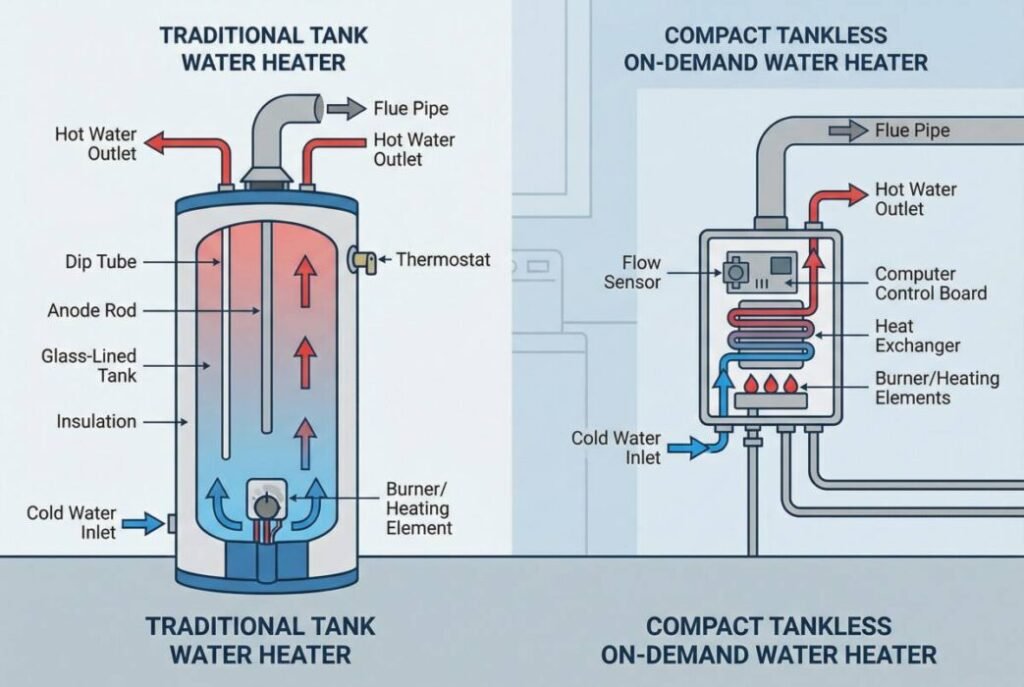
The typical lifespan of a traditional tank-style water heater ranges from 8 to 12 years, while tankless models can last significantly longer, often between 15 to 20 years with proper maintenance. Understanding these durations helps homeowners anticipate replacement needs and maintain efficient hot water supply says Abacus Avenue Property Management Harrison.
Understanding Water Heater Lifespans
The longevity of a water heater varies considerably depending on its type, usage, and maintenance. According to The Home Depot [1], a tank water heater should last six to 12 years with proper maintenance, whereas a tankless water heater can exceed 20 years. This difference is primarily due to the design and operational mechanisms of each system.
Tank-Style Water Heaters
These units store and continuously heat a reservoir of water. Their lifespan is often limited by internal corrosion and sediment buildup. Regular flushing can mitigate these issues, extending the unit’s operational life.
Tankless Water Heaters
Tankless water heaters heat water on demand, eliminating the need for a storage tank. This design reduces the risk of corrosion and sediment accumulation, contributing to their extended lifespan. A.O. Smith [2] states that tankless water heaters typically last 15 to 20 years, nearly double that of traditional tank units.
Factors Influencing Longevity
The longevity of a water heater is significantly influenced by several factors, including water quality, regular maintenance practices, and the quality of its initial installation. These elements collectively determine how long a unit will operate efficiently before requiring replacement, making their understanding crucial for homeowners.
Water Quality
Hard water, rich in minerals like calcium and magnesium, can lead to scale buildup inside the tank and heating elements. This accumulation reduces efficiency and accelerates wear, shortening the water heater’s life. Softening the water can significantly extend the unit’s operational period.
Maintenance Practices
Consistent maintenance, such as annual flushing of tank-style heaters to remove sediment, is crucial. For tankless units, periodic descaling helps prevent mineral buildup in heat exchangers. Neglecting these tasks can drastically reduce the expected lifespan.
Installation Quality
Proper installation ensures the water heater operates efficiently and safely. Incorrect sizing, inadequate venting, or improper connections can stress the system, leading to premature failure. Professional installation is vital for maximizing longevity.
Signs It Is Time to Replace
Identifying the signs of a failing water heater is crucial for timely replacement, preventing unexpected system failures and potential water damage. Key indicators include the unit’s age, visible leaks or rust, and a noticeable decline in heating efficiency or performance, all signaling that replacement may be necessary soon.
Age of the Unit
If a tank-style water heater is approaching or has exceeded its 8-12 year average lifespan, it is wise to consider replacement, even if it appears to be functioning. Older units are more prone to sudden failures and inefficiencies.
Leaks and Rust
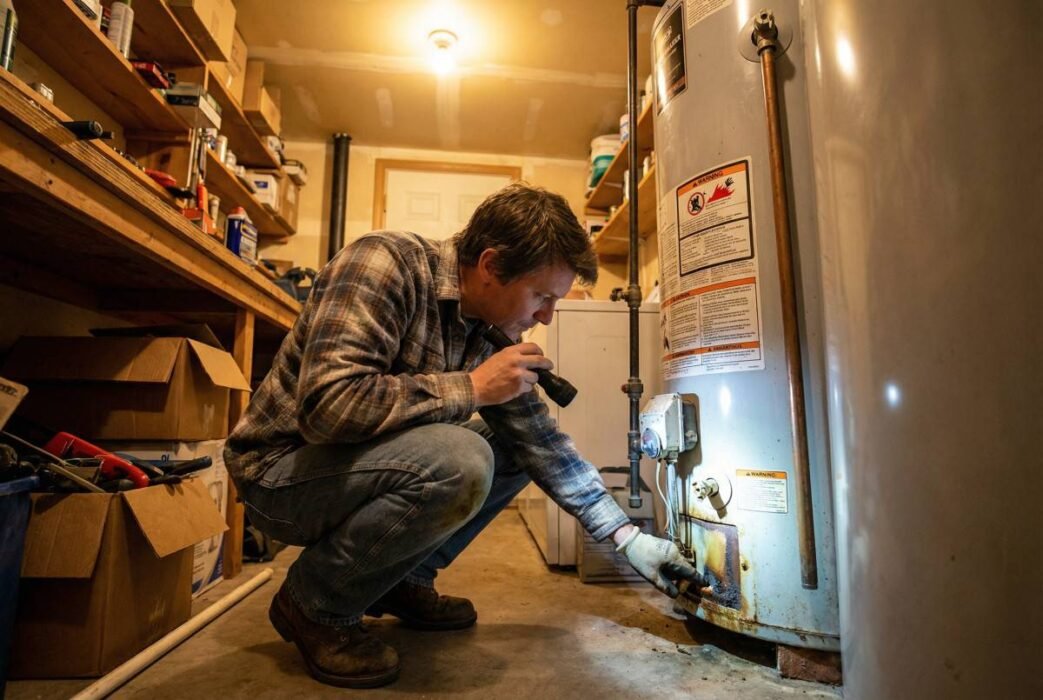
Visible leaks around the base of the tank or rust-colored water indicate internal corrosion, a common issue with aging tank-style heaters. According to ClimateCare [3], leaks are a sure sign the lifespan of a water heater is concluding. These are critical signs that replacement is imminent.
Reduced Efficiency and Performance
A water heater taking longer to heat water, producing less hot water, or making unusual noises (like rumbling or popping) suggests declining efficiency. These symptoms often point to sediment buildup or failing components, making replacement a more economical option than repeated repairs.
Differentiated Modules
Water Heater Lifespan Comparison
| Water Heater Type | Average Lifespan | Key Factors Affecting Lifespan |
|---|---|---|
| Tank-Style (Electric/Gas) | 8-12 years | Water quality, sediment buildup, anode rod condition, maintenance frequency |
| Tankless (Electric/Gas) | 15-20+ years | Water quality, descaling frequency, heat exchanger condition, professional installation |
Maintenance Tips for Extended Lifespan
- Flush tank-style water heaters annually to remove sediment.
- Inspect the anode rod every 3-5 years and replace if significantly corroded.
- Descale tankless water heaters every 1-2 years, especially in hard water areas.
- Check the pressure relief valve annually to ensure proper function.
- Insulate older tanks and hot water pipes to improve efficiency and reduce wear.
Frequently Asked Questions
Q: Can I extend my water heater’s life?
A: Yes, regular maintenance such as flushing the tank, checking the anode rod, and descaling tankless units can significantly prolong its operational life. Proper installation and water quality management also play crucial roles.
Q: What is the most common reason for water heater failure?
A: For tank-style water heaters, internal corrosion and sediment buildup are the most common causes of failure. For tankless units, mineral buildup in the heat exchanger can lead to reduced efficiency and eventual breakdown if not addressed.
Q: How do I know if my water heater is about to fail?
A: Common signs include a unit’s age exceeding its average lifespan, visible leaks or rust-colored water, unusual noises like rumbling, and a noticeable decrease in hot water supply or heating efficiency.
Q: Is it better to repair or replace an old water heater?
A: Generally, if a water heater is nearing the end of its expected lifespan (8-12 years for tank, 15-20 years for tankless) and requires significant repairs, replacement is often the more cost-effective and reliable option. Frequent repairs on an old unit can quickly become more expensive than a new installation.
Understanding the lifespan of your water heater and recognizing the signs of wear are essential for maintaining a reliable hot water supply in your home. Proactive maintenance and timely replacement can prevent unexpected issues and ensure long-term efficiency.
References
- [1] The Home Depot. (2023). *When to Replace a Water Heater*.
- [2] A.O. Smith. (n.d.). *How Long Do Tankless Water Heaters Last?*.
- [3] ClimateCare. (n.d.). *Lifespan of a Water Heater. Is It Time to Replace Yours*.
