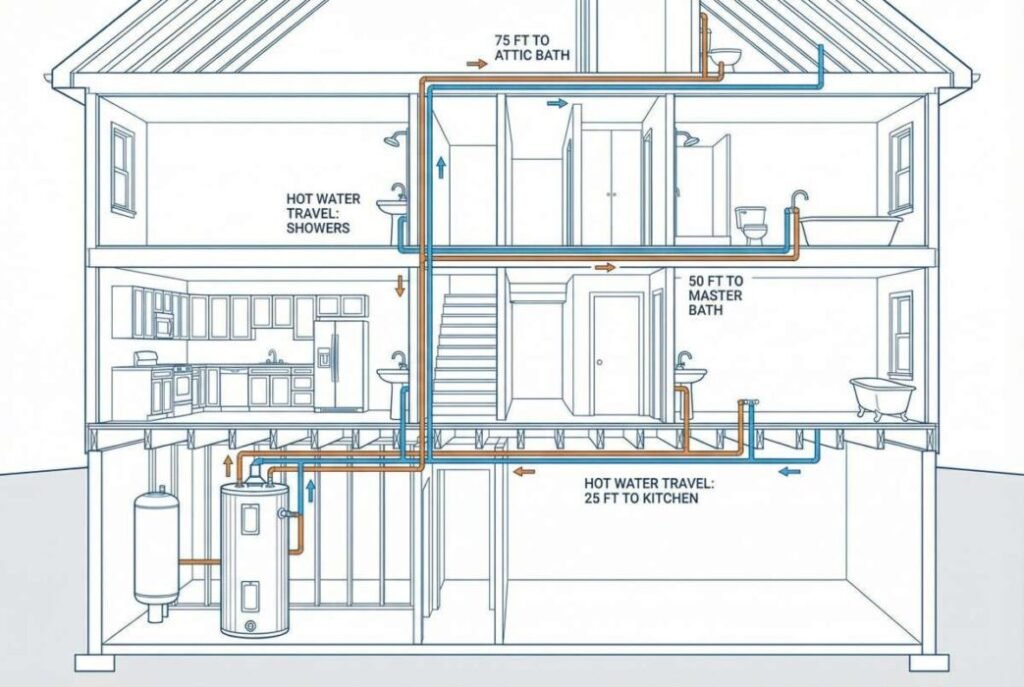
The delay in hot water reaching a faucet is primarily due to the physical distance between the water heater and the fixture, requiring the cold water already present in the pipes to be flushed out before heated water arrives.
Distance from Water Heater and Pipe Volume
The most common reason for a delay in hot water delivery is the length of the plumbing lines connecting the water heater to the faucet. The longer the distance, the more cold water must be expelled from the pipes before the hot water, which is continuously heated at the source, can reach the tap. This volume of water in the pipes directly impacts the waiting time, says 33 Property Management Cardiff.
According to the U.S. Department of Energy (2017), significant heat loss can occur in uninsulated pipes, further contributing to the delay as water cools down while traveling through the system.
Lack of a Hot Water Recirculation System
A hot water recirculation system actively circulates hot water through a dedicated loop or the existing cold water line, ensuring that hot water is readily available at fixtures without significant delay. Without such a system, hot water sits in the pipes and cools down, necessitating a wait for fresh hot water from the heater. These systems can be on-demand or set on a timer.
The Environmental Protection Agency (EPA) (2023) suggests that hot water recirculation systems can reduce water waste by minimizing the amount of cold water run down the drain while waiting for hot water.
Pipe Insulation and Diameter
The material and insulation of your home’s plumbing pipes play a crucial role in how quickly hot water reaches its destination. Uninsulated pipes allow heat to dissipate rapidly, causing the water within them to cool down faster. Additionally, larger diameter pipes hold a greater volume of water, meaning more cold water must be purged before hot water emerges. Proper insulation helps maintain water temperature.
Research published by the American Society of Heating, Refrigerating and Air-Conditioning Engineers (ASHRAE) (2019) indicates that insulating hot water pipes can reduce heat loss by up to 25-40%, improving delivery efficiency.
Type of Water Heater and Sediment Buildup
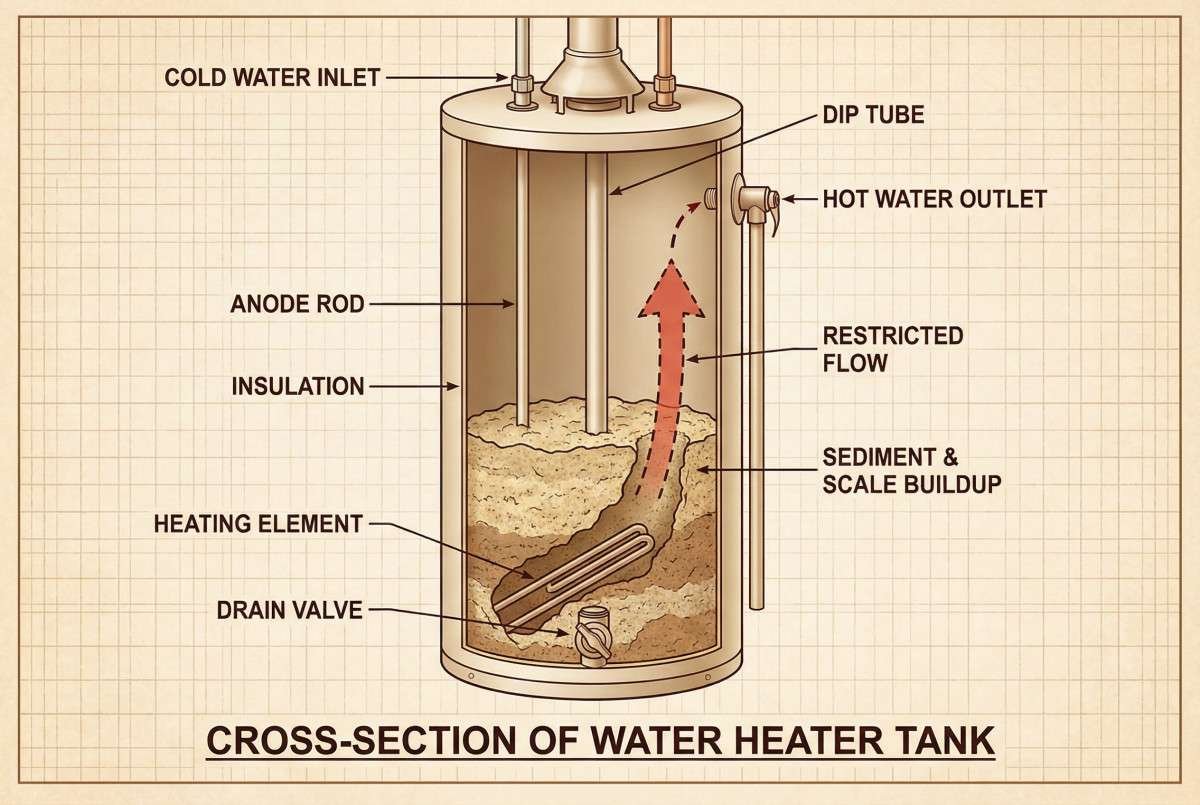
The type of water heater installed can influence hot water delivery times. Tankless water heaters, while energy-efficient, often have a slight delay as they heat water on demand. Traditional tank heaters, conversely, maintain a reservoir of hot water, but sediment buildup within the tank can reduce efficiency and potentially restrict flow. Regular maintenance is essential for optimal performance.
Consumer Reports (2022) advises that flushing a water heater annually can prevent sediment accumulation, which can otherwise impede heating efficiency and water flow.
Modules: Solutions for Faster Hot Water
Module 1: Recirculation System Options
Homeowners have several options for installing hot water recirculation systems:
- Dedicated Return Line System: This system uses a separate return pipe to send cooled water back to the water heater, ensuring a continuous loop of hot water. It is the most efficient but requires additional plumbing.
- Integrated Pump System: These systems use the cold water line as the return path, making them easier to install in existing homes. They often include a pump and a bypass valve.
- On-Demand Systems: Activated by a button or motion sensor, these systems only circulate water when needed, saving energy.
Module 2: Improving Existing Plumbing
To enhance hot water delivery without a full recirculation system, consider these improvements:
| Improvement | Description | Impact on Hot Water Delivery |
|---|---|---|
| Pipe Insulation | Wrapping hot water pipes with insulating material. | Reduces heat loss, keeping water hotter for longer. |
| Smaller Diameter Pipes | Replacing oversized pipes with those of appropriate diameter. | Decreases the volume of cold water to be flushed. |
| Water Heater Maintenance | Regular flushing of tank heaters to remove sediment. | Improves heating efficiency and flow. |
FAQ
Q: How can I make my hot water come faster without major renovations?
A: Insulating your hot water pipes is a cost-effective way to reduce heat loss and speed up hot water delivery. You can also consider an on-demand hot water recirculation pump that uses existing plumbing.
Q: Does a tankless water heater solve the slow hot water problem?
A: While tankless water heaters provide an endless supply of hot water, they still have a slight delay as water needs to travel from the unit to the faucet and be heated on demand. The distance remains a factor.
Q: What is the ideal distance between a water heater and a faucet?
A: There isn’t an “ideal” distance, but minimizing the distance between the water heater and frequently used hot water fixtures will naturally reduce waiting times. Centralizing the water heater or installing point-of-use heaters are solutions.
Q: Can low water pressure affect hot water delivery time?
A: Yes, low water pressure can exacerbate the issue of slow hot water delivery. If water flows slowly, it takes longer for the cold water in the pipes to be pushed out and replaced by hot water from the heater.
Q: How often should I flush my water heater?
A: Most manufacturers and plumbing experts recommend flushing your tank-style water heater annually to remove sediment buildup, which can improve efficiency and hot water delivery.
Understanding the factors that contribute to delayed hot water can help homeowners implement effective solutions. From optimizing plumbing layouts to installing recirculation systems, various approaches can significantly reduce waiting times and improve overall hot water accessibility in a residence.
