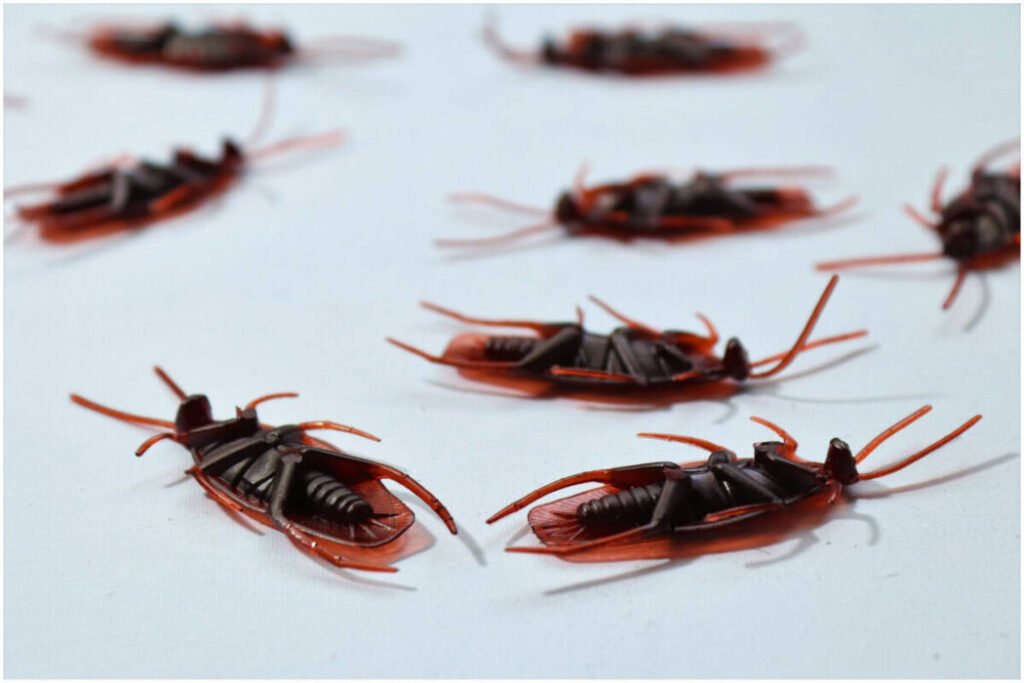
You killed twenty roaches in your kitchen last Tuesday. By Friday, twelve more showed up.
The problem isn’t your cleaning, says Arise Real Estate Management professionals. The colony lives in the wall between you and the neighbor who leaves pizza boxes on the floor.
Apartment complexes are roach highways. Shared plumbing chases, electrical conduits, and the half-inch gap under your front door all serve as transit corridors.
A German cockroach population can double every 28 days. You can turn your unit into a fortress and still lose if the building isn’t treated as a whole.
Here’s the layered approach that actually works: kill the ones inside, block the ones outside, and force your landlord to do their part. In that order.
Why Apartment Roaches Are Harder Than House Roaches
In a single-family home, you control the perimeter. In an apartment complex, you share walls, floors, ceilings, and plumbing with units you’ve never seen.
A neighbor three doors down can sustain an infestation that keeps sending scouts into your kitchen. Doesn’t matter how clean you are.
German cockroaches are the small, tan, fast ones you’re almost certainly dealing with. They travel through wall voids via plumbing and electrical penetrations.
According to the EPA, a single female German cockroach produces four to eight egg capsules in her lifetime. Each capsule holds roughly 40 eggs. That is up to 320 offspring from one cockroach. In a building with 100 units and a few untreated kitchens, the math gets ugly fast.
The building’s design works against you. Shared drain lines connect every sink on a vertical stack. The warm compressor cavity behind your refrigerator borders the neighbor’s unit. The gap around the pipe under your bathroom sink opens directly into the wall void.
Roaches navigate this infrastructure the way you navigate hallways. Except they can fit through a gap the thickness of a nickel.
Step One: Kill Everything Already Inside Your Apartment
Before you seal anything, crash the population that’s already here. A pregnant female behind your stove will restart the infestation even after you block every entry point.
Gel Baits: The Gold Standard
Gel baits contain a slow-acting insecticide mixed with an attractive food base. A roach eats the gel, returns to the harborage, dies, and gets eaten by other roaches.
Those roaches then die from secondary poisoning. One application can cascade through a hidden colony over about two weeks.
Apply pea-sized dots under the lip of your countertops, along cabinet door hinges, behind the refrigerator, and anywhere you’ve seen roach droppings. Those droppings look like ground black pepper.
Combat Max and Advion are two brands pest control professionals consistently name. Don’t smear the gel. Dots give roaches more feeding stations and prevent them from avoiding a large blob.
Boric Acid: Cheap, Slow, Effective
Mix equal parts boric acid powder and confectioners’ sugar. The sugar draws roaches in, and the boric acid adheres to their legs and body.
When roaches groom themselves, they ingest it. Boric acid disrupts their digestive system and kills them, usually within 72 hours of ingestion.
Apply a thin, barely visible layer along baseboards, under the sink, behind appliances, and inside cabinet corners. The operative word is thin.
If roaches can see a pile of powder, they walk around it. A light dusting they barely notice is far more lethal.
Don’t put boric acid on countertops or anywhere food touches. If you have pets or small children, skip this method entirely.
Diatomaceous Earth: The Desiccation Play
Food-grade diatomaceous earth is fossilized algae ground into a fine powder. At the microscopic level, the particles are sharp-edged silica that cut through a roach’s waxy exoskeleton.
Once that protective coating is breached, the roach dehydrates and dies. It’s a mechanical killer. No resistance can ever develop.
Apply it in thin layers using a bulb duster. Target cracks, crevices, behind appliances, and along baseboards.
Diatomaceous earth stops working when wet, so reapply after mopping or if your bathroom gets humid. Expect results in two to three weeks. This is not the fast option, but it’s the safest one for households with kids and pets.
Sticky Traps: Monitoring, Not Eradication
Glue traps won’t solve an infestation. What they do is tell you where the infestation is concentrated and whether your treatments are working.
Place traps in corners, behind the refrigerator, under sinks, and near plumbing penetrations. Check them every two days.
If the count drops week over week, your bait and dust strategy is working. If it stays flat or rises, either you missed a harborage or the source is in a neighboring unit.
Step Two: Seal Every Entry Point You Can Reach
Roaches follow edges. They navigate by touch, keeping one side of their body pressed against a surface at all times.
This means the perimeter of every room is a highway.
A German cockroach can squeeze through a gap of 1.6 millimeters. That’s about the thickness of a nickel. The gap under your front door. The unsealed hole around the pipe under your bathroom sink. The crack where the kitchen counter meets the wall. The space where baseboards don’t quite meet the floor. All of these are doors.
Get a tube of silicone caulk and a caulking gun. Total cost: about twelve dollars.
Seal every gap you find along baseboards, around pipes under sinks, around the toilet base, and anywhere cabinets meet walls. For the gap under your front door, install a door sweep with a rubber fin that drags against the floor. For larger gaps around plumbing penetrations, stuff the opening with copper mesh before caulking. Roaches won’t chew through copper.
Pull out the refrigerator and stove if you can. The wall behind these appliances is often the most infested zone in the apartment, and also the least sealed. Fill every gap, crack, and opening you find back there.
Step Three: Make Your Apartment Uninhabitable for Roaches
Roaches need three things: food, water, and harborage. Take away all three and they’ll go next door. In an apartment complex, that’s both the problem and the solution.
Food. Roaches can survive on a thin film of grease behind your stove or the glue on a cardboard box. Store all dry goods in airtight plastic or glass containers, not the boxes and bags they came in. Take out garbage every night. Don’t leave pet food in bowls overnight.
Wipe down the stove, microwave, and counters after every meal. Roaches can live for a month without food but only a week without water. Prioritize moisture.
Water. Fix drips. A leaking faucet or a sweaty pipe provides enough water for an entire colony. Wipe sinks, countertops, and shower walls dry before bed. Don’t leave dishes soaking overnight. That sink full of water is a watering hole. If your bathroom stays humid, run the exhaust fan for 20 minutes after showering.
Harborage. Roaches spend most of their time hiding in dark, tight spaces. Cardboard boxes are luxury condos. They’re dark, absorbent, and the corrugated layers provide perfect crevices.
Replace cardboard storage with plastic bins. Don’t stack newspapers, magazines, or paper grocery bags. The clutter under your sink and in the back of your closets is the enemy.
Step Four: Get Your Landlord Involved the Right Way
In most U.S. states, landlords have a legal obligation to provide habitable housing. A cockroach infestation, especially a building-wide one, breaches that warranty of habitability.
Specific laws vary. In New York, landlords must treat pest infestations under the Housing Maintenance Code. In California, cockroaches are explicitly listed as a condition that makes a dwelling substandard under Health and Safety Code §17920.3.
Put your complaint in writing. Verbal requests disappear. An email creates a paper trail.
Describe what you’ve seen, where and when. Note that the problem appears to be building-wide. Attach photos. Request a specific timeline for treatment. If they don’t respond within three to five business days, follow up in writing again.
If your landlord refuses to act, your options escalate. Report the condition to your local code enforcement or health department. In some jurisdictions, you can repair and deduct: pay for pest control yourself and subtract it from rent. In severe cases, you may be able to break the lease without penalty if the infestation rises to the level of constructive eviction.
Consult a local tenants’ rights organization before taking these steps. The rules vary widely by city and state.
Step Five: Coordinate With Neighbors, or at Least Contain Them
You can’t force the guy in 3B to stop leaving grease-soaked pizza boxes on his counter. But you can talk to him.
Knock on the doors of the units adjacent to yours: left, right, above, below. Explain that roaches travel through walls. If even one neighbor treats their unit at the same time as you, your results double.
Frame it as a shared problem with a shared solution, not an accusation.
If direct conversation fails, go back to the landlord. An infestation that crosses unit boundaries is definitionally a building problem. The pest control contractor should be treating all affected units, not just yours.
If they treat only your apartment, roaches retreat to untreated units for a few days and then return. This is the single most common reason apartment roach treatments fail.
I once spent three months treating a unit where the source was an unoccupied apartment two floors below. The previous tenant had left food everywhere and nobody had noticed. The roaches had established in the wall void between their kitchen and the one directly above it. Treating only the occupied unit was like bailing water from a boat with a hole in the hull.
When to Call a Professional, and What to Expect
If you’ve done the bait, the dust, the caulk, and the cleaning for four weeks and you’re still seeing roaches daily, the infestation is either in a wall void you can’t reach or coming from a neighboring unit in numbers too large for DIY methods.
Professional pest control for apartment complexes should include four components. An initial inspection of all adjacent units. Application of a non-repellent insecticide that roaches can’t detect, so they walk through it and carry it back to the colony. Gel bait placement in high-activity zones. And an insect growth regulator that prevents nymphs from reaching reproductive maturity.
Expect two to three follow-up visits spaced two weeks apart.
Ask the technician specifically about the products they’re using. A non-repellent like Alpine WSG or Phantom is significantly more effective than old-school repellent sprays. Non-repellents don’t scatter the population.
If your landlord’s pest control company shows up and sprays baseboards once a month without any baiting or IGR component, they’re doing suppression, not elimination. That’s a maintenance program for a building that already has roaches under control. It won’t fix an active infestation.
Frequently Asked Questions
Why do roaches keep coming back even after I treat my apartment?
In an apartment complex, the most common reason is a neighboring unit that remains untreated. Roaches retreat into wall voids during treatment and re-emerge afterward. New roaches also migrate from infested units through shared plumbing and electrical openings. The treatment must cover all affected adjacent units: yours, your neighbors on all sides, and the units directly above and below.
Is boric acid safe to use in an apartment with pets?
No. While boric acid has low acute toxicity to humans, dogs and cats that walk through the powder ingest it while grooming. Chronic exposure can cause gastrointestinal issues. In apartments with pets, use gel baits placed inside cabinets and behind appliances where animals can’t reach. Food-grade diatomaceous earth is a safer alternative. Always consult the product label for specific safety guidance.
How long does it take to get rid of roaches in an apartment?
With consistent treatment and sealing, you should see a noticeable drop in activity within two weeks. Full elimination in a single unit takes four to six weeks when neighboring units are infested. Building-wide treatment typically takes eight to twelve weeks with professional-grade products and multiple follow-up visits.
Can I break my lease because of a roach infestation?
It depends on your state and the severity. If the infestation makes the unit uninhabitable and the landlord has failed to address it after reasonable notice, some states allow tenants to break the lease under the doctrine of constructive eviction. This is a legal determination. Consult a local tenants’ rights organization or attorney before withholding rent or breaking a lease. Documentation is your strongest tool: keep dated photos, copies of all written complaints, and any inspection reports.
Do roach bombs work in apartments?
No, and they can make the problem worse. Foggers release insecticide into the air that settles on exposed surfaces. It doesn’t penetrate the cracks, crevices, and wall voids where roaches actually live. The fog can also drive roaches deeper into walls and into neighboring units, spreading the infestation. Bait gels, dusts, and targeted sprays applied directly to harborage areas are consistently more effective.
How do I make sure a new apartment doesn’t have roaches before I move in?
During the walkthrough, pull out the bottom kitchen drawer and look behind it with a flashlight. Check the hinges and interior corners of bathroom and kitchen cabinets for dark pepper-like specks. Those are roach droppings. Lift the stove top if possible and inspect underneath. Look for egg cases, small brown capsules about the size of a grain of rice, in cabinet corners and behind the refrigerator. Ask the landlord directly about their pest control schedule and the most recent treatment date. If you see even one live roach during daytime, there’s a heavy infestation somewhere nearby. Roaches are nocturnal.
The Reality Check
Getting rid of roaches in an apartment complex is not a one-weekend project. It’s a sustained campaign.
You’ll need gel bait, a caulking gun, airtight containers, and a landlord who eventually does their job. The first month is the hardest. You’re killing the existing population, starving the survivors, and physically blocking the reinforcements.
By Wednesday the bait dots behind the fridge have turned dark with dead roaches around them. The caulk line under the sink is holding. The traps in the bathroom went from twelve roaches on Tuesday to two on Friday. You still see one run across the kitchen floor on Saturday night but it’s slow, sick, probably on its way out. You crush it with a paper towel and go back to bed.
What actually works across dozens of buildings and thousands of units: gel bait in the kitchen and bathroom every two weeks for the first month, a thin dusting of diatomaceous earth along every perimeter, silicone caulk in every gap you can find, and a paper trail of written complaints to management.
Roaches are one of the most adaptable pests on earth. But they can’t survive where there’s no food, no water, no harborage, and no path in.
