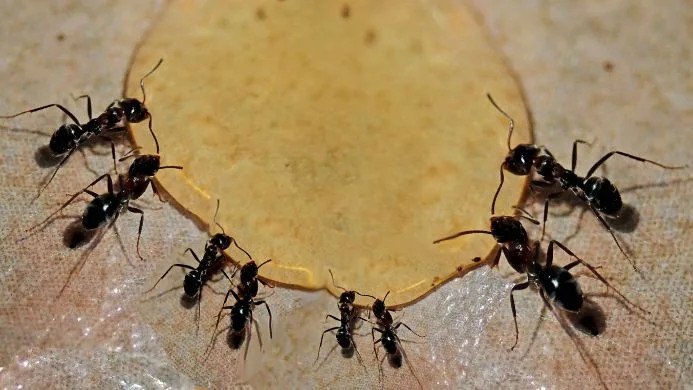
You left a drop of honey on the counter last night. This morning there is a black line of tiny ants marching from the windowsill directly to that exact spot. These are sugar ants, and they just told you exactly what they want, says Mark Thomas Properties solutions.
Sugar ants is the common name for several ant species that aggressively forage for sweets, most often odorous house ants or pavement ants. They are the ones that find a drop of syrup within hours and recruit the entire colony to collect it. The good news is that their single-minded pursuit of sugar makes them predictable and easy to bait. The trap is simple: give them exactly what they want, but add borax. Here is how to do it without scattering the colony into three new ones.
Sugar Ants vs. Other Kitchen Ants: Why Identification Matters
If the ants are tiny, dark brown to black, about an eighth of an inch long, and form a distinct trail from a crack in the wall or windowsill directly to something sweet, they are almost certainly sugar ants. If you crush one and it smells like rotten coconut, that confirms it is an odorous house ant, the most common sugar ant in the United States.
Sugar ants prefer carbohydrates in spring and early summer when the colony is producing new brood. In late summer and fall, the same colony may switch to protein. If you put out sugar bait and the ants ignore it, they are in a protein-feeding phase. This seasonal switch is the most common reason DIY ant bait fails. The colony was not rejecting your bait. It was rejecting sugar. Try a tiny dab of peanut butter next to the sugar bait. If the ants swarm the peanut butter, switch to a protein bait.
Homemade Sugar Bait That Actually Works
The recipe is simple: sugar, water, and borax. The execution is where most people get it wrong.
Mix one cup of warm water with two tablespoons of sugar and half a teaspoon of borax. Stir until the sugar and borax are fully dissolved. The solution should be clear, not cloudy. Cloudiness means undissolved borax, which ants detect and avoid.
The ratio matters. Too much borax kills ants before they reach the nest. The foraging workers die on the way back, the colony detects the sudden loss, and in some species this triggers budding where the colony splits and spreads. Too little borax does nothing. Half a teaspoon per cup is the starting ratio. Adjust based on results. If ants die on the cotton ball within hours, reduce borax to a quarter teaspoon. If ants feed for days with no reduction in activity, increase to three quarters of a teaspoon.
Soak a cotton ball in the solution and place it directly on the ant trail. Do not place it nearby. Place it on the trail. The ants walk directly into sugar water. Within minutes, they redirect the trail through the cotton ball. Do not disturb them. Let them feed. They are carrying sugared borax back to the queen.
Replace the cotton ball every two days. The sugar water ferments and the borax crystallizes as the water evaporates. Fresh bait keeps the colony feeding. A dried crusty cotton ball is ignored.
Commercial Baits for Sugar Ants
If you prefer a pre-made product, Terro Liquid Ant Bait is the most widely available and uses the same borax-in-sugar-water formula as the homemade recipe above. The advantage of Terro is the enclosed bait station, which keeps the liquid contained and prevents spills on countertops. The disadvantage is cost. A bottle of Terro with six bait stations costs $6 to $10.
If Terro does not work after three days, the ants are either in a protein-feeding phase or they are a species that does not respond to borax. Switch to Advion Ant Gel, which uses indoxacarb in a sugar-based gel matrix. Advion costs $15 to $20 per syringe and is the same product pest control professionals use. Place pea-sized dots of the gel directly on the ant trail. One syringe covers a typical kitchen.
Do not use Terro for pharaoh ants, which are the very tiny pale yellow ants covered in a separate guide. Borax kills pharaoh ants too quickly and triggers colony budding. If your ants are pale and translucent rather than dark, you are dealing with a different species that requires a different approach.
How to Handle the Ant Trail Without Triggering Budding
Do not spray the trail with insecticide. Spraying kills the visible ants and triggers the colony to scatter and bud. What was one trail becomes three trails in different rooms. This is the most common mistake people make with sugar ants, and it is the reason the ants keep coming back in different locations.
Clean the trail only after the bait has been in place for at least 24 hours and the colony is actively feeding on it. Use warm soapy water or a vinegar solution to wipe the trail from the entry point to the bait. This removes the pheromone path that other ants follow. The ants will find a new route to the bait, which is fine. The goal is to contain their activity to the bait station rather than across your entire counter.
If you must remove ants from a food preparation surface immediately, use a damp paper towel with soapy water. Wipe them up and rinse the towel down the sink. This kills the ants without leaving a repellent residue. Do not use disinfectant sprays, bleach, or ammonia on the trail. The harsh chemicals stress the colony in the same way insecticide does.
Find and Eliminate the Attractant
Sugar ants found your kitchen because something in it is worth eating. Find it and you prevent the next infestation before it starts.
Check these specific locations, which account for the vast majority of sugar ant attractants. The honey jar with a drip down the side. The syrup bottle with a sticky ring on the shelf underneath it. The sugar bowl with loose crystals around the rim. The fruit bowl with an overripe banana. The recycling bin with an empty soda can. The trash can with a leaky bag. The toaster crumb tray. The blender base where smoothie drips dried. The coffee maker where sugar spilled into the warming plate. The pet food bowl with kibble dust around it.
Wipe every one of these with soap and water. Store sugar, honey, syrup, and other sweeteners in sealed containers or the refrigerator. Rinse recyclables before putting them in the bin. Take garbage out nightly during an active infestation. One drop of soda residue in the bottom of the recycling bin supports a hundred ants.
Seal Entry Points After the Colony Is Dead
Do not seal the entry point while the bait is working. You want the trail to continue so every foraging ant carries poison back to the nest. Sealing early forces ants to find a new exit, which may be in a different room.
Wait until you have seen zero ant activity for three consecutive days. Then seal the entry point with silicone caulk. Sugar ants enter through gaps around window frames, cracks where the counter meets the backsplash, openings around pipes under the sink, gaps in door weather stripping, and cracks in the foundation where it meets the sill plate.
Follow the ant trail backward from the kitchen to its source. This tells you exactly where the entry point is. Do not guess. Let the ants show you. Once the trail has been inactive for three days, caulk that exact location.
What to Expect: The Sugar Ant Baiting Timeline
Day 1. Place bait on trail. Colony recruits heavily. Trail thickens for 24 to 48 hours. This is good. Every ant on the trail is collecting borax.
Day 3. Replace bait with fresh cotton ball or gel. Trail activity remains high but may begin to thin. Dead ants may appear near the bait.
Day 5. Activity drops noticeably. Trail thins. Replace bait again.
Day 7. For light to moderate infestations, trail activity is minimal or gone. A few stragglers may still appear.
Day 10. If activity continues past day 10, the colony is large enough that the bait concentration or quantity is insufficient. Increase borax to three quarters of a teaspoon, place multiple bait stations, and verify that the ants are still feeding. If they have stopped feeding on the bait entirely, the colony may have detected the borax and rejected the bait source. Switch to a different active ingredient like indoxacarb in Advion gel.
Frequently Asked Questions
Why do sugar ants suddenly appear in spring and disappear in winter?
Sugar ants live outdoors in soil, under rocks, and in mulch year-round. In spring, colonies produce new workers and foragers expand their search radius. Warm weather and rain drive ants toward the dry shelter and abundant food of a kitchen. In winter, outdoor colonies go dormant and foraging stops. The ants did not disappear. They are still living outside, waiting for spring. Seal entry points during winter when ants are inactive so they cannot reenter when foraging resumes.
Is borax bait safe around pets?
The cotton ball method described above keeps bait contained but accessible to ants. A pet that licks a soaked cotton ball ingests borax. The amount in one cotton ball, approximately one twentieth of a teaspoon, is unlikely to cause serious harm to a medium or large dog but can cause vomiting and gastrointestinal upset. In cats and small dogs, even small amounts of borax are riskier. Place bait inside a commercial bait station, behind appliances, or inside a small plastic container with ant-sized entry holes cut in the sides. Do not leave open cotton balls on floors or counters accessible to pets.
Does vinegar kill sugar ants?
Vinegar does not reliably kill ants. It disrupts their pheromone trails when sprayed directly on the trail, which temporarily confuses foragers. This can redirect the trail to a new route but does not eliminate the colony. Use vinegar as a cleaning agent to wipe down counters and erase pheromone trails after the colony has been baited and eliminated. Do not use it as a primary treatment.
