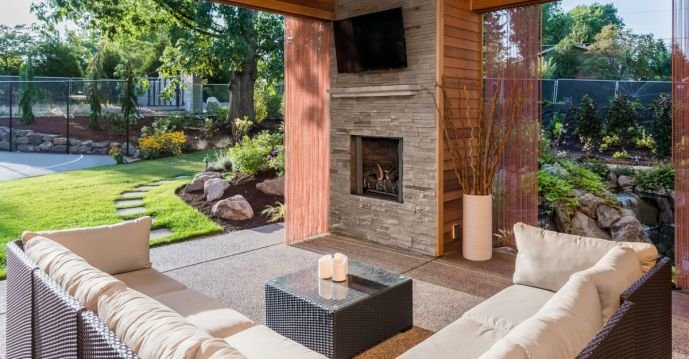
“Patio design reviews” is better read as “how do I know if a patio is designed well,” and the answer is a checklist, not a mystery. A good patio is sized by how you will use it, zoned so it is more than one flat slab, shaded where you sit, and built of a material that suits your climate and upkeep. Most patios that disappoint were designed around a pretty picture, not around people and sun.
Below is that checklist, ready to run against any patio plan or existing build, plus the common mistakes to catch, the size to plan for, the materials worth comparing, and an honest read on whether a patio adds home value.
The Patio Review Checklist
Walk any patio plan through these six checks and most design problems surface before you pour. Size comes first, because a patio that cannot fit the furniture you own misses the point. Zoning comes next, dividing the area into a place to sit, a place to cook or eat, and a path between them, so it does not read as one big slab, notes Keyrenter Westchester team. Shade follows, since where you actually sit needs protection from the midday sun. Material must match the climate and the look. Drainage has to carry rain away from the house and off the surface. And a clean transition, a step or grade change, links the patio to the house and the lawn instead of ending abruptly.
These are the same priorities the craftspeople behind home-building publications such as Fine Homebuilding stress for outdoor spaces: build for how you will actually use it, keep the materials honest, and get the details like shade and drainage right before the finish. Run the six checks in order and you will catch the issues that most patios regret: a build that is too small, too hot, too flat, or too close to the siding. Each one is easier to fix on paper than in concrete.
Common Patio Design Mistakes to Avoid
Most patio disappointments come from a small set of repeatable errors, and naming them helps you avoid them in your own plan. The most common is wrong scale, a patio sized for a postcard rather than for the dining set you actually own. A close second is no zoning, laying one large, undifferentiated area that feels empty and uninviting. Forgetting shade is another, leaving the seat with no relief in the afternoon.
Material and site mistakes follow: choosing a material that does not suit the climate or is slippery when wet, ignoring the sun path so the patio bakes, and failing to grade for drainage so water pools against the foundation. A cheap fix that shows up later is skipping a transition, letting the patio end without a step or edge that ties it to the house and yard. Each of these reads as a small thing at build time and a large regret at use time.
How Big Should a Patio Be?
A good patio size starts from the furniture, not from a number. Measure the biggest feature you plan, usually the dining or seating set, add walking room around it, and that is your floor-plan minimum before paths.
A bistro set settles into a space around 10 by 10 feet. A six-seat dining set needs closer to 12 by 14 feet, because a dining table plus chair clearance on every side takes more than people expect. Add a grill area or a walkway and the patio grows toward 16 by 20 feet or more.
The honest rule is to leave through-traffic room so the patio is usable even when the table is set. A patio sized exactly to the furniture and nothing else feels cramped the first time two people try to pass behind a chair. Plan a little extra for movement, and the patio works on a busy day instead of only when it is empty.
Patio Materials Compared
Material drives the look, the cost, and the upkeep, and the four common patio surfaces split cleanly by budget and climate fit. Concrete pavers are the versatile budget choice. Flagstone reads natural and fits informal yards. Brick is classic and warm. Travertine is the premium, heat-friendly pick in hot climates. The table lines up the tradeoffs.
| Material | Look | Cost | Upkeep | Best for |
| Concrete pavers | Versatile, many styles | Low to mid | Low; weeds in joints | Most budgets and climates |
| Flagstone | Natural, irregular | Mid to high | Low; uneven joints | Informal, natural yards |
| Brick | Classic, warm | Mid | Low; can get moss in shade | Traditional homes |
| Travertine | Premium, heat-reflective | High | Low; needs sealing | Hot climates, pool decks |
Choose by climate first, then budget, then style. In a hot region, a material that stays cool underfoot, like travertine, beats one that bakes. In a wet or shaded spot, a non-slip surface matters more than the newest look. All four can be good; the wrong one is what fails.
Do Patios Add Value to a House?
A patio is generally considered a positive addition to a home, because it extends usable outdoor living space and is a feature buyers like. Whether it adds measurable resale value depends on region, quality, and appraisal.
The honest answer is that it contributes to value and enjoyment but should not be built on a promise of a specific percentage return. A well-built patio in a market where outdoor living is prized earns more than a patched-up one where it is not.
The safest way to treat a patio is as a lifestyle investment that adds appeal, with any dollar-for-dollar return as a bonus rather than the plan. Spend at a level you are comfortable with, keep the design proportional to the house, and the patio pays for itself in years of use even when the resale number is harder to pin down.
Current Patio Design Trends
Patio design in recent years leans toward turning a single outdoor space into several. The strongest current direction is the multi-zone outdoor room, where seating, dining, and a fire pit or grill each take their own area. Indoor-outdoor flow follows, with glass doors and matching materials pulling the patio into the house. Low-maintenance pavers and climate-appropriate planting, including natives that need no fussing, show up in most newer designs, and shade, through a pergola or large umbrella, is treated as a feature rather than an afterthought.
These trends share one idea with the checklist above: a patio that works like an outdoor room, zoned and shaded and easy to keep, beats a bare slab that only looks good in a photo. Match the trend to your climate and how you entertain, not to a picture, and it will suit you.
Patio Design Reviews: Common Questions
Do patios add value to a house?
Generally yes, a well-built patio is seen as adding usable outdoor living space and buyer appeal, though the exact resale return varies by region, material, and quality. Treat it as a lifestyle investment that helps resale rather than a guaranteed percentage of return.
What are common patio design mistakes?
Building too small, leaving one undifferentiated slab with no zoning, forgetting shade where you sit, choosing a material wrong for the climate, ignoring drainage so water pools, and ending the patio without a transition to the house and yard are the most common misses.
What is considered a good size patio?
A good size starts from your furniture: a bistro set fits around 10 by 10 feet, a six-seat dining set needs about 12 by 14, and adding a grill or walkway pushes it toward 16 by 20 or more. Leave extra through-traffic room so it stays usable when the table is set.
What is the trend for patios?
The current trend is the multi-zone outdoor room, splitting seating, dining, and a fire pit into separate areas, with indoor-outdoor flow, low-maintenance pavers, shaded seating, and climate-appropriate planting. It is less about one big surface and more about a patio that works like an outdoor living room.
What patio material is best for a hot climate?
Travertine and other heat-reflective, light surfaces stay coolest underfoot in hot climates, making them a strong pick for sun-exposed patios and pool decks. Concrete pavers in a light color are a more budget-friendly alternative; dark materials absorb heat and get too hot.
Judging a patio comes down to a checklist you can run honestly, not a vague sense of style. Confirm it fits the furniture, zones into places to sit and use, gets shade where you spend time, handles drainage, and uses a material matched to your climate. Walk the list before you pour or pave, and the patio earns its place instead of disappointing it.
