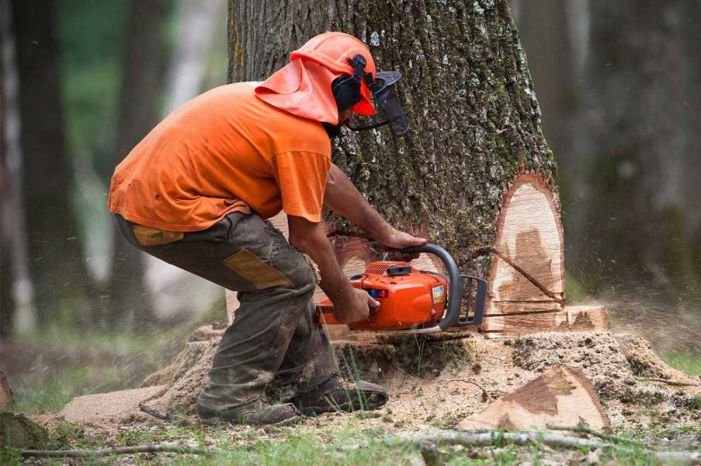
Getting the best price on tree removal is less about hunting the lowest number and more about understanding the range and how to read a quote. On tree removal best price matters twice: most homeowners pay between about $600 and $850 nationally, but a small, easy tree runs a couple hundred dollars while a large tree with poor access can run $3,000 or more. The number moves on size, location, access, and whether it is an emergency, so a fair price in one yard can be a bargain or a rip-off in another.
The cost ranges below break down by tree size and region, and the short process for getting three competing written quotes you can trust comes after them. Read both, then call a crew.
Average Tree Removal Price: The Range, Not a Single Number
Published averages for tree removal cluster near $630 to $850 nationally, with a typical project running roughly $385 to $1,070 or about $10 to $14 per foot. Remove the word “average” and the real picture appears: a good estimate can be as low as $150 for a small, easy tree and push past $3,000 for a very large or hard-to-reach one, points out Central Florida Property Management experts. Averaging all of those flattens the number into one value that describes almost no single job, which is why the range matters more than the mean.
The two major national price guides you will find online agree on the range even when their “average” differs slightly, because each is averaging a different mix of jobs; LawnStarter’s pricing guide puts the national average near $630 while the cost breakdown at InvoiceFly settles closer to $850. Your quote depends on your tree and your yard, not on a national figure, so treat any published average as a starting point and read the next section for what really moves the number.
Tree Removal Cost by Size of Tree
Size is the single biggest driver of price, so the fastest way to estimate a job is to size the tree first. A small tree under about 30 feet takes little work and a crew of one or two; a medium tree up to about 60 feet needs more care and equipment; a large tree over 60 feet often needs a crane, a bigger crew, and considerably more time. The table below gives the common ranges.
| Tree size | Approx. height | Typical price | Why it costs that |
| Small | Under 30 ft | $150 – $500 | Little labor or equipment, easy drop zone |
| Medium | 30 – 60 ft | $600 – $1,200 | Safety gear, careful rigging, two or more crew |
| Large | Over 60 ft | $1,500 – $3,000+ | Crane or climbing, bigger crew, more time |
| Very large / hard access | Over 60 ft + obstacles | $3,000 – $5,000+ | Special equipment, risk, lengthy work |
A 100-foot oak can cost $3,000 or more, and a tree that must be climbed and rigged limb by limb over a house costs far more than one that drops clean into an open yard. A 50-foot tree generally lands at the upper end of medium or entry of large, and a 30-foot tree sits comfortably in the small-to-medium range.
Why Quotes Differ So Much
Five things move a tree removal price, and none of them say anything about how fair a company is. Location matters first: a tree near power lines, a house, a fence, or a driveway needs careful rigging or a crane. Access comes next, since an open yard with room to drop costs less than one a truck cannot reach.
Health and condition also count; a dead tree can be easier to cut but riskier if brittle, and a healthy tree can be harder to take down safely. Urgency is the big wildcard. Emergency removal after a storm or for a fallen or leaning tree can run double or triple a normal job because crews must drop everything, work under risk, and act fast. And the job’s scope matters more than people expect: whether debris is hauled away, whether the stump is ground, and whether a permit is needed all sit inside or outside the quote.
Hidden Costs That Blow the Budget
The quote you are handed often covers the tree and nothing else, and homeowners find the real price in the add-ons. Stump removal or grinding runs about $75 to $500 depending on size, and it is almost always extra. Trimming, if you bundle it, runs roughly $150 to $800. Hauling away branches and logs can add $50 to $100 per load. Permits for large or protected trees can carry a $50 to $150 fee, and municipal or historic-district rules may require a certified arborist, priced around $50 to $150 for a consultation, though many companies waive it with a signed job.
These add-ons are legitimate, but they are only a surprise if you never asked. The fix is to ask one question before accepting any quote: is everything, hauling and stump included, in this written price? A quoted $600 removal can become a $1,100 job once stump, haul-off, and permit land, and knowing that up front is what separates a good deal from a shock.
Getting the Best Price, Step by Step
The single most effective way to a good price is to get three written quotes from licensed, insured, established companies, and compare them on value rather than the bottom line. Call at least three local services, have each walk the tree and give you a written, itemized estimate, and ask them all the same four questions.
Those four are: what is included, what is extra, are you licensed and insured, and how do you handle damage. Compare the written estimates side by side, and do not automatically take the lowest.
Compare the estimates side by side, and do not automatically take the lowest. A genuinely low bid from a company without insurance or with a vague scope is the most expensive offer you can accept, because you absorb the risk. The best value, not the lowest number, is the written quote you understand from a crew that will stand behind it.
A word on “who is cheapest.” There is no one cheapest tree removal company, because price is local, seasonal, and job-specific. Ask neighbors who they used, check that a company is licensed and insured for your state, and treat an estimate that is dramatically below every other as a warning sign rather than a win.
Ways to Cut the Cost of Tree Removal
You can lower the bill without cutting corners on safety. Remove trees proactively rather than after a storm, since emergency work carries a heavy premium. Bundle work: removing two or three trees at once, or adding a stump grind and a trim in the same visit, often earns a bulk discount. Do the cleanup yourself, asking the crew to leave the wood and brush you haul or split, and you take the haul-off fee out of the quote. Book off-peak when you can, since slower seasons sometimes bring more competitive bids. And ask every company what is included before comparing, so you are comparing the same scope, not apples to a quote with fewer lines.
Cheap vs Safe: Why the Lowest Bid Can Cost More
On tree removal, the best price and the safe price are the same price. An uninsured company leaves you liable if a limb hits a structure or a worker is hurt on your property, and a company that skips proper equipment or insurance has to make money somewhere. Professional crews carry full insurance, use arborists trained in safe felling, and reduce the chance of property damage and personal injury to something near zero.
DIY removal is rarely the money-saver it looks like. Inexperienced homeowners misjudge cutting angles and fall zones, and a dropped limb can damage a roof, a fence, or worse, in seconds. Many municipalities also fine improper tree removal, especially near sidewalks, power lines, or protected trees. For all but the smallest, safest trees, hiring an insured professional is the affordable choice in the end.
Tree Removal Best Price: Common Questions
What is the average price to have a tree taken down?
Most homeowners pay roughly $600 to $850, with typical projects running about $385 to $1,070 depending on size and location. Large or hard-to-reach trees run $1,500 to $3,000 or more, so the honest answer is a range, not a single average, and your quote depends on your specific tree and yard.
Who is the cheapest tree removal company?
There is no single cheapest company, because prices are local, seasonal, and job-specific. The way to a low-but-fair price is to get three written quotes from licensed, insured local crews and compare on value and scope, not just the bottom line, and to treat an estimate far below every other as a warning sign rather than a win.
How big of a tree costs $1,000 to remove?
A quote near $1,000 usually lands on a medium to large tree, roughly 30 to 60 feet or taller, especially one with limited access or that needs careful rigging over a structure. Size, drop zone, and how the crew must reach it all move the number, so two similar-sized trees can differ by hundreds of dollars.
How can I reduce the cost of tree removal?
Get three written quotes and compare the same scope, remove the tree before it becomes an emergency, and bundle multiple trees or a stump grind into one visit for a discount. Ask what is included so hauling and stump are not surprise add-ons, and do the debris cleanup yourself to take that fee out of the quote.
Is the cheapest tree removal bid a good deal?
Not necessarily, and often the opposite. A far-below-market bid may come with no insurance, a vague scope, or cut corners, and you absorb the risk if something goes wrong. The best deal is a written, itemized quote from an insured, established crew you understand, not the lowest number you are handed.
The best price for tree removal comes from knowing the range, reading a quote, and comparing three written offers on value rather than on whoever is cheapest. Size the tree, add the hidden costs to every estimate you compare, and book before the tree forces an emergency timeline. Do that, and you pay a fair price for a job done safely, once.
