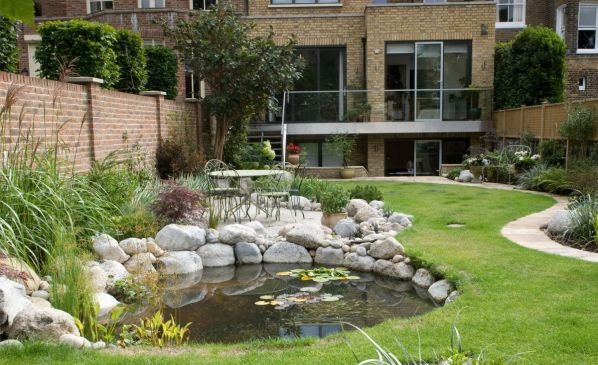
How to design garden at home is a sequence, not an art test: decide what you need, measure and map the sun, fix the soil, lay out the spaces, and only then pick plants. The order is what makes it work. Start the other way, buying pretty plants first, and you end up with a collection instead of a garden. This method works on any yard, from a few square meters to a full backyard, notes security deposit law in New Jersey.
It takes an hour of thinking, a tape measure, and a cheap bag of compost to move the needle more than any single plant purchase. The steps below lay out the order, the reasoning behind each, and the handful of principles that make a plan look designed instead of assembled.
Step 1: Decide What You Need Before Anything Else
Every garden design starts with how you will use the space, not how it should look. Write down the activities the yard has to support, because that list drives every later decision. Dining and seating, a place for children or pets, space for vegetables, storage for tools and toys, a washing line, compost, maybe a shed. Rank what matters most and let the rest wait.
Start small. A first garden planted over a space no bigger than a 10 by 10 foot plot teaches the habits of watering, weeding, and light management without the overwhelm of a full redesign, and a food-focused build adds the raised-bed sizing detail from Gardenary’s vegetable-garden design once you choose one. Constraint is the secret to a successful first garden, and it applies to the design too: resist the pull to fill every square meter in year one.
Step 2: Measure the Space and Map the Sun
Measure the yard and record the light before you place anything. Sketch the outline on paper, note the hard surfaces, and over one day walk the space at a few hours to see where sun and shade actually fall. That “sunny corner” you remember is often two hours of morning light and afternoon shade, and a plant that needs full sun will not forgive the mistake.
Sun, slope, and access are the three physical facts your layout obeys. Mark where the sun rises and sets, and put seating where the evening sun is pleasant. Where one area gets deep shade and another bakes, you have the information you need to group plants by need later.
Step 3: Fix the Soil Before You Design Around It
The single most important under-visible step is the soil. Good soil means no compaction, drainage that lets water soak in, and a pliable loam rich with organic matter, the same foundation a 17-step garden design guide puts at the top of its list. A garden planted in weak, compacted soil fails no matter how sound the design, and the fix is cheap: compost, worked in before planting, and a soil test if you are unsure.
Most home gardens sit in soil that has been disturbed, drained, or starved of organic matter. Spend the time and the bag of compost now, and the plants reward it for years. This is the step people skip because it is invisible, and it is the one that pays the most.
Step 4: Pick a Style and Lay Out the Zones
Choose a garden style early, because it decides the shapes, materials, and plants you use, and with it the backbone of how to design garden at home reads clearly. Three common styles cover most home gardens, and the table helps you pick by the look and the upkeep you can tolerate rather than by fashion.
| Style | Character | Structure | Upkeep | Best for |
| Formal | Ordered, symmetrical, geometric | Clipped hedges, straight paths, topiary | Higher, regular clipping | Small tidy yards, strong outlines |
| Informal | Blousy, natural, flows freely | Curving paths, loose borders | Moderate | Mixed borders, cottage charm |
| Modern / low-maintenance | Clean, spacious, restrained | Clean paving, simple grasses, few hard workers | Lower | Busy households, small spaces |
With a style in hand, divide the yard into zones that match your wishlist: a seating area near the house, a vegetable patch where it gets sun and water access, a play zone out of the traffic, quiet corners. Then connect those zones with paths so the garden reads as places linked by movement rather than a flat field of grass with beds around the edge.
Step 5: Arrange Plants in Masses, Layers, and Balance
The principles that make planting look designed are the same ones professionals use, and none of them require an art degree, as the Pretty Purple Door design guide for non-designers lays out for homeowners. Repetition unifies the garden: use the same plant or color in at least three places so the eye travels and the yard feels connected. Massing multiplies impact: plant odd-numbered groups, three, five, or seven, of one plant instead of singles scattered about.
Layer for depth. A mixed border works when tall, mid, and low plants sit in a staggered foreground, middle, and background rather than one straight line. Pull foundation beds out deeper than feels comfortable, toward six feet if you have the space, so there is room for that layering. Give beds enough depth for real structure, not a narrow ribbon of flowers against the wall.
Balance by weight, not by mirror image. Asymmetric balance, matching the visual bulk of plants on either side of a path or entry but not copying them, reads as designed and natural at once. Add a focal point, a sculptural planter, a bench, a small water basin, for the eye to rest on and to draw people into the space. Ground-level effort that ties a garden together is texture and color: pair a big-leaf plant with a fine-leaved neighbor, choose a limited palette and repeat it, and the borders look intentional even between blooms.
Step 6: Hide Parts and Let It Grow
Two underrated moves finish the design. Hide a piece of the garden from a standing view, a shrub or grass at the curve of a path, and the yard feels larger, more private, and curious rather than flat. And resist the urge to overplant in year one.
A garden is watched and shaped over years. Plant for the mature size, leave space to edit, and redesign the planting as confidence grows. That is the difference between a garden someone planted and one someone designed.
Designing a Home Garden on a Budget
A tight budget does not block a good design; it sharpens it. Buy fewer plants in masses of three or five rather than many singles, because repetition looks designed where scattered singles look random.
Start with hard structure, paths, borders, and a focal point, which carry the design year-round, then fill in plants over seasons. Compost your own yard waste instead of buying soil. A small, well-laid-out garden beats a large, half-finished one every time.
Free online garden planners let you drag plants onto a scaled drawing of your yard before you dig, which is a cheap way to test the layout and catch sun and spacing mistakes on screen. The apps vary, but the practice of laying out your space first, in any tool or on paper, is the lesson that matters.
Garden Design Questions, Answered
The questions below cover the quick answers people most often look up when they start a garden at home, from the ratio rules to the layout method.
What is the 70/30 rule for gardening?
The 70/30 rule is a loose balance heuristic, not a hard law, and it has no single official definition. In common usage it points to a mix, often about 70 percent of an area as one element, such as lawn or a planted base, and about 30 percent as the other, such as beds or hardscape, to balance habitat, looks, and upkeep. Treat it as a starting ratio to adapt to your yard, not a number to hit exactly.
How do I design my garden layout?
Measure the space and draw it to scale, then mark where sun and shade fall through the day. List how you will use each part, seating, vegetables, play, and group those uses into zones. Connect the zones with paths, place a focal point, and lay out the beds and plants within that frame before buying anything.
What are the steps to landscape design?
A common framework runs about seven steps: list the uses and style you want, measure the space, map sun and shade, check and improve the soil, lay out the zones and paths, choose plants in masses and layers, then plant and let it develop. The exact count varies by source, but the order, decide, measure, soil, layout, plant, is what most share.
What is the 5-4-3-2-1 gardening method?
The 5-4-3-2-1 method is a flexible planting-count shorthand some gardeners use to bring structure to a border, roughly five of a base plant, four of a secondary, three of another, and so on down to a single accent. It is a way to get masses and repetition into a plan, not a strict rule, and it works best adapted to the size of your beds rather than followed literally.
How do I design a garden as a beginner?
To design a garden as a beginner, and to know how to design garden at home at all, start small and follow the order: pick one area, no bigger than a 10 by 10 foot plot, write down what you need it for, note where the sun falls, improve the soil, and choose a few plants in groups of three or five. Grow it year by year, adding zones and layers as you learn, instead of trying to design the whole yard at once.
Designing a garden at home comes down to a plan you can sketch on the back of an envelope: what you need, where the sun goes, what the soil needs, and a path that ties it together. Do that before you buy a plant, keep the palette and the masses simple, and give it a season to prove itself. The garden that follows looks like a design, not a collection.
