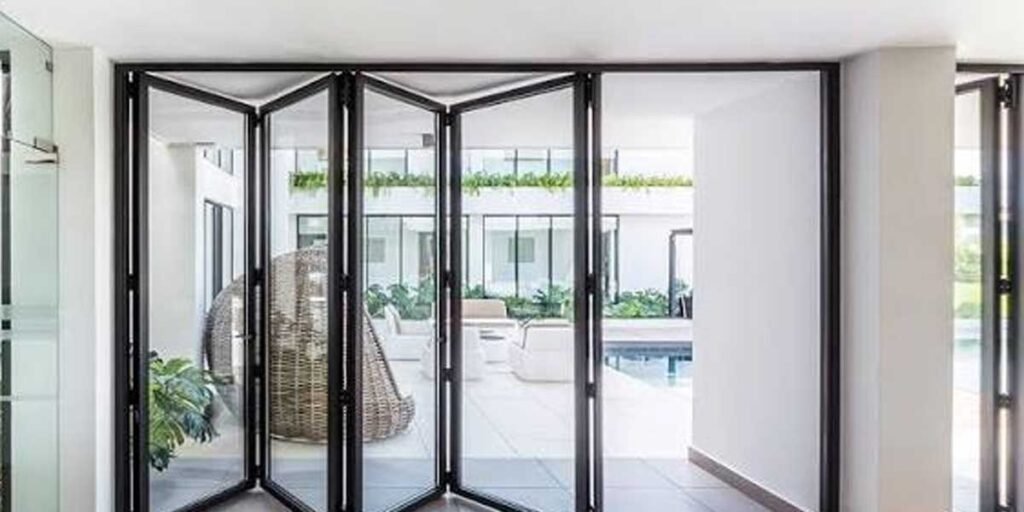
The sliding doors pros and cons come down to trade-offs, not a winner: a sliding patio door saves the floor and wall space a hinged door needs to swing, opens a wide glass view, slides with little effort, and usually costs less than a French or hinged door of the same size, but it gives up some sealing strength, asks for regular track cleaning, opens from one side only, and shows a big pane to clean. The energy performance of doors matters on top of the mechanics, since a sliding door’s weatherstripping and glass set how well it seals. Choose a sliding door when the space to swing is tight or you want the wide view and the budget, and choose a hinged or French door when you want maximum airflow, a firmer seal, and a more traditional look.
Below is the side-by-side table, what a sliding door does well, what it asks of you, and the rule for who should pick which.
Sliding doors pros and cons at a glance
A sliding door wins on space, view, and price, and loses on the seal, the track, and the single opening, so the table lines the two up by the choices most owners weigh. The right one depends on the wall, the climate, and how you live, says Real Property Management Services professionals.
| Factor | Sliding door | Hinged / French door |
|---|---|---|
| Floor and wall space | No swing room needed | Needs space to open |
| Opening and air | One side opens | Both or full panels open |
| Seal and weather | Sound, but a wide pane | Compression seal, firmer |
| Maintenance | Track and rollers to clean | Hinges and weatherstripping |
| Cost | Often lower per size | Often higher for similar size |
| Look | Clean, wide view | Traditional, divided |
The table is the honest trade-off. A sliding door needs no swing room, which a tight or furniture-lined opening rewards, it slides with less effort, and it usually costs less than a hinged or French door of the same size, while a hinged or a French door opens wider for air, closes with a firmer compression seal, and suits a more traditional look. There is no universal best, only the fit, so weigh the wall space, the airflow you want, the climate’s wind and rain, and the budget before you choose.
The pros: what sliding doors are good at
A sliding door earns its keep by saving space, opening a wide view, sliding with little effort, and often costing less than a hinged door of the same size, which makes it a strong choice for a tight or budget-conscious home. The engineers at Brennan describe it as gliding on a track rather than swinging, with one moving panel and one fixed, so it needs no clear space to the side.
The strengths are concrete. A sliding door needs no swing room, which lets it sit flush against a wall or the furniture where a hinged door could not, it opens a large glass panel that widens the room’s view and lets in more light, and it slides on a track with less effort than a panel that swings on hinges, which suits a frequent opening like a patio. Because it uses a fixed and a moving panel rather than two full swinging leaves, a sliding door often costs less than a French door of a similar width, and a top-hung unit rolls more smoothly and holds up longer than a bottom-roller one. For a home that wants the view and a working door without giving up the wall, the sliding door is hard to beat.
The cons: what sliding doors ask of you
A sliding door costs you in the track that needs regular cleaning, the rollers that wear, the wide glass that shows grime, the single side that opens, and a seal that may be a little less firm than a compression-closing hinged door. The trade-offs are maintenance and a slightly lower press.
The honest drawbacks are real. The bottom track collects dirt and its rollers wear, so a sliding door wants a periodic vacuuming and a little lubrication for the door to slide easily and seal well, and a bottom-roller unit shows the wear sooner than a top-hung one. The single large pane is beautiful but shows every smudge and needs a regular cleaning on both faces, and because only one panel moves, you get airflow from one side rather than two, which a hinged or a French door expands. A sliding door’s weatherstripping seals well when the unit is sound, but a hinged door presses its panel against the frame for a compression seal that can feel firmer in wind and rain. Match the maintenance and the single opening against what a door asks of you in daily use.
Sliding vs. French and hinged patio doors
Choose a sliding door for a tight opening, a wide view, and the budget, and a French or hinged patio door when you want full opening for air, a firmer compression seal, and a more traditional look, since a French door’s two full leaves swing wide and weather well while a sliding door fits where no swing room exists. Both seal and perform when built well, so the split is the trade of space and price against opening and press.
The split is straightforward. A French door’s two full panels swing open for the maximum airflow and meet in the middle with a compression seal that holds in wind and rain, and its divided, classic look suits many homes, but each panel needs room to swing, which a tight spot cannot give. A sliding door requires no swing room, opens its wide single glass with less effort, and usually costs less, but it opens one side and sets its weatherstrip along the track rather than pressing a full panel. On a narrow, furniture-lined opening with a view to show, the sliding door wins, and on a wide opening where air and a firm seal matter, the French door earns its space. Energy-wise both perform when the unit is certified and well-fitted.
Maintenance, lifespan, and who should choose which
Keep a sliding door working by cleaning the track and the rollers, checking the weatherstripping and the glass seal, and letting a well-built unit last a good while, and match the door to the way you live, since the space, the airflow, and the upkeep decide the fit. There is no single lifespan number to quote, only the unit’s material and how it is kept.
The upkeep and the fit go together. A sliding door asks that you vacuum the track and wipe the rollers a few times a year, keep the weatherstrip in place, and wash the big panes, and a well-made unit in a protected, well-sealed opening lasts a long time, with a top-hung unit tending to outlast a bottom-roller one. Choose a sliding door if the wall is tight, you want the wide view and the light, or the budget is the priority, and choose a hinged or a French door if you want full opening airflow, a compress-loaded weather seal, or a traditional divided look. Match the door to the space and the way you go in and out, and it earns its keep for years, with the best patio doors for homes guide sorting the same choices across the door styles.
Frequently asked questions
What is the disadvantage of a sliding door? A sliding door needs its track and rollers cleaned and lubricated, shows its one large pane in need of cleaning, opens from only one side, and its weatherstrip may seal a little less tightly than a compression-closing hinged door. The maintenance and the single opening are the main trade-offs.
What is the common problem with sliding doors? The common troubles are a dirty or worn track and rollers that make the door stick and misalign the weatherstrip, so a door stops sliding smoothly or leaks a draft. Regular cleaning and lubrication prevent most of it.
What is better than a sliding door? A hinged or a French door is often better when you want full opening airflow, a firmer compression seal, or a traditional divided style, though it needs room to swing and usually costs more. A sliding door stays better for a tight opening, a wide view, and the budget.
What is the lifespan of a sliding patio door? A well-built sliding patio door in a protected, well-maintained opening lasts many years, and a top-hung unit tends to last longer than a bottom-roller one, though the exact number depends on the material and the upkeep. Clean track and coils keep it working its longest.
Are sliding doors more energy efficient than French doors? Energy efficiency depends on the door’s glass, weatherstripping, and fit, not the style alone, so a well-sealed certified sliding door can be efficient and a well-fitted French door can be too. Compare the energy label and the seal rather than the door type.
Let the wall, the airflow, and the upkeep decide
Weigh the sliding doors pros and cons against your wall and the way you live: choose a sliding door for a tight opening, a wide view, and the budget, and a hinged or a French door for full opening airflow, a firmer seal, and a traditional look. A sliding door saves the swing space and the price but asks for track care and a single opening, while a hinged door swings wide and weathers well but needs room. Match the door to the opening and the daily use, and whichever you choose earns its place for years.
