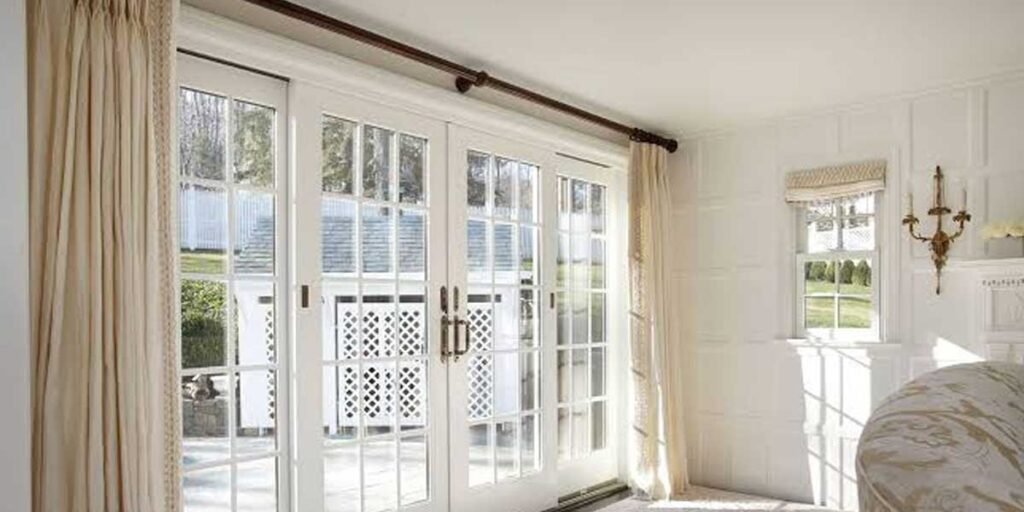
The best patio doors for homes are the ones that match a specific room’s dimensions, your climate, and how much upkeep you are willing to do, rather than the single most advertised model. A sliding door fits a tight space and lets in wide light; a French door suits a traditional look but needs swing clearance; a bi-fold opens a full wall but costs more and carries more moving parts. Across US markets, plan on roughly $2,000 to $6,000 installed for a quality patio door depending on size, glass, and material, so the right choice also depends on what you want the opening to do.
Written as a selection tool, the comparison below puts patio door types and materials across the conditions that actually matter, use case, climate, durability, upkeep, installed cost, and the failures that send homeowners back to the hardware store, then closes with a decision checklist for different homeowner profiles. If a door already needs to be fitted rather than chosen, the installation step-by-step is covered elsewhere on the site.
What makes a patio door the right one for your home
A patio door is right when its opening style matches the room’s traffic and space, its material tolerates the local weather, and its glass cuts heat or cold where you live, explains the KRS Holdings Harrisonburg team. Start by deciding how you will use the opening, then let size and climate narrow the material and glass, rather than shopping by brand name.
A door that leads to a small breakfast nook asks for a sliding panel that needs no swing room. A door leading to an entertainer’s deck can afford to open wider and may justify a bi-fold or a French pair, at the cost of floor clearance and a higher price. In a cold climate, the glass choice matters more than the frame; in a hot, humid one, the frame and its seal matter more. Write down the room width, the traffic, and your winter and summer extremes before you look at models, and the comparison table below will do most of the narrowing for you.
Patio door types compared by use case
Sliding patio doors lead on space efficiency and price, sliding-French doors add a traditional look without the swing, French doors suit classic interiors but need floor clearance, and bi-folds open a full wall at higher cost and upkeep. The matrix below maps each type against the conditions a buyer actually weighs.
| Type | Space needed | Style | Airflow | Upkeep | Cost driver | Likely failure |
|---|---|---|---|---|---|---|
| Sliding (2-4 panels) | None (glides on track) | Modern, minimalist | One panel opens | Low, but track needs cleaning | Width, glass, number of panels | Track debris, roller wear, air seal |
| Sliding-French | None | Traditional paired look | One panel opens | Low | Panels and glass upgrade | Same as sliding |
| French (pair, hinged) | Swing arc in front | Classic, formal | Both panels can open | Moderate | Two operating units, hinges, glass | Hinge sag, weatherstripping wear |
| Bi-fold | Stack space at the side | Open, wide | Full wall can open | Higher, many moving panels | Panel count, hardware per panel | Hinges, seals, multiple track points |
If the core decision is sliding versus a hinged or folding alternative, the sliding doors pros and cons section of this site walks through which opening style suits tight layouts, high traffic, and modern rooms.
For most US homes, a two-panel sliding door is the value pick because it gives a wide view and a slim frame with the fewest moving parts.
Best patio door materials by climate and upkeep
Vinyl tolerates heat and moisture cheaply, fiberglass resists expansion in cold swings, aluminum suits ultramodern looks but needs a thermal break, and composite blends insulation with curb appeal; pick the material for the weather and the maintenance you will accept. The frame, not the glass, is what a coastal wind or a dry summer will test first.
In a hot, humid climate, vinyl is a low-maintenance, affordable choice, and a UV-stabilized vinyl resists sun damage over time. In a cold region with wide seasonal swings, fiberglass resists the expansion and contraction that can warp other frames, which makes it a strong winter-climate pick despite a higher price. Aluminum is sleek and strong but conducts heat, so it needs a thermally broken design to stay efficient; it suits modern homes in milder climates where its slim profile shines. Composite frames blend materials to gain weather resistance and a premium look, usually at a higher installed cost than vinyl.
On the efficiency side, the glass matters more than the frame in most homes.
An ENERGY STAR-certified patio door, with coated and often gas-filled glass matched to your climate zone, is the reliable way to cut heat transfer; you can look up certified models in the ENERGY STAR certified windows and doors finder for a model that fits your region.
Failure risks to watch before you buy
Most patio door problems come back to four weak points: the weather seal, the sliding track and rollers, the glass and its hardware, and the frame’s joint at the wall. Buy a door whose weak points you can inspect, and budget for the maintenance the type demands.
A sliding door’s track carries the weight of the whole panel, so a grain of sand or a warped frame turns a smooth glide into a hard pull, which is why track and roller quality matters as much as the glass. The seal where the panel meets the frame is the most common place air and water creep in; on a coast or in heavy rain, a poor seal shows up as damp on the interior sill. French doors fail most often through hinge sag and weatherstripping wear over years of swinging. A bi-fold, with its many panels, multiplies the points where a hinge or seal can loosen. None of these fail fast, but each is easier to judge in a showroom than after installation, so check how smoothly a sample slides, how the seal sits, and what the warranty covers.
Choosing the best patio doors for homes, profile by profile
Match the door to how you live: a small-space owner picks a sliding two-panel for the view and the price, a cold-climate homeowner prioritizes fiberglass and a high-efficiency glass package, a low-upkeep buyer avoids the many moving parts of a bi-fold, and a design-forward owner can accept the cost and care of a folding wall.
- Tight rooms and rented or compact homes: sliding (2-panel), vinyl or fiberglass, standard low-E glass.
- Cold climate, big seasonal swings: fiberglass frame, ENERGY STAR-certified low-E and gas-filled glass, inspect the seal.
- Hot, humid, or coastal: UV-stabilized vinyl or composite, weatherproof frame, strong sill flashing.
- Low-upkeep priority: sliding over bi-fold, vinyl or fiberglass over wood, fewer moving parts.
- Design-forward or full-wall opening: bi-fold or sliding-French, accept higher cost and maintenance.
- Budget-focused: two-panel sliding in vinyl, standard sizes only, double-check the installed quote covers removal and flashing.
For any profile, measure the rough opening before you compare prices, and ask for installed quotes that itemize the door, labor, removal, and flashing so you are comparing the same scope. A patio door that fits the room and the climate will outlast, and cost less to keep, than a more expensive door chosen on brand alone.
Questions homeowners ask about patio doors
Which type of patio door is best?
For most homes, a two-panel sliding patio door is the best balance of view, price, and low maintenance. French doors suit traditional interiors with swing clearance, and bi-folds pull ahead only when you want a full-wall opening.
What is the best patio door material?
Vinyl suits hot, humid, and budget-focused homes; fiberglass resists cold-weather expansion; aluminum fits modern milder-climate designs with a thermal break; composite balances durability and style for premium buyers. Climate and upkeep preference decide the winner.
Are ENERGY STAR patio doors worth it?
Yes for weather extremes: an ENERGY STAR-certified door with coated, gas-filled glass cuts heat transfer in cold and hot climates and can lower heating and cooling bills over the door’s life. The upgrade pays off most where seasons are most severe.
Which is cheaper, sliding or French patio doors?
Sliding patio doors are generally cheaper than French doors for the same opening because one panel glides on a track instead of two units swinging on hinges. The saving appears in both the door price and the labor.
Adjacent projects on this site follow the same matching-to-conditions logic across the broader home improvement library.
The patio door that fits your home
Choose the door that fits the room, the climate, and your upkeep tolerance, then confirm it carries the glass and frame you need before you pay a premium for brand. Measure the opening, settle the type by how you use the space, and let the climate set the material and glass.
That matching habit is what separates a patio door you will enjoy for a decade from one you will repair for a decade. Start with the type and material you narrowed for your profile here, then get an installed quote that itemizes the cost.
