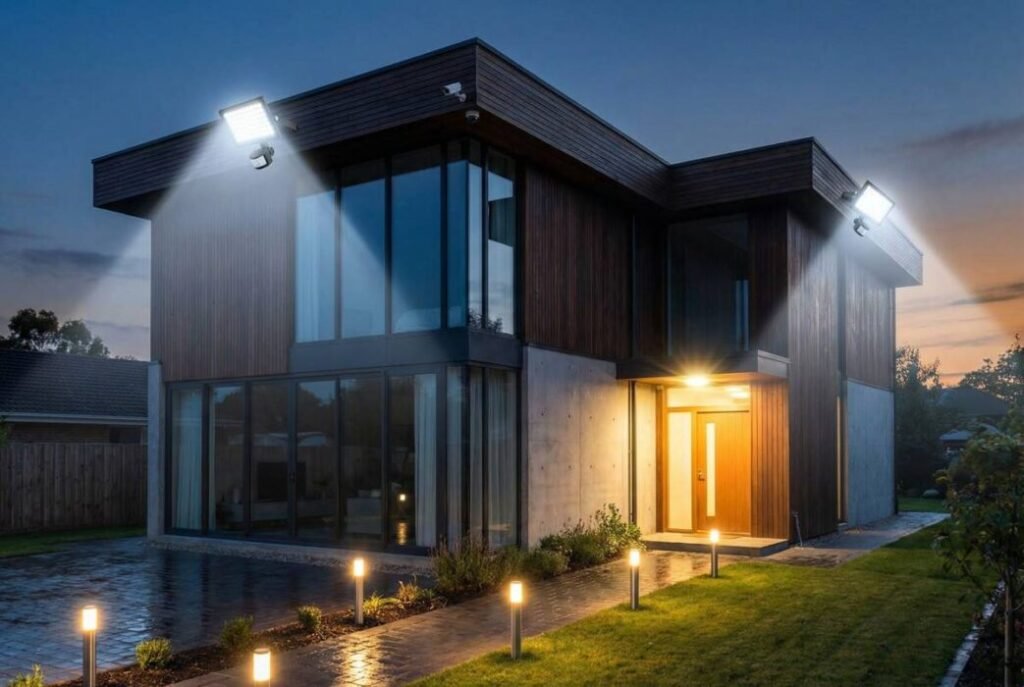
Effective outdoor lighting significantly deters potential intruders by eliminating dark hiding spots and increasing visibility around a property. Research indicates that well-lit homes are considerably less likely to be targeted by criminals, enhancing both safety and peace of mind for residents.
Types of Outdoor Security Lighting
Choosing the right type of outdoor security lighting involves understanding the unique benefits each option provides for different areas of your property. Each lighting solution serves a specific purpose, contributing to a comprehensive security strategy says Fireside PM, a leading property management Santa Clara CA.
Motion Sensor Lights
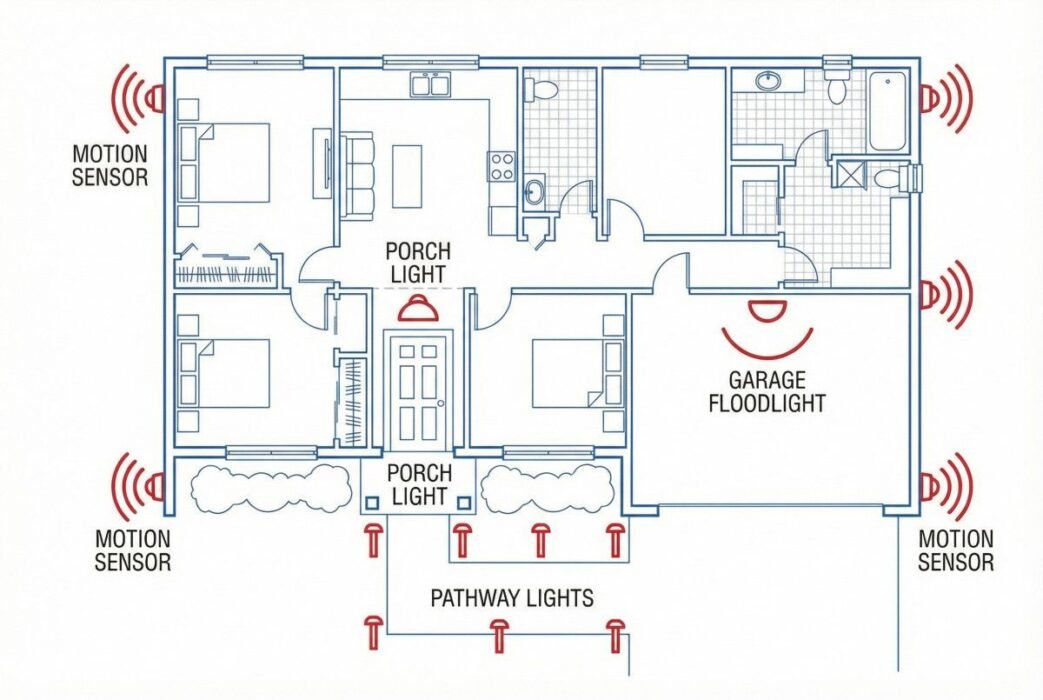
Motion-activated lighting is a cornerstone of effective home security systems, illuminating automatically upon detecting movement within their designated range. These fixtures are energy-efficient, activating only when needed, and can startle potential intruders, often causing them to retreat. Quality sensors can detect motion up to 50 feet away with a 240° detection zone, effectively eliminating dark spots around your property [1].
Floodlights
Floodlights are ideal for maximizing brightness over large outdoor areas such as backyards, driveways, and side yards. These powerful fixtures cast wide beams of light, creating high visibility that discourages unwanted visitors. Modern LED floodlights typically produce between 1,000 to 3,300 lumens, offering ample illumination for enhanced security [1].
Pathway and Step Lights
Pathway and step lights improve safety by illuminating walkways, stairs, and potential obstacles, significantly reducing the risk of falls. Proper placement of these lights, typically 6-8 feet apart for pathways and under stair treads for steps, ensures consistent illumination and highlights changes in elevation, making nighttime navigation safer [1].
Wall-Mounted Sconces
Outdoor wall sconces serve a dual purpose, acting as both security lights and aesthetic architectural features. Placed near entry points and along walls, they brighten these areas, removing potential hiding spots for intruders while enhancing the home’s curb appeal. Sconces are available in various styles to complement any home design [1].
Smart Lighting Systems
Smart lighting systems offer advanced control and customization, allowing homeowners to manage their outdoor lighting remotely via smartphones or other devices. These systems often integrate with other security devices, offering features like scheduling, motion detection, color changes, video recording, and two-way communication, providing comprehensive property protection [1].
Strategic Placement for Maximum Security
Strategic placement of outdoor security lights is crucial for deterring intruders and enhancing overall property safety. Proper positioning ensures that all vulnerable areas are adequately illuminated, leaving no dark spots for concealment.
Entry Points
Entry points, including all doors (front, back, and side) and accessible windows, require the most attention for outdoor security lighting. Bright wall sconces or floodlights should be mounted 6-10 feet above the ground near these areas to prevent tampering and provide optimal coverage. Motion-activated lights are particularly effective here, alerting residents to any unexpected activity [1].
Driveways and Garages
Driveways and garages are common hidden approach points for intruders, making them critical areas for security lighting. Motion-sensor floodlights are highly effective in these locations, illuminating large areas upon detecting movement. Angling floodlights to create overlapping beams can eliminate blind spots around garage doors and driveways [1].
Side Yards and Blind Spots
Side yards and other secluded areas often become security weak points due to their inherent darkness, offering potential hiding spots for intruders. Motion-detection lights are an excellent solution, instantly illuminating these areas when movement is detected. Focusing on corners and hidden spots ensures comprehensive coverage [1].
Fences and Property Boundaries
A well-lit perimeter significantly enhances security by establishing a visible boundary around the property. Lights placed along fences and property lines deter intruders by removing hiding spots and preventing accidents. For optimal security, lights should be positioned off the fence line, facing the home, with even coverage to avoid gaps [1].
Energy-Efficient and Smart Options
Modern outdoor security lighting extends beyond basic illumination, incorporating energy-saving and intelligent features that enhance both protection and convenience. These innovations contribute to a more secure home while reducing energy consumption.
Benefits of LED Lighting
LED security lights offer substantial advantages over traditional bulbs, consuming up to 80% less energy and providing significant long-term savings. Their instant illumination acts as an immediate deterrent, and their durability ensures reliable performance across various weather conditions. The extended lifespan of LEDs also reduces maintenance and replacement costs [1].
Solar-Powered Fixtures
Solar security lighting eliminates the need for complex wiring, making installation simpler and more flexible. These energy-efficient options harness sunlight during the day to power nighttime illumination, reducing utility bills and environmental impact. Many solar lights include motion sensors, conserving energy while maintaining security [1].
App-Controlled Smart Lights
App-controlled smart lighting systems provide unparalleled control, allowing users to adjust brightness, color, and timing from anywhere via mobile devices. These systems can be programmed to simulate occupancy, integrate with voice assistants, and combine with other security devices for a comprehensive smart home security solution [1].
FAQ
What is the ideal brightness for security lights?
For optimal home security, outdoor lights should generally provide between 700 and 1500 lumens. Brighter lights enhance visibility, making it more difficult for intruders to approach unnoticed and improving the clarity of surveillance footage.
Should security lights be on all night?
While continuous illumination can be effective, motion-activated lights are often preferred for security. They conserve energy by only activating when motion is detected, drawing attention to specific areas when needed, and startling potential intruders.
Can outdoor lighting really deter crime?
Yes, outdoor lighting is a proven deterrent. Studies have shown that well-lit areas experience significant reductions in nighttime crime rates, as criminals prefer to operate under the cover of darkness [1].
What are the best locations for motion sensor lights?
Motion sensor lights are most effective when placed near entry points, driveways, garages, and side yards. Positioning them to detect movement across their field of view, rather than directly towards them, improves accuracy and reduces false alarms.
How can I make my security lighting less obtrusive to neighbors?
To minimize disturbance to neighbors, use floodlights with adjustable heads and angle them carefully to avoid shining into adjacent properties. Consider indirect lighting techniques and choose fixtures with shields or diffusers to direct light downwards and prevent glare.
Conclusion
Selecting the appropriate outdoor lighting for home security is a critical investment in property protection and personal safety. By understanding the various types of lighting available, implementing strategic placement, and leveraging energy-efficient and smart technologies, homeowners can create a robust defense against intruders. A well-designed outdoor lighting system not only deters crime but also enhances the aesthetic appeal and functionality of your home’s exterior, providing lasting peace of mind.
References
[1] Martin’s Electrical and Lighting Company. (2025). *The Ultimate Guide to Choosing the Right Outdoor Security Lighting [2025 Expert Tips]*. (Referenced from: https://martins-electrical.com/the-ultimate-guide-to-choosing-the-right-outdoor-security-lighting-2025-expert-tips/)
