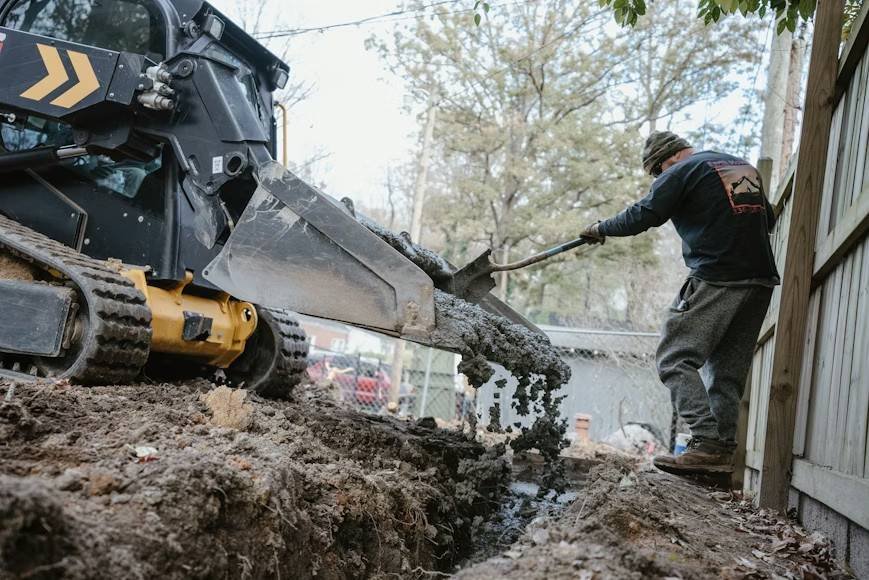
Want your garage, shed, or workshop to stand strong for decades?
The footing under those homes determines everything. Done properly the house should last 30+ years. Done incorrectly you’ll be fixing cracks, rot, and settling after only a few seasons.
Here’s the thing…
If there ever was a flooring material of choice for auxiliary structures, it would be reinforced concrete. Extremely durable and able to support heavy loads.
This guide explains precisely how to choose your foundation for a long lasting auxiliary building.
Let’s jump in!
Here’s what’s covered:
- Why Reinforced Concrete Flooring Wins For Auxiliary Builds
- What Makes A Foundation Truly Durable?
- Types Of Reinforcement You Should Know About
- 4x Steps To Get The Foundation Right
- Common Mistakes To Avoid
Why Reinforced Concrete Flooring Wins For Auxiliary Builds
Concrete flooring is not just an alternative…it’s the tried and true solution.
Why? Because garages, sheds, workshops and outbuildings are all subject to heavy loads. Vehicles, tools, machinery, stored equipment… quickly accumulates weight.
A weak foundation simply can’t handle it.
That’s why correctly poured garage floors and concrete shed floors help. Reinforced concrete flooring distributes weight across the whole slab. This prevents pressure points from developing. You won’t have any cracking, sinking or shifting.
The numbers back this up.
Industry figures show a well-installed concrete slab can last 20-30 years or longer with minimal maintenance. Even better, some concrete floors can last 50 years+ when reinforced properly and allowed to cure.
That’s a long time before any major repair is needed.
Reinforced concrete flooring also provides:
- A flat, level surface for storage and equipment
- Strong resistance to moisture, pests, and ground movement
- A secure anchor point for the shed walls or garage frame
- Easy cleaning and very low maintenance
So you dont just gain survivability… You gain a backbone that simplifies your entire aux build for easier use throughout.
And the best part?
The solid slab is poured once and never again. Not like timber or stone dust bases that have to be rebuilt every couple years.
What Makes A Foundation Truly Durable?
Not all foundations are built equal.
Foundations are only as strong as the materials used, engineering/design applied and preparation accomplished. Neglect one step and failure is inevitable.
Here’s what separates a strong foundation from a weak one:
- Thickness: Most auxiliary builds need 100-150mm slabs to handle the weight
- Reinforcement: Steel mesh or rebar gives the slab the tensile strength it needs
- Site prep: Proper levelling, compaction, and drainage are non-negotiable
- Concrete mix: The right strength grade matters for the intended use
Miss any of these and the slab will fail early.
Concrete floors are better than any other flooring available. Wood decays. Gravel sinks. Slabs crack. Concrete deals with insects, damp, soil movement and the elements beautifully.
A solid foundation isn’t an upgrade. It’s the starting line.
Types Of Reinforcement You Should Know About
There are multiple methods to strengthen a concrete slab. Each method has advantages based on the application.
The 3x most common types are:
- Steel rebar: Heavy duty steel bars placed in grid patterns prior to pouring. Ideal for vehicle accessible slabs, machinery supports or heavy storage.
- Steel mesh: Lighter than rebar, but still offers strength. Good option for smaller sheds and regular garage floors.
- Fibre reinforcement: Synthetic or steel fibres mixed directly into the wet concrete. Good for controlling surface cracking.
The right choice depends on the structure.
If you’re building a simple garden shed… mesh will likely suffice. If you’re framing a double garage/workshop for heavy machinery… use rebar.
Get the reinforcement right and the slab can handle anything you throw at it.
4x Steps To Get The Foundation Right
Pouring a slab isn’t a guessing game.
Do it right and you’ll have a 30 year lasting slab. Skip steps and you’ll get a slab that cracks in year 2. Here are the 4x steps that will make all the difference.
Step 1: Site Assessment
Start by checking the soil.
Expansive soil is reactive to moisture content. This causes it to swell when moisture is present and shrink when it dries out. If the soil swells beneath a slab that was not designed to withstand soil movement, it can cause cracking. A basic soil test lets you know precisely what you’re dealing with so the slab can be designed to accommodate it.
Step 2: Excavate & Prep
Excavate the topsoil, grade as needed and compact the base course. Install a layer of crushed stone for drainage.
Skipping this step is one of the biggest reasons slabs fail early.
Step 3: Formwork & Reinforcement
Build the formwork to set the slab’s shape and size.
Place the reinforcement (mesh or rebar) onto chairs so it rests in the center of the slab. This allows it to do the most work when the concrete is poured. This is extremely important if you want reinforced concrete flooring to function correctly.
Step 4: Pour & Cure
Pour the concrete in one go to avoid weak joins. Then… be patient.
Concrete takes approximately 7 days to set for light duty purposes and takes up to 28 days to fully cure.
Skip the curing process and you’ll regret it.
Common Mistakes To Avoid
The majority of foundation problems are caused by only a few errors. Eliminate these and your slab will surpass everything above it.
Watch out for:
- Slabs that are too thin – Anything under 100mm risks cracking under load
- Skipping reinforcement – Unreinforced slabs crack much faster
- Poor drainage – Water pooling under the slab erodes the base
- Rushing the cure – Applying a load to a slab before it has cured weakens the slab permanently.
- Cutting corners on site prep – A poor sub-base will result in a poor slab, regardless of the quality of concrete used
Always engage a professional concreter for any secondary construction. The initial price is worth it over repairing a failed slab in years to come.
Final Word
If you want your auxiliary building to last, begin with a good foundation. Reinforced concrete floors are the best option available.
It is:
- Long-lasting – 25 to 50+ years with basic maintenance
- Versatile – Handles everything from small sheds to commercial workshops
- Low maintenance – Set it and (mostly) forget it
- Strong – Built to take heavy loads day after day
Select the appropriate reinforcing, prepare the site correctly, and allow proper curing times. If you do these three things the foundation should last longer than anything else on site.
That’s the formula for building auxiliary structures that actually last.
Treat the foundation like the most important part of the build… Because it is.
