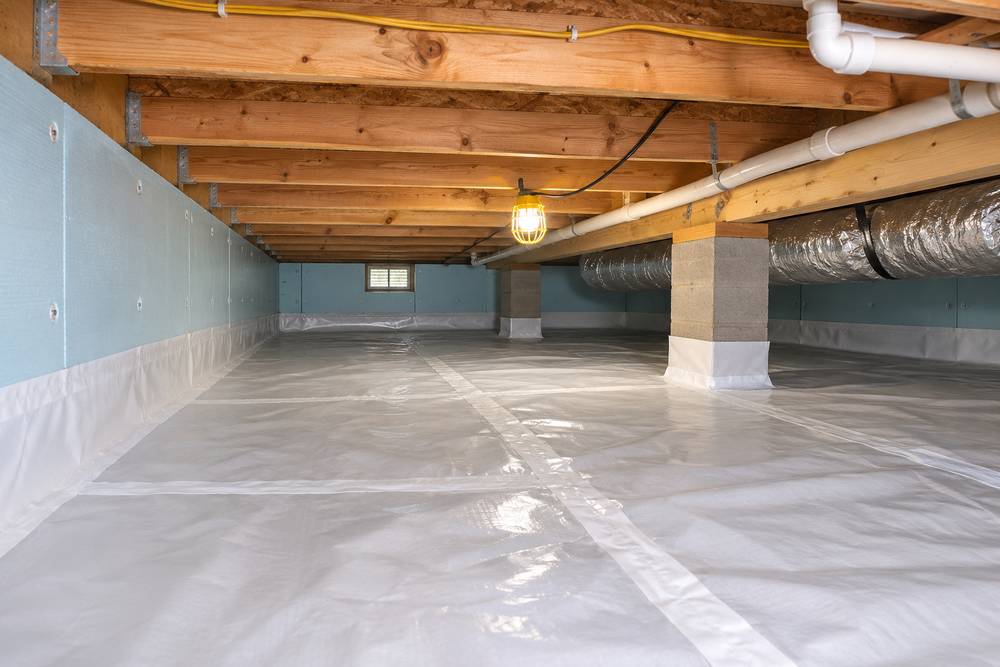
The realistic crawl space insulation cost in the United States runs roughly $0.30 to $3.00 per square foot in materials and about $1.00 to $7.00 per square foot installed, depending on your choice of fiberglass batt, rigid foam, or spray foam, so a typical crawl space lands near $1,500 to $8,000 or more when the moisture and vapor work are included. No single national price exists, and the number only holds if you fix dampness and add a vapor barrier first, because insulating a wet crawl space can trap moisture instead of saving energy.
Written as a cost-planning tool, this framework breaks crawl space insulation cost into material, labor, and the moisture and vapor lines that quietly add up. It builds one worked estimate, shows how size and region move the total, and sets a DIY-versus-professional threshold so you can check any quote against your own arithmetic. If you want a precise figure for your square footage, the crawl space insulation cost calculator on this site runs the numbers for you.
How crawl space insulation cost is put together
A crawl space estimate is mostly arithmetic, the coverage area times a per-square-foot rate for the insulation type, with different rates for fiberglass batt, rigid foam, and spray foam, plus moisture, vapor-barrier, and cleanup lines. The most important precondition is a dry space, because the vapor barrier and any dampness fix come before the insulation matters.
Across multiple 2026 contractor and guide sources, fiberglass batt runs about $0.30 to $0.60 per square foot in material and $1.00 to $2.00 installed, rigid foam about $0.80 to $1.50 material and $2.50 to $4.00 installed, and closed-cell spray foam about $1.50 to $3.00 material and $4.00 to $7.00 installed. A whole crawl space typically lands from roughly $1,500 for a vented budget job to $8,000 or more for a sealed, spray-foam crawl with a vapor barrier. These are planning ranges, not a fixed national price, and they vary with local labor and your crawl’s height and conditions.
A worked crawl space insulation cost
Here is the framework run for a typical 1,200-square-foot crawl space with fiberglass batt, a vented floor approach, and a vapor barrier; roughly $3,400 total sits in the middle of a realistic plan range for that scope. Change the material, the height, or the moisture work and only the matching line moves.
| Line | Amount | Rate | Line total | What it covers |
|---|---|---|---|---|
| Fiberglass batt, floor joists | 1,200 sq ft | $0.30 – $0.60 | $360 – $720 | Material between joists |
| Install labor | 1,200 sq ft | $0.70 – $1.40 | $840 – $1,680 | Fit and secure the batt |
| Vapor barrier | 1,200 sq ft | $0.30 – $0.70 | $360 – $840 | Ground moisture control |
| Subtotal | 1,200 | N/A | $1,560 – $3,240 | Coverage x rate |
| Air seal, venting, cleanup | N/A | N/A | $300 – $600 | Prep + tidy |
| Total estimate | 1,200 | N/A | $1,860 – $3,840 | Planning midpoint, not a quote |
Watch what changes if you choose closed-cell spray foam instead.
At roughly $4.00 to $7.00 per square foot installed across the same area, the same job can push toward $5,000 to $8,000, before the vapor and cleanup lines, which is why comparing only per-square-foot rates misleads.
Crawl space insulation cost by size and region
The square footage scales the total linearly, and your crawl’s height and whether it is damp or vented shift the labor and the vapor work. A high-cost metro and a taller or wetter crawl both push the total toward the top of the band, so size, height, and conditions pin where your quote falls.
As a quick read on the PAA figures, insulating a 1,000-square-foot crawl with batt usually lands near $1,500 to $3,200, and a fully encapsulated 2,000-square-foot crawl, which adds comprehensive sealing and a dehumidifier, can run toward $5,500 or more. The same square footage changes price mainly through the material and the moisture scope, so get a quote sized to your crawl’s actual height and dampness, not a flat per-foot number.
Hidden costs, including moisture and vapor handling
The items that push a crawl space quote up are the moisture fix, vapor barrier, venting changes, dehumidification, and cleanup.
A cheap per-square-foot rate usually hides them, and in a damp crawl space this moisture work is the precondition that keeps the insulation effective and keeps mold at bay.
- Moisture fix, any water entry, standing water, or high humidity that must be resolved before insulation.
- Vapor barrier, a high-quality barrier runs about $0.30 to $0.70 per square foot and is essential on a dirt floor.
- Venting or sealing work, deciding whether to balance vents or seal the crawl against the outside.
- Dehumidifier, roughly $300 to $1,500 where humidity must be actively controlled.
- Access and cleanup, the low, tight space and the removal of debris add time and cost.
- Labor share, often 50 to 70 percent of the total, so local rates matter.
Dampness is a genuine health concern, because crawl-space moisture can feed mold growth, which is why the U.S. Environmental Protection Agency mold guidance stresses controlling moisture first. Settle the water and vapor lines before any insulation, or the investment can trap moisture instead of paying back.
DIY versus professional crawl space insulation
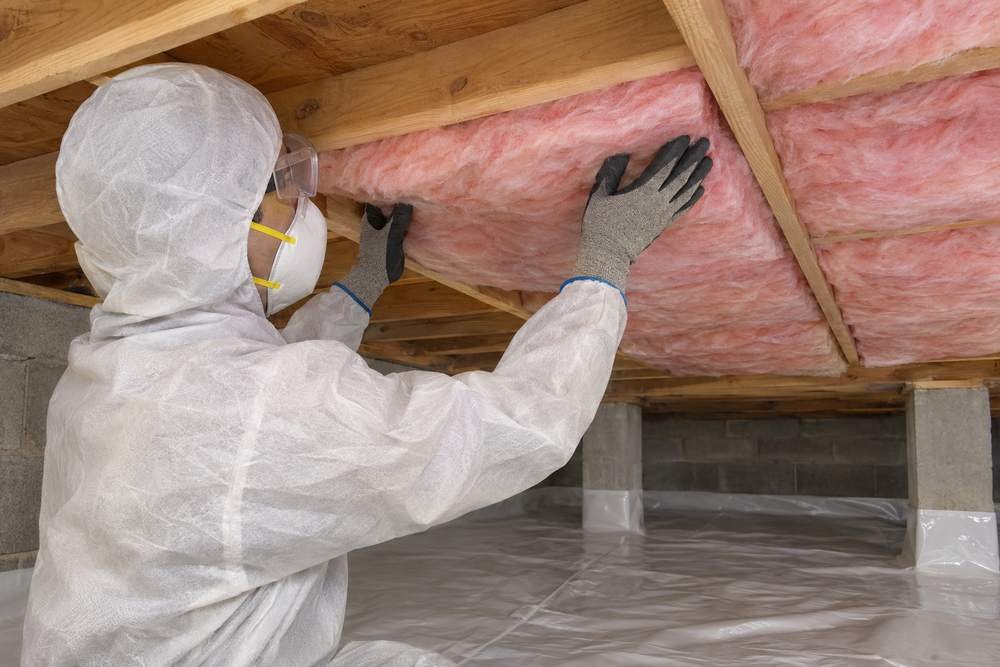
Fiberglass batt in a clean, dry vented crawl can be a reasonable DIY within reach of a careful homeowner, while a damp space, sealed-crawl work, or spray foam favors a professional who handles the moisture scope and equipment. Weigh the labor savings against the low-working space and the vapor-barrier risk.
At roughly $0.30 to $0.60 per square foot for batt materials, a dry, accessible fiberglass-batt job is an honest DIY project, with the caveat that the space is cramped and the vapor barrier and air-seal detail matter. Anything damp, tall, or requiring spray foam is best left to a licensed applicator who can address the moisture first. Only attempt the crawl yourself once water and humidity are known to be under control.
Questions people ask about crawl space insulation
Is it worth it to insulate a crawl space?
Yes, for most homes a conditioned or well-sealed crawl space cuts heat loss and reduces drafts where a lot of energy escapes, though the payoff depends on your climate and whether the space is dry. A dry crawl with a vapor barrier is where the investment makes sense.
What is the cheapest way to insulate a crawl space?
Fiberglass batt between the floor joists is the lowest-cost material, at roughly $0.30 to $0.60 per square foot, with a simple vapor barrier underneath. It is cheapest when the crawl is dry and accessible, so you skip the moisture repair.
How much does it cost to encapsulate a 2000 sq ft crawl space?
A fully encapsulated 2,000-square-foot crawl, with comprehensive sealing, a vapor barrier, and sometimes a dehumidifier, typically runs toward $5,500 or more, depending on conditions and local labor. The moisture and dehumidification scope drives most of the cost.
How often should I replace crawl space insulation?
Replace crawl space insulation when it is wet, crushed, or rodent-damaged, regardless of age, since moisture ruins its R-value and can feed mold. A dry batt can last many years, but a damp one should go sooner. Run the exact scope through the crawl space insulation cost calculator before you budget.
What your crawl space budget should be
Build your budget from coverage arithmetic, not from a per-square-foot promise, and clear the moisture and vapor precondition first; multiply your square footage by your local installed rate for the insulation type, then add the vapor and cleanup lines to get a number you can take to any contractor.
Set a realistic planning range from the source figures above, then get three itemized quotes on the same coverage, material, and moisture scope. The right crawl space insulation cost is the one that survives your own line-item math, and it starts with a dry crawl.
