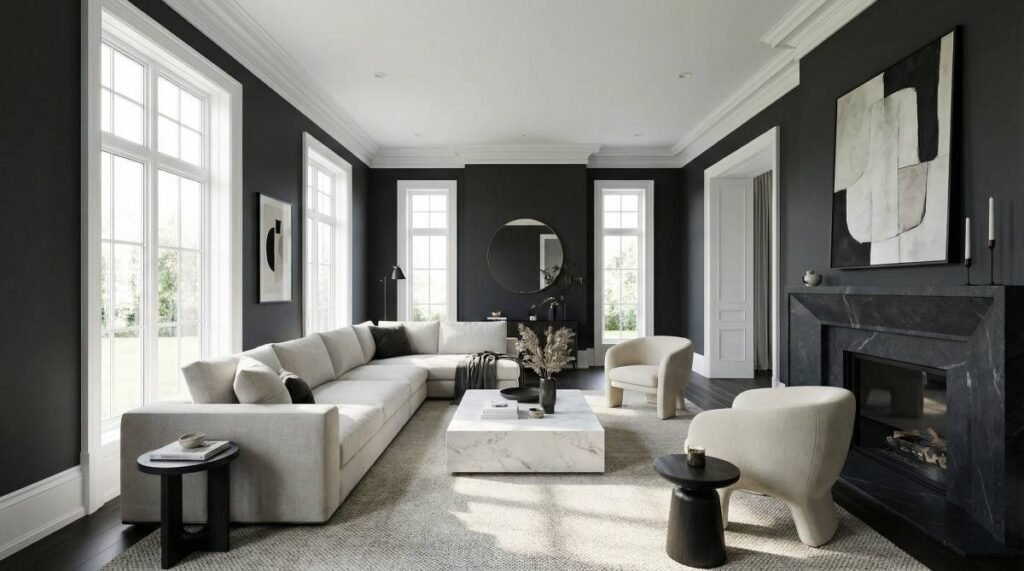
According to Retain Each management, dark paint does not automatically make a room feel smaller. Instead, it changes how the eye reads the boundaries of a space. While light colors reflect more light and create an airy atmosphere, darker hues absorb light and can soften the corners of a room, sometimes making it feel more expansive and intimate. The final perception depends heavily on lighting, furniture contrast, and the Light Reflectance Value of the chosen paint color.
The Science of Light Absorption and Room Perception
The perception of room size is primarily governed by how surfaces reflect or absorb light, a characteristic measured by the Light Reflectance Value or LRV. Darker paints have a lower LRV, meaning they absorb more light and reflect less back into the room, which can sometimes lead to a sense of the walls closing in if the space is poorly lit. However, this same absorption can cause the walls to recede into the background, effectively hiding the physical corners and making the room’s dimensions feel less defined and more mysterious.
When a room is painted in a dark shade, the lack of reflected light reduces the visual contrast between the walls and the shadows in the corners. This lack of definition can trick the brain into thinking the walls are further away than they actually are, especially in rooms with limited natural light where shadows are already prevalent. Understanding the LRV of a paint color is essential for predicting how it will interact with the available light in a specific environment.
| LRV Range | Reflectance Level | Typical Visual Effect on Space |
|---|---|---|
| 0 – 20 | Very Low | Absorbs most light; creates deep, receding boundaries and high intimacy. |
| 21 – 40 | Low to Medium | Provides significant depth; requires intentional lighting to avoid a cramped feel. |
| 41 – 60 | Medium | Balanced reflection; maintains room size perception without dramatic shifts. |
| 61 – 100 | High | Reflects most light; creates an airy, open, and clearly defined space. |
Choosing a paint with an LRV below 20 can create a dramatic, “enveloping” effect that is often sought after in bedrooms or media rooms. In these settings, the goal is not necessarily to make the room feel larger but to enhance the mood and comfort of the space. The key is to balance these low-LRV colors with elements that provide visual relief, such as lighter flooring or metallic accents that catch the remaining light.
Why Dark Paint Can Actually Expand a Small Space
Contrary to popular belief, dark paint can be a powerful tool for making a small room feel larger by creating a sense of infinite depth. When every wall is painted in a deep, uniform color, the sharp lines where the walls meet the ceiling and floor become less distinct, which can make the physical limits of the room seem to disappear. This “infinite” effect is particularly effective in small, windowless spaces like powder rooms or hallways where light colors might only highlight the lack of space.
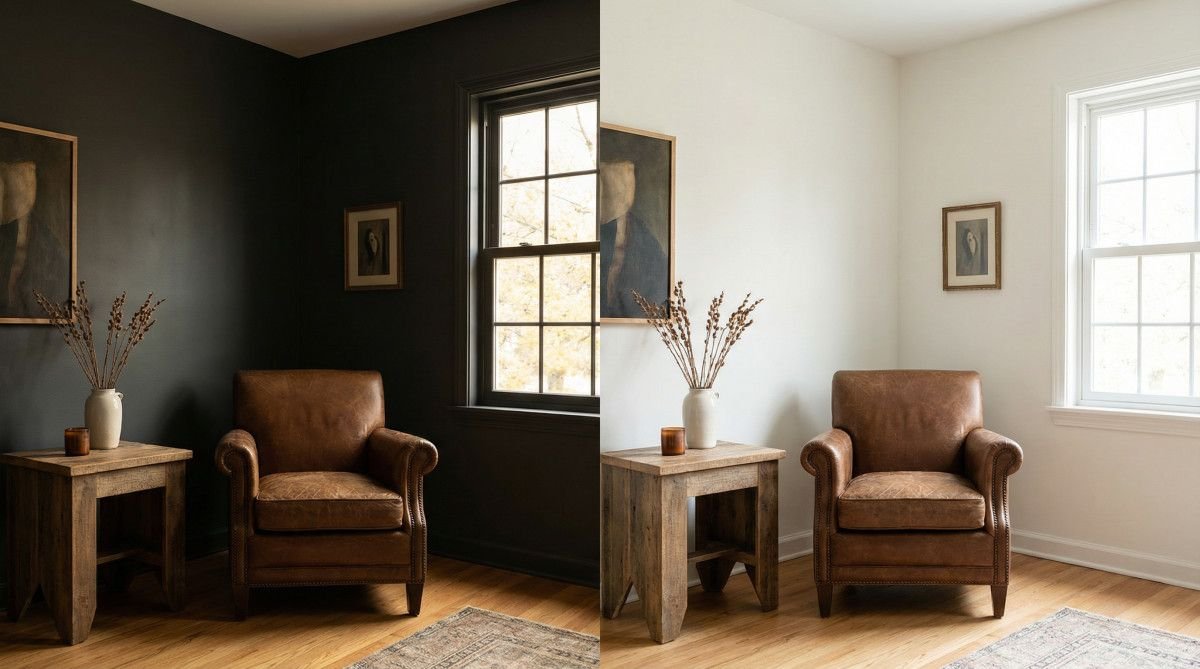
By using a dark color, you are essentially leaning into the smallness of the room to create a “jewel box” effect that feels intentional and luxurious rather than cramped. The depth provided by colors like charcoal, forest green, or navy blue adds a layer of sophistication that light colors often lack. When the eye cannot easily find the corners of a room, the brain perceives the space as being more expansive than its actual square footage would suggest.
To maximize this expanding effect, it is often recommended to paint the trim and even the ceiling in the same dark hue as the walls. This monochromatic approach eliminates the visual breaks that occur when white trim is used against dark walls, further blurring the boundaries of the room. When the entire space is wrapped in a single deep color, the eye moves continuously around the room without being stopped by high-contrast transitions, enhancing the overall sense of scale.
The Role of Lighting and Paint Finish in Spatial Perception
The success of a dark paint color in a small room is almost entirely dependent on the quality and quantity of lighting available. Natural light is the most effective way to bring out the undertones of a dark color and prevent it from feeling flat or oppressive, but artificial lighting is equally important for evening hours. Layering different types of light, such as overhead fixtures, wall sconces, and floor lamps, ensures that the dark walls are illuminated from multiple angles, highlighting their depth and texture.
The finish of the paint also plays a significant role in how light interacts with the dark surface and affects the perceived size of the room. While matte finishes are popular for their ability to hide wall imperfections and provide a velvety look, they absorb the most light and can make a room feel more closed in. In contrast, glossier finishes reflect more light, which can add a sense of movement and brightness to a dark room, though they also highlight every bump and crack in the plaster.
| Paint Finish | Light Reflection | Best Use for Dark Colors |
|---|---|---|
| Flat / Matte | Minimal | Creating a deep, non-reflective, and cozy atmosphere in bedrooms. |
| Eggshell | Low to Medium | Standard choice for living areas; provides a soft glow without high glare. |
| Satin | Medium | Ideal for kitchens and bathrooms; reflects enough light to maintain depth. |
| Semi-Gloss / Gloss | High | Best for trim or accent features to create highlights and visual interest. |
Using a satin or eggshell finish on dark walls provides a subtle sheen that catches the light without being overly reflective. This slight reflection helps to bounce light around the room, preventing the dark color from feeling like a “black hole.” When combined with strategic lighting, these finishes can make a dark room feel vibrant and alive, rather than small and stagnant.
Strategic Ways to Use Dark Paint Without Shrinking a Room
Successfully using dark paint in a small space requires a thoughtful approach to the surrounding decor and architectural details. One of the most effective strategies is to create high contrast with furniture and accessories, such as placing a light-colored sofa or a large, bright piece of art against a dark wall. This contrast provides a focal point for the eye and prevents the dark color from overwhelming the senses, making the room feel balanced and well-proportioned.
Another technique is to use mirrors and metallic surfaces to reflect light and create the illusion of more space. A large mirror placed opposite a window will not only double the amount of natural light in the room but also reflect the dark walls, adding to the sense of depth and complexity. Similarly, brass or chrome hardware and light fixtures can act as “jewelry” for the room, providing bright spots that break up the dark surfaces and add a touch of elegance.
- Select a dark color with a complex undertone, such as a navy with a hint of green or a charcoal with a touch of purple, to add more visual interest.
- Ensure the room has at least three sources of light to eliminate dark corners and highlight the paint’s depth.
- Use light-colored flooring or a large area rug to provide a “grounding” element that reflects light upward.
- Incorporate natural materials like wood, leather, and linen to add warmth and texture, preventing the dark room from feeling cold or sterile.
By following these steps, homeowners can confidently embrace dark paint colors even in the smallest of rooms. The goal is to move away from the idea of “making a room look bigger” and instead focus on “making a room feel better.” A well-executed dark room offers a level of comfort and sophistication that a standard white-walled space simply cannot match, proving that dark paint is a viable and stylish choice for any home improvement project.
Frequently Asked Questions
Does painting a small room dark make it look bigger?
While dark paint does not literally increase the size of a room, it can make a small space feel bigger by blurring the corners and creating a sense of infinite depth. When the eye cannot easily distinguish where one wall ends and another begins, the brain perceives the space as more expansive. This effect is most successful when the ceiling and trim are also painted in the same dark shade.
What are the best dark colors for small rooms?
The best dark colors for small rooms are those with deep, complex undertones like navy blue, forest green, charcoal gray, and even soft black. These colors provide a rich backdrop that adds character and sophistication without feeling flat. It is important to test these colors in the specific room’s lighting, as the undertones can shift significantly depending on the light source.
Should I paint the ceiling dark if the walls are dark?
Painting the ceiling the same dark color as the walls can actually make a room feel taller and more cohesive. This monochromatic approach removes the visual “lid” that a white ceiling creates, allowing the eye to travel upward without interruption. However, if the room has very low ceilings, a slightly lighter shade of the wall color might be a better choice to avoid a “caving in” sensation.
Does a dark accent wall make a room look smaller?
A dark accent wall can actually make a room feel longer or wider depending on which wall is chosen. Painting the furthest wall in a deep color can make it appear to recede, adding depth to the space. However, if the room is already very narrow, painting the long walls dark might make it feel more like a corridor, so it is best to use accent walls strategically to balance the room’s proportions.
How do you make a dark room feel bigger with lighting?
To make a dark room feel bigger, you should use a layered lighting approach that includes ambient, task, and accent lights. Placing lights in the corners of the room helps to eliminate shadows and highlight the depth of the dark paint. Using mirrors to reflect both natural and artificial light is also a highly effective way to increase the perceived scale of a dark-painted space.
What floor color goes best with dark walls?
Light-colored flooring, such as light oak, pale tile, or a large cream-colored area rug, provides the best contrast with dark walls. This contrast helps to reflect light back up into the room and prevents the space from feeling too heavy or dark. If you have dark floors, using a large, light-colored rug is an essential step to balance the room’s overall brightness and spatial perception.
Ultimately, the decision to use dark paint in a small room should be based on the desired mood and the specific characteristics of the space. By understanding the science of light and employing strategic design choices, any homeowner can create a stunning, intimate, and surprisingly spacious-feeling room with deep, dark hues. The key is to embrace the color fully and use it as a tool to enhance the unique architecture and light of the home.
