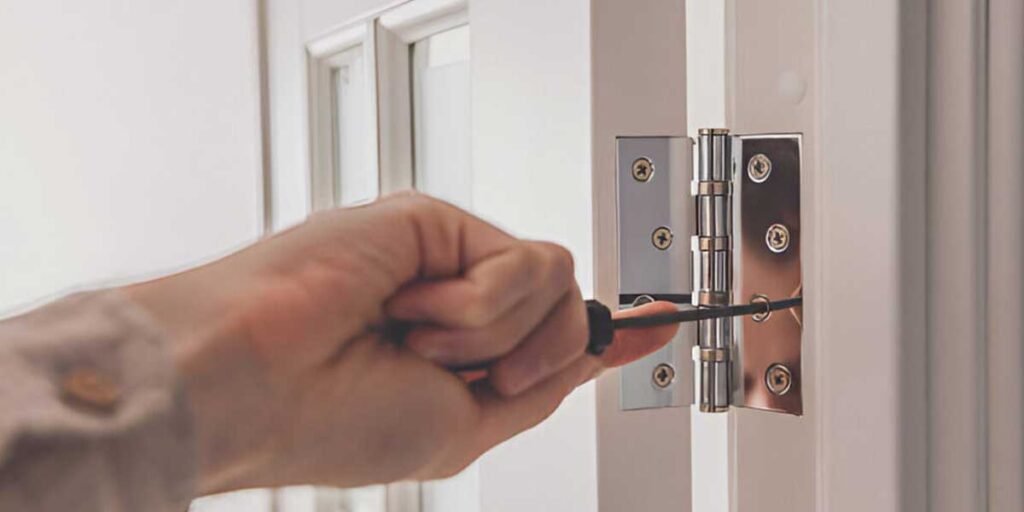
Entry doors maintenance tips come down to a regular rhythm that protects the finish and the seal: clean the door with a mild soap and water mixture and never a pressure wash or an abrasive, check and replace the weatherstripping rather than caulking a gap, seal and touch up the finish the way your door’s material asks, and lubricate the hinges, the lock, and the hardware, per the Masonite exterior-door maintenance guide. Wood, steel, and fiberglass each need their own care, and a door that lets air and water through, whether a worn weatherstrip, a loose hinge, or a wet sill, is a repair first and a replacement only when the frame or the finish is really gone. A little upkeep on a schedule keeps the door turning, sealing, and looking right for decades.
Below is the schedule, the safe steps, and where repair stops and replacement begins.
Entry doors maintenance tips, on a schedule
Run the maintenance on a frequency that catches small wear before it costs you, since a door that is cleaned, sealed, and lubricated on a schedule keeps the weather and the wear out, observes Real Capital Group Buffalo experts. The table lines up the task, its cadence, and the checkpoint.
| Cadence | Task | Use | Checkpoint |
|---|---|---|---|
| Every week | Wipe the face and edges | Mild soap, water, soft cloth | No dust or dirt build |
| Every month | Check the weatherstrip and the locks | Clean, close and look | Strip compresses when shut |
| Every season | Clean the glass, check the seals | Mild glass cleaner, soft cloth | No gap on the closed edge |
| Every year | Inspect, lubricate, touch up | Hinge oil, sealant, manufacturer finish | Door swings, seals, drains |
| When needed | Replace the worn weatherstrip | New strip, no caulk fill | The seal presses tight |
The schedule is the honest rhythm. Wipe the face and the edges with a mild soap and water and a soft cloth each week, check the weatherstripping and the locks monthly by closing the door and looking, clean the glass and the seals each season, and once a year go deeper, inspect the hinges and the hardware, lubricate what moves, and touch up the finish the way your door’s material asks. A worn weatherstrip gets replaced, never filled with caulk, and a door that seals, swings, and drains on this schedule stays tight against the weather and open to you.
The safe clean, step by step
Clean the door the safe way, see the mild soap and water and a soft cloth, and never the pressure washer, the abrasive, or the hot water, since a pressure wash can strip the top layer of the finish and a harsh cleaner can damage the material under it. Clean inside the frame too, where the dirt collects.
The clean is simple and gentle. Mix a mild soap and a little water, and clean the interior and the exterior of the door with a soft cloth, working for the frame and the edges as well, since dirt hides in the small spaces, and use a soft brush for a stubborn spot rather than a scouring pad. Clean a door with glass with a mild glass cleaner on a cloth over the panes, and finish with a clean, dry wipe to keep the finish bright. Avoid the pressure washer, which removes the top layer of the finish, avoid harsh or abrasive chemicals and hot water, and keep the strong substances away from the door when you clean the walls around it. A gentle clean keeps the finish on and the door looking new.
Weatherstripping, seals, and hardware
Keep the door airtight and easy to use by checking the line where it meets the frame, the weatherstrip that presses shut, the seals, the hinges, and the hardware, since most entry-door complaints are a worn seal or a squeaking, loose opener. The seal and the hardware are the most-maintained part of a door.
The seal and the hardware get the care. Look at the weatherstripping all the way around, and replace any cracked or worn strip, since a strip that does not compress when the door is closed lets air and water in, and do not try to refill one with caulk, replace the strip instead. Check the seals and the sill cap, adjust the sill and the strike plate so the weatherstrip meets firmly but does not bind, tighten the screws of the security hardware without overdoing it, and lubricate the hinges so the door swings smooth and wears less, with a graphite or a dry lubricant on the lock cylinder so it does not freeze or stick in the cold. A door that seals and swings on a maintained weatherstrip and hardware is the one that keeps out the draft and the water.
Material-specific care
Care for the door by the material it is made of, since wood, steel, and fiberglass each need their own upkeep, and follow your door’s manufacturer for the finish and the cleaner. The material sets how often you coat and how careful you clean.
The material decides the care. A wood door lets you stain or paint and needs a re-coat as the topcoat wears, so touch it up and reseal so the wood does not take in water, a steel door resists dents and needs its scratches touched with a rust-resistant touch-up so a chip does not rust, and a fiberglass door takes paint and resists the weather with little care, but it scratches and needs the finish kept whole. A door with glass needs the panes cleaned with a mild glass cleaner and the trim and the seals kept sound, and whatever your material, follow the manufacturer’s cleaner and finish instructions, since the wrong product can strip or damage the finish. Match the care to the material, and the door keeps its finish and its weather-tight seal.
Repair versus replacement, and the lifespan signals
Repair a door before you replace it, since most of what wears, the weatherstrip, a seal, a hinge, a lock, or a touch-up, is fixable, and replace only when the frame, the sill, or the finish is beyond a repair. The signals tell you which one.
The decision rule is practical. A worn or cracked weatherstrip, a loose hinge or screw, a lock that sticks, or a scratched painted finish are repairs, and replacing the strip, tightening the hardware, and touching up the paint or a steel touch-up keeps the door serving, so repair first. A door is ready for a replacement when the frame is rotted or warped and cannot hold the seals, the sill leaks into the house and will not seal, the finish peels or delaminates across a large area, the glass fogs and cannot be replaced simply, or the door is badly out of square, so measure the work against a replacement. For a structural frame, a wet threshold, or a full-door change, call a professional rather than fight a failing unit. Repair the small wear and replace the unit past repair, and the door stays sound.
Frequently asked questions
What is the best thing to clean exterior doors with? The best cleaner for an exterior door is a mild soap and water mixture on a soft cloth, never a pressure washer, a harsh abrasive, or very hot water, which can strip the finish. Wipe the frame and the edges too.
What are the maintenance tips for front doors with glass? A front door with glass needs the panes cleaned with a mild glass cleaner on a cloth, the seals around each lite kept sound so the glass does not rattle or fog, and the same gentle door finish care. Check the glass seals each season.
How to maintain an exterior front door? Maintain an exterior door by cleaning it gently each week, checking and replacing the weatherstrip monthly, sealing and touching up the finish each year, and lubricating the hinges and the lock, all the way your door’s material asks. A door that seals and swings is maintained.
When should I replace weatherstripping on a door? Replace the weatherstripping when it is cracked, worn, or no longer compresses tightly when the door closes, since a gap lets air and water in. Replace the strip rather than filling it with caulk.
How often should I lubricate the door hardware? Lubricate the hinges and the moving hardware about once a year, and use a graphite or a dry lubricant on the lock cylinder so it does not freeze or gum in the cold. Keep the hinges smooth and the lock turning, and the essential maintenance tips for residential swimming pools guide covers upkeep for the other part of the house on a schedule too.
Let the schedule, the material, and the repair decide
Use the entry doors maintenance tips by keeping a rhythm: clean the door gently with a mild soap and water each week, check and replace the weatherstrip rather than caulking a gap, seal and touch up the finish the way wood, steel, or fiberglass asks, and lubricate the hinges and the hardware each year, and repair the weatherstrip, the seal, the hinge, and the touch-up first, replacing the door only when the frame, the sill, or the finish is past repair. Care for the material, watch the seal, and act on the small wear, and your front door keeps turning, sealing, and standing against the weather for decades to come.
