
Choosing between flat, eggshell, and satin paint depends on a room’s traffic levels, moisture exposure, and wall condition. Flat paint offers a non-reflective finish that hides imperfections, while eggshell provides a subtle luster suitable for living areas. Satin paint delivers a durable, pearl-like sheen ideal for high-traffic zones like kitchens and bathrooms, explains Real Property Management Viking.
The primary difference between these finishes lies in their resin-to-pigment ratio, which determines the level of light reflection and surface durability. Higher sheen levels generally offer better washability but highlight wall flaws. Conversely, lower sheens excel at masking uneven surfaces but are more susceptible to scuffs and moisture damage.
Understanding Paint Sheen and Light Reflection
Paint sheen refers to the amount of light reflected off a dried paint surface, ranging from zero reflection in flat finishes to high reflectivity in gloss. This characteristic significantly impacts how colors appear under different lighting conditions and how easily the surface can be cleaned without damaging the paint film.
When light hits a flat surface, it scatters in multiple directions, creating a soft, velvety appearance that minimizes the visibility of bumps or patches. In contrast, satin and eggshell finishes reflect light more directly, which can make a room feel brighter but also draws attention to any underlying structural imperfections or poor drywall work.
The following table outlines the typical gloss levels and light reflectance values for the three most common interior paint finishes used in residential projects.
| Finish Type | Gloss Level (%) | Reflectivity | Best Feature |
|---|---|---|---|
| Flat / Matte | 0–5% | Very Low | Hides Imperfections |
| Eggshell | 10–25% | Low to Medium | Subtle Luster |
| Satin | 25–35% | Medium | High Durability |
Flat Paint: Best for Low Traffic and Imperfect Walls
Flat paint is a non-reflective finish that contains the highest concentration of pigment and the lowest amount of resin, making it ideal for ceilings and low-traffic areas. It excels at concealing surface flaws like scratches, dents, and uneven textures because it absorbs light rather than reflecting it back toward the viewer.
While traditional flat paints were difficult to clean, modern formulations have improved their scrubbability significantly. However, they remain the most porous of the three finishes, meaning they can absorb stains and moisture more easily than their higher-sheen counterparts. This makes them less suitable for humid environments like bathrooms or busy hallways.
One major advantage of flat paint is its ease of touch-up. Because the finish does not have a noticeable sheen, new paint blends seamlessly with the existing coat, allowing homeowners to fix small areas without repainting the entire wall. This characteristic makes it a favorite for rental properties and large commercial spaces.
Eggshell Finish: The Versatile Standard for Living Spaces
Eggshell paint provides a soft, low-sheen finish that mimics the surface of a real bird’s egg, offering a perfect middle ground between flat and satin. It is the most popular choice for interior walls in living rooms, dining rooms, and bedrooms because it provides enough durability for light cleaning while maintaining a sophisticated look.
The subtle luster of eggshell helps to bounce light around a room without creating the harsh glare often associated with glossier finishes. This quality enhances the depth of the paint color, making it appear richer and more vibrant. It is durable enough to withstand occasional wiping with a damp cloth to remove dust or light scuffs.
Homeowners often prefer eggshell because it is more resistant to stains than flat paint but less likely to highlight wall imperfections than satin. It offers a balanced performance that suits most residential applications where moderate durability is required without sacrificing the aesthetic appeal of a softer finish.
Satin Paint: Durability for High Traffic and Moisture
Satin paint is a versatile, medium-sheen finish known for its pearl-like glow and exceptional durability, making it the preferred choice for high-traffic areas and moisture-prone rooms. Its higher resin content creates a hard, non-porous surface that resists moisture, mildew, and heavy scrubbing better than flat or eggshell options.
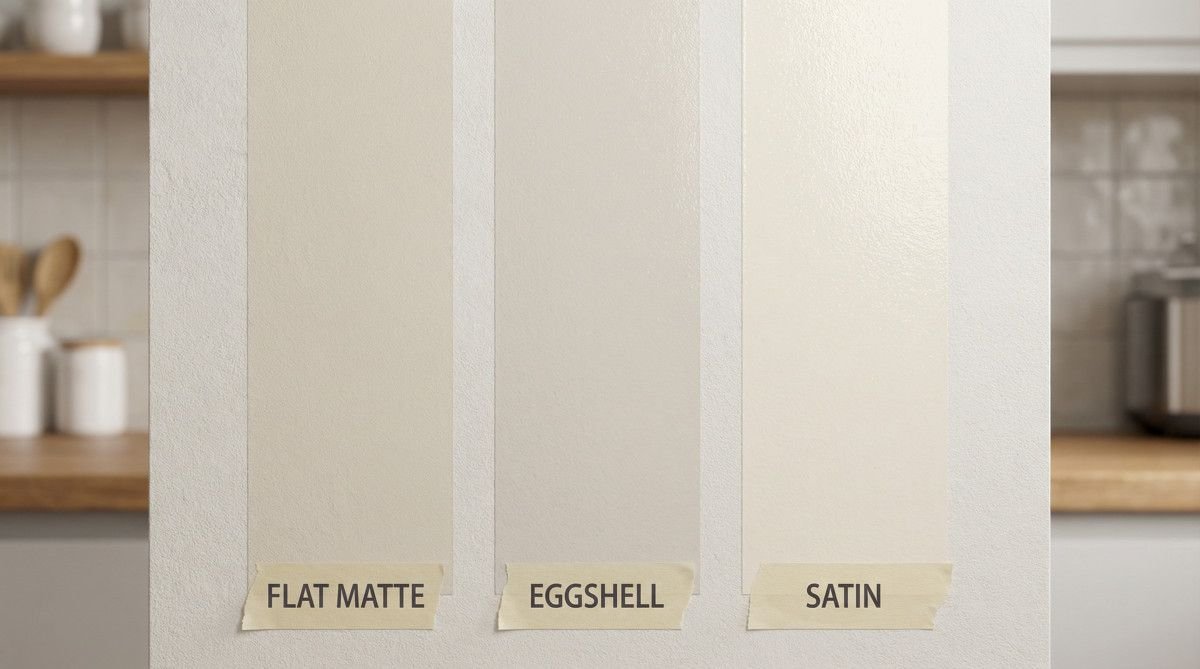
Because of its smooth surface, satin paint is incredibly easy to clean, which is essential for kitchens, bathrooms, and children’s playrooms. It can withstand the frequent cleaning required in these spaces without losing its luster or becoming dull. However, the increased reflectivity means that any bumps or unevenness in the drywall will be more visible.
Applying satin paint requires more care than lower sheens, as overlapping brush strokes or roller marks can become visible if the paint is not applied evenly. Despite this, its longevity and resistance to wear make it an excellent investment for surfaces that face daily physical contact, such as trim, doors, and cabinetry.
Room-by-Room Guide for Choosing the Right Finish
Selecting the right paint finish for each room involves balancing the aesthetic goals of the space with the practical demands of its daily use. High-moisture areas require the protection of a satin finish, while formal spaces with less activity can benefit from the elegant, muted appearance of flat or eggshell paint.
Ceilings are almost exclusively painted in a flat finish to prevent light from reflecting off the large surface area, which would highlight every seam and fastener in the drywall. For trim and doors, many designers opt for satin or even semi-gloss to provide a durable contrast against the softer sheen of the surrounding walls.
The table below provides a quick reference guide for the recommended paint finishes based on the specific requirements and typical conditions of various rooms within a standard residential home.
| Room Type | Recommended Finish | Reasoning |
|---|---|---|
| Master Bedroom | Flat or Eggshell | Low traffic, soft atmosphere |
| Living Room | Eggshell | Moderate traffic, balanced look |
| Kitchen | Satin | High moisture, easy to clean |
| Bathroom | Satin | Resists humidity and mildew |
| Hallways | Eggshell or Satin | High traffic, scuff resistance |
| Ceilings | Flat | Hides imperfections, no glare |
Frequently Asked Questions
Is eggshell or satin better for a living room?
Eggshell is generally better for a living room because it provides a soft, sophisticated look that hides minor wall imperfections while remaining durable enough for light cleaning. Satin may be too reflective for large wall surfaces in a relaxing space, potentially creating distracting glares from lamps or windows.
Can you use flat paint in a bathroom?
Using flat paint in a bathroom is not recommended because its porous surface absorbs moisture and is prone to mildew growth. The lack of resin makes it difficult to wipe away water spots or steam stains without damaging the finish. A satin finish is the superior choice for humid environments due to its moisture resistance.
Which paint finish is the easiest to touch up?
Flat paint is the easiest finish to touch up because it has no sheen to match, allowing new paint to blend perfectly with the old layer. Higher sheens like eggshell and satin are much harder to touch up because the difference in luster between the original and new paint will often create a visible patch.
Does satin paint make a room look brighter?
Satin paint can make a room look brighter because its medium-sheen surface reflects more light than flat or eggshell finishes. This reflectivity helps bounce both natural and artificial light around the space, which can be particularly beneficial in smaller rooms or areas with limited window access.
Is satin more expensive than flat paint?
Satin paint is often slightly more expensive than flat paint because it contains a higher concentration of resins and binders to create its durable, reflective finish. While the price difference per gallon is usually minimal, the long-term value of satin in high-traffic areas often outweighs the initial cost due to its superior longevity.
Should I use eggshell or satin for hallways?
For hallways, the choice depends on the level of activity; eggshell is suitable for low-traffic halls, while satin is better for busy areas with children or pets. Satin offers higher resistance to scuffs and fingerprints, making it easier to maintain the appearance of narrow passages that experience frequent physical contact.
Choosing the correct paint finish is just as important as selecting the right color for a home improvement project. By matching the sheen to the specific needs of each room, homeowners can ensure their walls remain beautiful and functional for years to come. Whether prioritizing the flawless look of flat paint or the rugged durability of satin, understanding these differences is key to a successful renovation.
