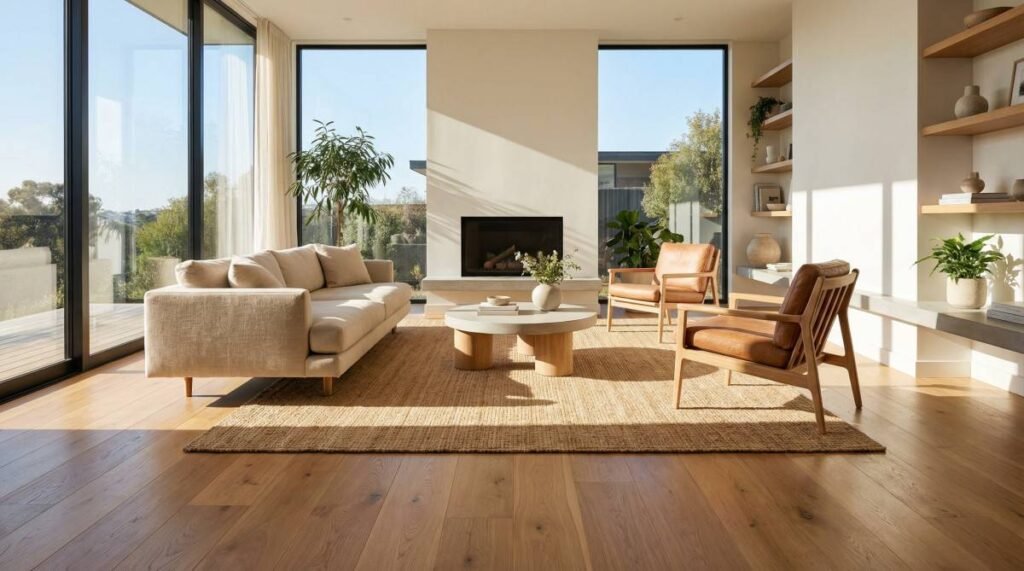
Choosing a flooring color that hides dirt means focusing on medium-toned shades like taupe, beige, or warm gray, since these colors often resemble the natural tone of common household debris. Extremely light or dark floors create stronger contrast with dust and hair, making them appear more noticeable. Opting for multi-tonal patterns and matte finishes, adds Norfolk Management Company, can further disguise surface imperfections and everyday grime.
Selecting the right floor color is a strategic decision for homeowners who prioritize low maintenance without sacrificing aesthetic appeal. The primary goal is to minimize the visual contrast between the flooring surface and the typical particles that accumulate daily, such as dust, pet dander, and dried mud. By understanding how light interacts with different pigments and textures, you can create a space that looks pristine for longer periods between cleanings.
While personal style often dictates home decor choices, the functional aspect of flooring color cannot be overlooked in high-traffic areas. Entryways, kitchens, and living rooms are particularly susceptible to rapid dirt accumulation, making them ideal candidates for dirt-concealing strategies. This guide examines the specific color palettes, finishes, and patterns that offer the best performance for busy households seeking a cleaner appearance with less effort.
The Power of Medium Tones for Concealing Debris
Medium-toned flooring colors like warm oak, hickory, and soft taupe are the most effective at hiding dirt because they sit in the middle of the value scale. These shades provide a neutral background that blends with both light-colored dust and darker soil particles. Unlike stark white or deep espresso, medium tones do not highlight every speck of debris that enters the home.
Brown and gray variations with warm undertones are particularly forgiving in active environments. These colors mimic the natural earth tones found in outdoor dirt, allowing small amounts of tracked-in soil to remain virtually invisible until a deep cleaning is performed. For many homeowners, a medium-brown wood or wood-look plank offers the perfect balance of traditional beauty and practical utility.
When comparing different color intensities, the medium range consistently outperforms the extremes in terms of daily maintenance. Light floors tend to show dark hair and wet footprints, while dark floors are notorious for highlighting light-colored dust and pet fur. The following table illustrates how different color categories perform against common household messes.
| Flooring Tone | Hides Dust | Hides Pet Hair | Hides Mud/Soil | Overall Maintenance |
|---|---|---|---|---|
| Light (White/Cream) | Excellent | Poor (Dark Hair) | Poor | High |
| Medium (Oak/Taupe) | Good | Excellent | Excellent | Low |
| Dark (Walnut/Black) | Poor | Poor (Light Hair) | Good | High |
Choosing a medium tone also provides more flexibility for interior design updates. These colors act as a versatile foundation that complements various wall paints and furniture styles. By investing in a medium-toned floor, you ensure a timeless look that remains functional even as your lifestyle or decor preferences evolve over time.
Utilizing Texture and Multi-Tonal Patterns
Multi-tonal patterns and textured surfaces hide dirt by breaking up the visual continuity of the floor, making it difficult for the eye to spot individual particles. Flooring with natural grain variations, knots, or “distressed” aesthetics provides built-in camouflage for scratches and debris. These visual interruptions distract from surface-level grime that would be obvious on a solid, uniform color.
Natural stone tiles with variegated veining or luxury vinyl planks with high-definition wood grain printing are excellent examples of multi-tonal options. When a floor contains multiple shades of brown, gray, and tan, a piece of dirt simply looks like part of the natural pattern. This effect is especially beneficial in large open-plan areas where light hits the floor from multiple angles.
Textured finishes such as wire-brushed wood or hand-scraped planks add a physical dimension that further aids in concealing wear and tear. These techniques create subtle shadows and highlights on the surface, which mask small scuffs and dust bunnies. In contrast, a perfectly smooth surface acts like a mirror, reflecting light in a way that emphasizes every imperfection and stray hair.
For carpeted areas, choosing a “flecked” or “berber” style can provide similar benefits. These carpets use yarns of different colors twisted together, creating a speckled appearance that is far more forgiving than solid-colored plush piles. Whether you prefer hard or soft surfaces, prioritizing visual complexity is a proven method for maintaining a clean-looking home with minimal daily intervention.
Why Matte and Low-Gloss Finishes Outperform High-Shine
Matte and low-gloss finishes are superior for hiding dirt because they diffuse light rather than reflecting it directly, which minimizes the visibility of smudges and dust. High-gloss floors act like a lens, magnifying every footprint, water spot, and oily residue left behind by bare feet or pets. A flatter finish keeps the focus on the floor color rather than surface-level contaminants.
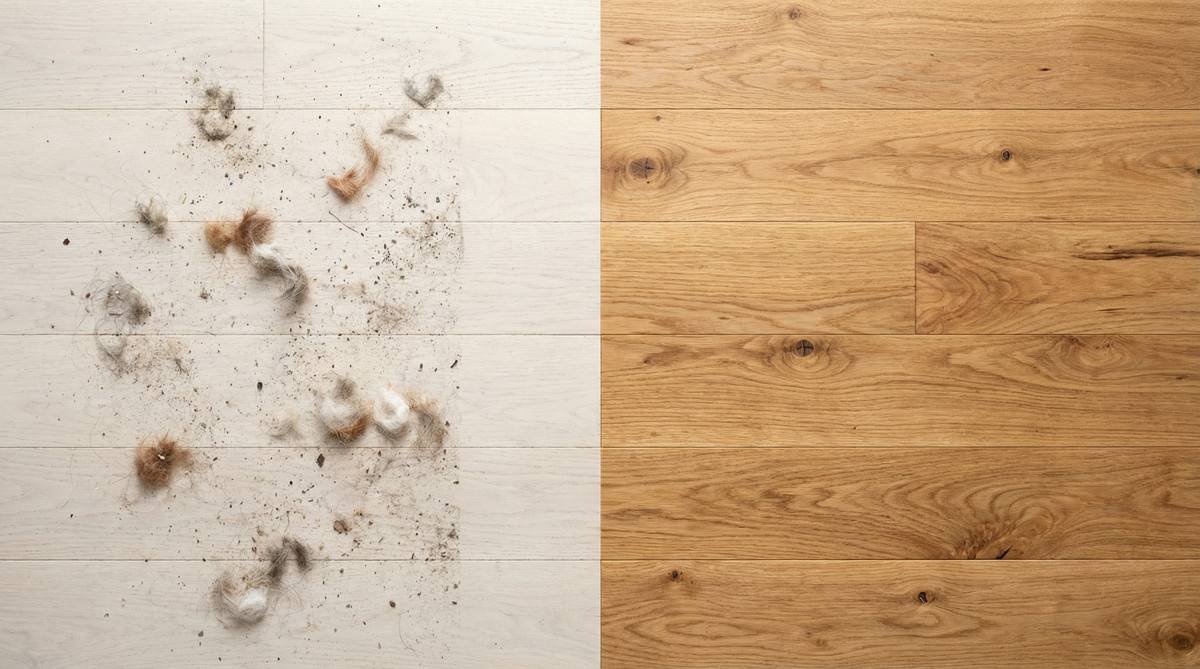
The science behind this involves how light rays bounce off different textures. On a shiny surface, light reflects in a uniform direction, making any disruption—like a layer of dust—highly visible as a dull spot. On a matte or satin finish, the light scatters in multiple directions, which naturally softens the appearance of the floor and hides the presence of fine particles.
Maintenance is significantly easier with low-sheen options because they do not require constant buffing to maintain their appearance. High-gloss floors often look streaky after mopping if the cleaning solution is not perfectly balanced or if the water is slightly hard. Matte surfaces are much more forgiving of imperfect cleaning techniques, allowing for a faster and less stressful maintenance routine.
Modern flooring technology has made matte finishes more durable and stain-resistant than ever before. Many luxury vinyl and laminate products now feature advanced top coats that provide a realistic low-luster look while offering maximum protection against spills. Choosing a matte finish is a practical way to ensure your floors look consistently clean throughout the day, regardless of the lighting conditions.
Matching Flooring Colors to Pet Hair and High Traffic
Matching your flooring color to the shade of your pet’s fur is a highly effective strategy for hiding shed hair between vacuuming sessions. If you have a golden retriever, a light oak or honey-toned floor will blend with the fur, whereas a dark walnut floor would highlight every strand. This “fur contrast” rule is a critical consideration for any household with furry companions.
For homes with multiple pets of different colors, a medium-toned floor with significant color variation remains the safest bet. These floors contain enough light and dark elements to mask a variety of hair types simultaneously. Additionally, choosing a floor with a durable wear layer is essential for resisting the scratches and “clicking” sounds associated with pet nails in high-traffic zones.
Entryways and mudrooms require extra attention to color selection due to the constant influx of outdoor elements. Using a darker, more saturated medium tone in these areas can help hide wet mud and damp footprints more effectively than very light shades. Implementing a transition zone with a high-quality walk-off mat can also reduce the amount of dirt that reaches your primary flooring surfaces.
Strategic color selection extends to the grout lines in tiled areas as well. Choosing a grout color that is slightly darker than the tile itself, or a neutral gray-brown, prevents the grout from looking dingy over time. By considering the specific types of “dirt” your household generates—whether it is pet hair, garden soil, or kitchen spills—you can tailor your flooring choice for maximum concealment and longevity.
Frequently Asked Questions
Does grey flooring hide dust well?
Grey flooring is exceptionally good at hiding dust because most household dust has a greyish or lint-like appearance. Light to medium grey shades provide a low-contrast background that allows fine particles to blend in seamlessly. However, very dark charcoal greys may still show light-colored debris and should be used with caution in high-dust environments.
Are dark floors harder to keep clean?
Dark floors are generally considered harder to keep clean because they show light-colored dust, pet hair, and dried water spots very clearly. The high contrast between the dark pigment and common household debris makes every speck stand out. While they offer a sophisticated look, they typically require more frequent sweeping and mopping to maintain a pristine appearance.
What is the best tile color for a busy kitchen?
The best tile color for a busy kitchen is a medium-toned beige, tan, or “greige” with a matte or textured finish. These colors effectively hide crumbs, dried spills, and water spots that are common in cooking areas. Tiles with a stone-look pattern or subtle veining are even more effective at masking daily messes compared to solid-colored ceramic or porcelain.
Can patterns help hide scratches and scuffs?
Patterns are highly effective at hiding scratches and scuffs because the visual complexity of the design draws the eye away from surface imperfections. Wood grains with heavy character, such as knots and mineral streaks, can make a small scratch look like a natural part of the wood. This makes patterned or high-variation flooring an excellent choice for homes with children or pets.
Is white flooring a bad choice for high-traffic areas?
White flooring is often a challenging choice for high-traffic areas because it shows dark dirt, mud, and hair very easily. While it can make a space feel bright and airy, it requires a rigorous cleaning schedule to prevent it from looking dingy. If you desire a light look, consider a very light oak or a “pickled” wood finish which offers more concealment than pure white.
Selecting a flooring color that hides dirt is a practical investment in your home’s long-term comfort and cleanliness. By prioritizing medium tones, matte finishes, and multi-tonal patterns, you can significantly reduce the time spent on daily maintenance. These choices allow you to enjoy a beautiful, welcoming environment that stands up to the realities of a busy lifestyle while maintaining its aesthetic integrity for years to come.
