Two patio door estimates for the same opening can differ by several hundred dollars without either contractor padding the bill. The difference lives in scope, and scope starts at your wall.
The average homeowner pays about $2,564 for a new sliding glass door, according to NerdWallet’s sliding glass door cost guide updated in April 2026, which cites Angi and reports a published spread from $336 to $8,991. A range that wide tells you the total by itself is nearly useless. What you can check is which conditions of your opening each quote priced in.
Read patio door estimates as statements of responsibility. Every line either accepts a piece of work or hands it back to you.
What an estimate is priced against
An estimate is priced against the rough opening and what surrounds it: sill, header, framing, floor transition, and the exterior flashing line. The door itself comes second in that order, and often matters less than the wall it has to fit.
Manufacturers sell patio doors in nominal sizes. A “6-foot” slider is not six feet of clear opening, and a tape measure rarely lands on the label. Half an inch of difference is routine; two inches changes the model you can order and the hardware that ships with it. That gap between the label and the wall is where the first real cost decision sits.
Prep work is the part most homeowners skip when they compare estimates. The old unit comes out, the sill gets probed for soft lumber, the opening gets squared and shimmed, and the house gets closed up so weather and insects stay outside overnight. Hidden conditions surface here: rot at the sill, a header that was shimmed instead of repaired, a threshold sitting below the exterior grade line.
That is why the assumption line matters more than the total. A note reading “price assumes existing opening is sound” shifts risk to you the moment a pry bar finds something else.
A same-size swap on a sound opening is typically a one-day job for a two-person crew, and that scenario is what published price ranges describe. Change the opening’s size, or find rot that reaches the framing, and the work stops being a door replacement. Cutting or reinforcing framing, and creating a new exterior opening, belong to a licensed contractor working under a permit.
A repair quote belongs beside the replacement quote. NerdWallet’s April 2026 guide puts a replacement glass panel at $250 to $1,000 and fresh rollers and track at $110 to $300, which is the comparison to run when the frame and sill still test sound.
What moves the number before any labor is priced
Panel count and glass specification set the price of the door before any labor gets billed. Frame material and the number of panels that actually open move the number further, and finish color sits far down the list.
Sliding patio doors are the baseline configuration: two panels, one fixed and one riding a track. A slider needs no swing clearance and carries one track with one set of rollers, which is why a two-panel unit is the cheapest way to fill a standard opening.
Folding patio doors trade hardware for width. A bifold or telescoping system stacks its panels to one side, and every panel brings its own hinges or pivots plus its own length of track. NerdWallet puts multi-panel doors, including telescoping and bifold designs, between $2,500 and $6,500. The money buys a wider clear opening, and it asks more of the header above the door.
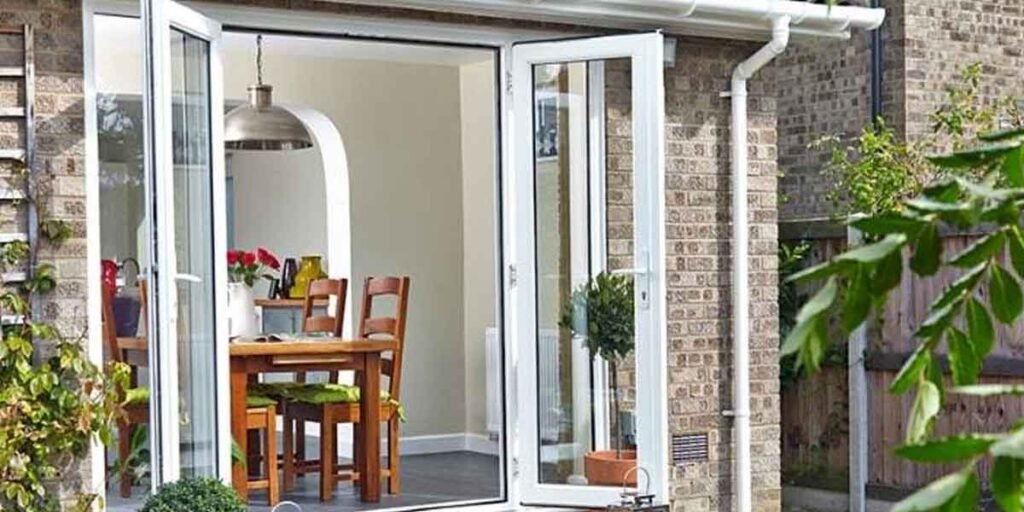
The patio doors sliding vs french decision turns on clearance and hardware. French doors swing, so they need floor space in front of them on one side, and two hinged leaves cost more in hardware than a single track. At equal opening width, a slider is the cheaper installation.
A French door earns its price when the room has the clearance and the opening is wide enough that a slider would dominate the wall.
Glass is the line most buyers underread. Low-E coatings, argon fill, and laminated or tempered panes are priced separately, and that is where two quotes on the same frame often separate.
Two doors sold as energy efficient can carry different ratings. ENERGY STAR’s criteria for doors are based on how much glass the door contains, called the glazing level, together with ratings certified by the National Fenestration Rating Council, and those criteria change by climate zone. An adjective cannot be compared across quotes. The U-factor and solar heat gain coefficient on the NFRC label can.
Safety glazing counts as required work. Federal rules in 16 CFR 1201.1 list sliding glass doors of the patio type among the products whose glazing must meet the safety standard, alongside storm doors, shower enclosures, and glazed panels. A quote that sells tempered or laminated glass back as an optional upgrade deserves a second look.
Frame material lands last. Vinyl is the cheapest and most common choice; aluminum costs a little more and insulates less; fiberglass and wood-clad units raise the unit price, and wood asks for periodic finish work that vinyl never demands.
Why two quotes for the same door differ by hundreds
Labor is priced by access, disruption, and finishing, not by the door. One contractor bids a straight swap; another bids a swap plus trim repair, flashing, disposal, and cleanup. Both totals can be honest and still differ by hundreds.
Some contractors bill hourly and some price the opening as a package. NerdWallet’s guide lists professional labor at $70 to $100 per hour, an hourly rate whose project total depends on crew size and time on site. A flat per-opening price hides the hours the crew expects; an hourly rate with no hour estimate hides the same thing from the other side. Ask for both numbers, and the two patio door estimates become readable side by side.
Access decides more of the labor than most homeowners expect. A walkout with a clear path takes a different morning than a second-floor deck, a narrow side yard, or a courtyard where the unit has to be lifted over plantings. The same door on a harder approach can turn a half-day into two.
Disposal is the line that quietly changes hands. An old patio door leaves the house as glass and aluminum, and hauling it away costs money.
A quote can include that cost or leave it with you.
Flashing and weatherproofing sit above the door head and behind the side jambs. When the flashing is wrong, water shows up at the interior floor a season later, and the fix involves the door you just paid to install.
Interior restoration is the most common exclusion. Drywall patching, paint touch-up along the jambs, the floor transition strip at the sill, and threshold work all happen after the door is hung. A homeowner can take those tasks on. The risk is discovering them once the invoice arrives.
Dollar anchors for those same lines, unit through permit, are collected in a line-by-line breakdown of patio doors cost. Which of them a given contractor has already priced into your project is a different question, and it gets answered in the exclusions, not in the total.
What turns a line item into a change order
Change orders come from conditions a patio door estimate assumed away. Soft sill lumber, an out-of-square opening, rot behind interior trim, a permit nobody filed, and debris nobody priced all arrive as new charges after the deposit is paid.
Two patterns deserve a hard look. The first is the quote that leaves you the old door and a trip to the transfer station. The second is the quote that hands the permit question to the homeowner, which turns into a problem at resale when an inspector asks who approved the exterior work.
A blank line is the real problem. Ask for a conditional unit price in writing: so much per hour of sill repair, so much to correct a rough opening, so much to patch and paint interior trim. A number on the page can be compared. A blank becomes whatever the crew finds.
Where damage reaches the framing, or the opening has to change dimensions, the project changes category. Removing or replacing a header, cutting a wider opening, and the inspection schedule that follows require a licensed contractor and a permit. Insulation and air sealing work that has to satisfy an energy code inspection falls in the same bucket.
Five questions to answer before comparing patio door estimates
Answer these five questions in writing before you compare two patio door estimates. Each one forces a quote to state an assumption you can check, and each costs the contractor a sentence to answer.
- What is the measured opening? Width, height, and sill condition, measured at the wall, not copied from the old door’s label.
- What glass rating is included? U-factor, solar heat gain coefficient, and glazing level, plus whether safety glazing is standard.
- How is labor priced? Hourly or per opening, with the assumed crew size and hours written down.
- Who handles removal, disposal, flashing, and interior restoration? One line per task, with the owner named as contractor or homeowner.
- How does hidden damage get priced? A conditional rate for sill repair, opening correction, and trim, agreed while the old door is still in place.
Two quotes that answer all five can be compared on merit. Two quotes that answer two of five get compared on price alone, and that contest rewards the shortest scope.
Questions homeowners ask before signing
Four questions decide whether two quotes are describing the same work, and each has a short answer that survives a call to the contractor.
What is the average cost to install a patio door?
Published patio door estimates for a full replacement cluster near $2,564, the homeowner average NerdWallet reports in its April 2026 sliding glass door cost guide, with the same source showing a spread from $336 to $8,991. Those figures bundle the door and the installation into one number, so they describe turnkey work on a routine opening, not labor alone.
Which is cheaper, patio doors or French doors?
A sliding unit costs less to buy and to install at the same opening width. French doors add hinged hardware and require swing clearance, and their price climbs faster as the opening widens.
What do Home Depot and Lowe’s charge to install a patio door?
Neither retailer publishes a single installation rate. Both price installation per store and per promotion, with the door bundled into the labor, so the figure you get depends on the store, the season, and the model chosen.
Do you need a permit to replace a patio door?
A same-size replacement in an existing opening frequently skips the permit, while a change in opening size, a new opening, or structural repair draws one. Local building departments draw that line, and the answer belongs in writing before work starts.
Until the exclusions are on paper, two patio door estimates cannot be compared at all. Record the measured opening, the glass rating, the labor basis, who hauls the old unit away, and how hidden damage gets priced, and the totals finally describe the same project.
