The types of energy-efficient windows come down to how the glass, the gas, and the frame perform, not to a brand name, and the payoff is real, since roughly 30 percent of a typical home’s heating and cooling is lost through its windows, and the ENERGY STAR program reports that replacing single-pane windows with certified ones cuts household energy bills by an average of up to 13 percent nationwide. The most efficient type is a fixed window, which seals perfectly, and among operating windows a double- or triple-pane unit with a low-e coating, an argon or krypton gas fill, and a warm-edge spacer rates highest, with a low U-factor that a colder region rewards.
Choose by the climate, the orientation, and the budget, and read the U-factor and the solar-heat-gain coefficient rather than the sticker brand. Below is the comparison matrix, how the glass works, the frame choices, and the failure risks to watch.
Types of energy-efficient windows, compared by use
Compare windows by the glass, the frame, and the window type, and weigh the U-factor against your climate, because the most efficient unit for a cold, north-facing home is not the best for a hot, south-facing one. The matrix sorts the main types against the performance and the use.
| Type | How it saves | Best climate | Cost note |
|---|---|---|---|
| Double-pane, low-e | Two panes, low-e coating blocks heat | Most regions | Base of most certified windows |
| Triple-pane | Three panes, more insulation | Very cold | Higher cost, best in the north |
| Gas-filled (argon/krypton) | Gas between panes slows heat | Cold and hot | Adds a small premium |
| Fixed / non-opering | Seals best, no moving parts | Any | Most airtight, no venting |
The matrix is the starting point. A double-pane window with a low-e coating is the workhorse of certified windows for most of the country, a triple-pane unit with a krypton fill and a low U-factor earns its extra cost in a very cold region, a gas fill slows the heat transfer between the panes in both heat and cold, and a fixed window seals best since it has no moving sash to leak. The same frame in a cooler glass handles a hot, sunny exposure differently than a cold one, so the matrix pairs each type to a use rather than a single winner.
What makes a window efficient: glass, gas, and U-factor
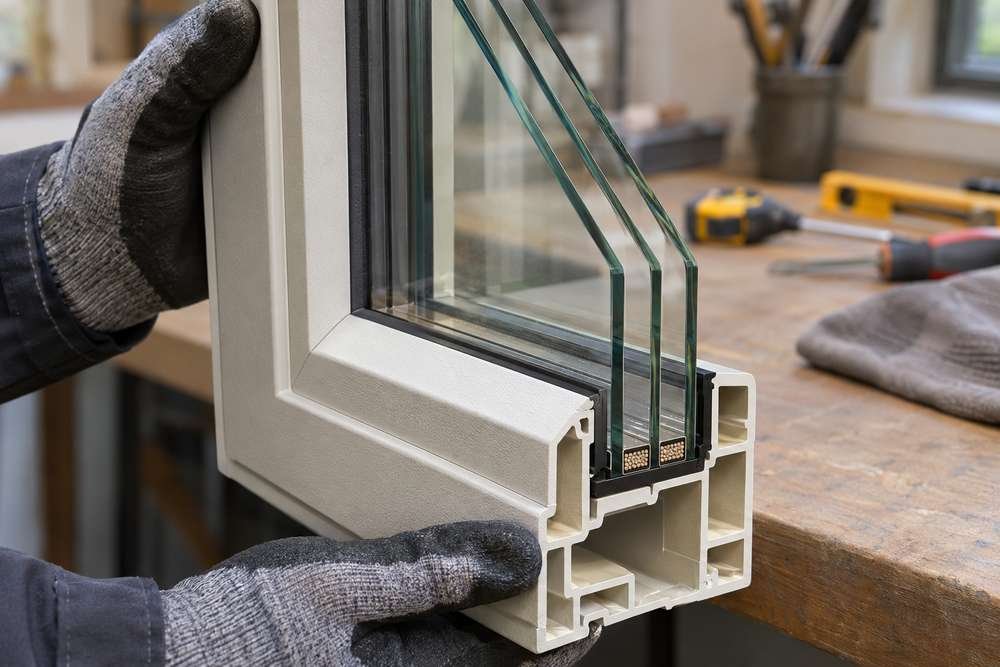
The window’s performance lives in the glass and the space between the panes, so the U-factor, the low-e coating that blocks the heat and the UV, the gas fill that slows transfer, and the spacer carry the label. A lower U-factor means less heat moves through, and the SHGC sets how much sun heat the glass lets in.
Read the numbers, not the brand. The U-factor measures how easily heat passes through, and a lower one is better for keeping a home comfortable, while the SHGC and the visible transmittance shape how much solar heat and light the window admits, which a south-facing, hot, or very sunny home weighs differently. A low-e coating reflects the heat and the UV while letting light through, an argon or krypton gas between the panes slows the heat, and a warm-edge spacer cuts the cold edge. Together these decide the certified rating, and the climate-zone label tells you which performance the local list expects.
Frame material: vinyl, wood, or fiberglass
Choose the frame by the upkeep you want and the look you need: vinyl is the low-maintenance workhorse, wood delivers a classic look but needs care, and fiberglass is durable and close to wood in appearance with less upkeep. The frame and the glass together set the window’s performance and its upkeep.
| Frame | Feels | Upkeep | Best for |
|---|---|---|---|
| Vinyl | Budget to mid | Low | Most replacement jobs |
| Wood | Classic, warm | Needs care, paint or stain | Historic or traditional homes |
| Fiberglass | Durable, close to wood | Low | Premium, low-upkeep homes |
The frame is a large part of the look and the upkeep. A vinyl frame is the low-maintenance workhorse of affordable replacement and carries most certified windows, a wood frame brings a warm, classic look but wants regular paint or stain, and a fiberglass frame is durable, thermally strong, and reads close to wood with far less upkeep. A window’s thermal performance comes from the glass and the frame together, so a composite or fiberglass frame with a strong R-value and a certified glass pair well. Match the frame to how much upkeep you want and the look of the house, and the glass to the climate.
Climate, orientation, and the right performance rating
Match the window to your climate zone and the window’s orientation, since a very cold region rewards a triple-pane, low-U-factor window, a hot region rewards a low-SHGC glass that blocks solar heat, and a south-facing or west-facing window in a warm climate wants the low-SHGC most. The ENERGY STAR climate-zone label does the matching for you.
The climate and the orientation decide the numbers. A cold, northern climate rewards a low U-factor, so a triple-pane unit or one with a strong low-e and a gas fill earns its extra cost, while a hot, southern climate rewards a low SHGC, so a glass that blocks solar heat without giving up light is the priority, and a southwest exposure in any warm region wants that low SHGC most. The ENERGY STAR program issues a separate certified label for each climate zone, so picking the label for where you live is the reliable shortcut. Match the glass to the climate and the orientation, and the window performs where it counts rather than just on paper.
What fails: seal and condensation risks
A window’s efficiency fails when its seal breaks, so watch for a fogged or clouded pane, a failed double-pane unit, or condensation between the glass, since a lost seal kills the insulating gas and the rating. Catch it early, honor the warranty, and replace a failed unit rather than live with the loss.
The failure is the seal. A double- or triple-pane window keeps its value only while the seal holds the gas between the panes, and once it fails you see a fog or a cloud between the glass and the U-factor drops, so a glaze that looks clear from outside but fogs on a cold morning is a flag. Check the windows each season, keep the tracks and the weep holes clear for the operating ones, and when a seal fails, claim the warranty and replace the unit, since a fogged pane has already lost its insulation. The same care that protects the windows protects the openings around them, and the energy-efficient windows cost: average prices and savings guide sets the budget for the upgrade.
Frequently asked questions
What style of window is most energy-efficient? A fixed, non-operating window is the most energy-efficient because it seals with no moving sash to leak, and among operating windows a casement or a sturdily sealed style rates high. Fixed windows give up the venting.
Which window brand is the most energy-efficient? The most efficient is the one that earns the right performance rating for your climate, not a single brand, so read the U-factor and SHGC and pick the ENERGY STAR label for your climate zone. A certified window in an efficient frame saves regardless of the name.
Is there a tax credit for energy-efficient windows in 2026? There is a federal tax credit for qualifying energy-efficient upgrades, and it is worth checking the current program and the window’s certification before you buy, since the credit amount and the rules change by year. The savings from a certified window and its state and utility rebates add to it.
Which windows have the best R-value? Windows are rated by the U-factor, the inverse of the R-value, so the best is a low U-factor: a triple-pane unit with a low-e coating, a gas fill, and a fiberglass or composite frame lists lowest. Lower U-factor means less heat loss.
Are triple-pane windows worth the extra cost? A triple-pane window is worth the extra cost in a very cold climate, where the low U-factor saves the most, and less so in a mild or hot one. Match the panes to the climate to get your money back in savings.
Let the climate, the orientation, and the seal decide
Choose the types of energy-efficient windows by reading the glass, the gas, and the frame against your climate and the window’s orientation, and weigh the U-factor and the SHGC rather than the brand, with the ENERGY STAR climate-zone label as the reliable shortcut. A fixed window seals best, a double- or triple-pane unit with a low-e and a gas fill carries most of the country, and a hot or south-facing home wants the low SHGC. Match the window to the climate and keep the seal sound, and the windows repay you in comfort and a lower bill for the years you own them.
