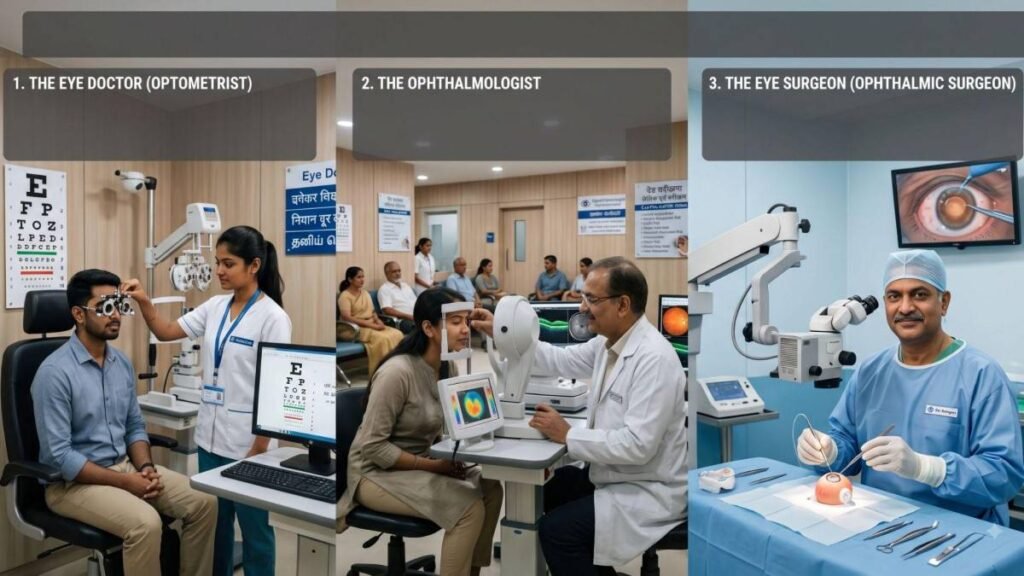
Not every eye concern needs the same kind of specialist. Some problems may only need a routine eye check, while others require medical treatment or surgery. This scenario is where the roles of an eye doctor, ophthalmologist and eye surgeon differ. Knowing what each professional does can help you seek the right care for your vision and overall eye health too.
What Does an Eye Doctor Do?
An eye doctor is like a general catchall phrase for someone who does eye exams, checks your sight, and picks out everyday eye concerns. Depending on their specific qualifications, they might look for visual sharpness, eye pressure levels, the retina and the optic nerve.
People usually consult an eye doctor for concerns such as:
- Blurred or unclear vision
- Eye strain or related headaches
- Redness, irritation or discomfort
- Sensitivity to light
- Sudden or gradual changes in vision
Based on the examination, the doctor may suggest glasses, contact lenses, medicines, further tests or a referral to an eye specialist.
Ophthalmologist
An ophthalmologist is a medical doctor trained to diagnose and treat eye diseases. They manage both common and complex conditions and may also perform certain procedures when required.
Their role may include:
- Diagnosing cataract, glaucoma and retinal conditions
- Treating corneal and other eye disorders
- Prescribing medicines and eye drops
- Monitoring existing eye diseases
- Performing diagnostic tests and procedures
Some ophthalmologists may also specialise further in areas such as retina, cornea, glaucoma or paediatric ophthalmology.
Eye Surgeon
An eye surgeon is usually an ophthalmologist with additional training and experience in performing surgical procedures on the eyes.
They may perform procedures related to:
- Cataract
- Retina
- Glaucoma
- Refractive correction
Consulting an eye surgeon does not always mean surgery is needed. First, the doctor assesses the condition and recommends medicines, monitoring, laser treatment or surgery based on its severity and overall eye health.
How These Eye Care Professionals Differ
Each professional has a different role in eye care, mainly based on their medical training, scope of treatment and ability to perform surgical procedures.
| Professional | Main Role | Common Services | Surgery |
| Eye Doctor | General term for a professional providing vision and eye-related care | Eye examinations, vision checks, basic assessment and referrals | Depends on qualification |
| Ophthalmologist | Medical doctor trained in eye disease diagnosis and treatment | Disease management, medicines, diagnostic tests and procedures | May perform surgery |
| Eye Surgeon | Ophthalmologist with surgical expertise | Surgical assessment and procedures for eye conditions | Performs eye surgery |
Which Professional Should You Consult?
For routine vision concerns, an eye doctor may be the first point of contact. If you have persistent symptoms, a diagnosed eye condition or need specialised medical treatment, an ophthalmologist or eye specialist may be suitable. An eye surgeon becomes important when a condition may require an operation.
Final Thoughts
The terms are connected, but their responsibilities are not the same. An eye doctor is a broad term; an ophthalmologist is a medically trained eye disease specialist, and an eye surgeon performs surgical treatment. Choosing the right professional based on your symptoms and treatment needs can make eye care more focused and appropriate.
