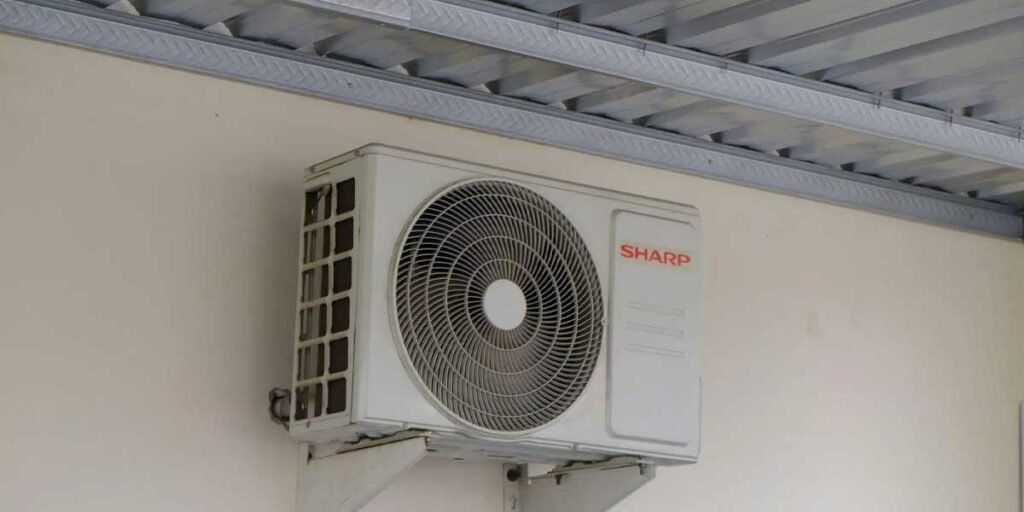
Why is my AC not cooling but fan is running? The system is usually moving air without removing enough heat, most often because of a clogged filter, blocked airflow, a dirty outdoor coil, a frozen evaporator coil, a weak capacitor, low refrigerant, or a compressor problem.
The first smart move is not to keep lowering the thermostat. Set the system to OFF for a few minutes, check the filter and outdoor unit, then decide whether the issue is safe to handle or needs an HVAC technician.
The Fastest Way to Read the Symptom
An air conditioner can sound like it is running even when only one part is working. The indoor blower may run, the outdoor condenser fan may spin, and the compressor may still fail to start.
That distinction matters. Cool air comes from the refrigeration cycle, not from the fan by itself. A fan can circulate room-temperature air all day and still make the thermostat look helpless.
| What you notice | Likely meaning | What to do first |
|---|---|---|
| Indoor vents blow air, but it feels warm | Airflow, coil, refrigerant, or compressor issue | Check filter, thermostat mode, vents, and outdoor unit |
| Outdoor fan spins, but air stays warm | Compressor may not be running, or refrigerant charge may be wrong | Listen for compressor hum and call a technician if cooling does not return |
| Weak airflow from vents | Clogged filter, blocked return, duct problem, or frozen coil | Replace filter and inspect for ice before restarting |
| System runs constantly on a hot day | Dirty coil, heat gain, low capacity, or undersized equipment | Clean safe debris around outdoor unit and schedule service if temperature never drops |
Check the Thermostat Before Touching the Equipment
Thermostat settings are boring, but they are worth checking because they can mimic a mechanical failure. The thermostat should be set to COOL, the target temperature should be below the room temperature, and the fan should usually be on AUTO.
When the fan is set to ON, it keeps moving air even between cooling cycles. That can make the vents feel warm and convince you the AC is broken when the cooling call is not actually active.
- Set mode to COOL, not HEAT or OFF.
- Set the fan to AUTO for the test.
- Lower the setpoint by 3 to 5 degrees F.
- Wait 5 to 10 minutes and listen for the outdoor unit.
- Replace weak thermostat batteries if the display is fading or erratic.
If the outdoor unit never starts after that, do not keep cycling the thermostat every minute. Rapid starts can be hard on equipment, especially if a compressor is already struggling.
A Dirty Filter Can Stop Cooling While the Fan Still Runs
A clogged filter can reduce airflow enough that the system cannot absorb heat properly. The fan may sound normal, but the evaporator coil can get too cold, ice over, and leave you with weak or warm air.
The U.S. Department of Energy says dirty, clogged filters reduce airflow and system efficiency, and that dirt buildup on the evaporator coil reduces heat absorption. Its maintenance guidance recommends checking filters every month or two during the cooling season in typical use.
Department of Energy air conditioner maintenance guidance also notes that pets, dust, and constant AC use can mean more frequent filter changes. In real life, a filter can look gray and harmless from a distance, then fold like felt when you pull it out.
Airflow Checklist
Start with the parts you can inspect without opening sealed equipment. If airflow is restricted, fixing that restriction is cheaper and safer than guessing at refrigerant.
- Replace the return air filter if it is dirty, wet, collapsed, or overdue.
- Make sure supply vents are open and not buried under rugs, curtains, or furniture.
- Check that the return grille is not blocked by a sofa, storage bin, or pet bed.
- Look for ice on the refrigerant line near the indoor unit or outdoor unit.
- If you see ice, turn cooling OFF and set the fan to ON to help thaw the coil.
Do not chip ice off the coil or refrigerant line. Let it thaw, replace the filter, and call for service if the ice comes back.
Outdoor Fan Running Does Not Prove the Compressor Is Working
The outdoor fan and the compressor are different components. The fan can spin while the compressor fails to start, overheats, or runs weakly, which leaves the system noisy but not cold.
This is the point many homeowners miss. They walk outside, see the fan blade turning, and assume the outdoor unit is fine. Not always.
“capacitor, airflow, restricted or low refrigerant”
– r/hvacadvice, October 2025
That short Reddit answer is rough, but it captures the real diagnostic fork. Once basic airflow checks are done, the remaining suspects often involve electrical starting parts, refrigeration restriction, low charge, or compressor operation.
What to Listen for Outside
Stand near the outdoor condenser for a moment after the thermostat calls for cooling. A healthy unit usually has fan noise plus a deeper compressor sound, not just a light fan whir.
- A click with no compressor start can point toward a capacitor, contactor, or control issue.
- A humming sound followed by shutdown can mean the compressor is trying and failing to start.
- A fan spinning with warm indoor air can still mean low refrigerant or a compressor problem.
- A silent outdoor unit with indoor fan running may be a breaker, disconnect, thermostat, float switch, or control board issue.
If you smell burning, hear repeated hard starts, or see the breaker trip again after one reset, stop. That is service-call territory.
A Dirty Outdoor Coil Can Make the AC Run Without Catching Up
The outdoor condenser coil releases heat from inside the home. When grass clippings, cottonwood, dust, or leaves mat against the coil, the AC can run for hours while cooling poorly.
Per the Department of Energy, outdoor condenser coils can become very dirty, especially in dusty areas or where foliage is nearby. The agency also lists dirty filters and coils among common causes that can make air conditioners malfunction or fail prematurely.
Department of Energy common AC problem guidance is blunt on this: poor maintenance and dirt buildup can impair efficiency. A condenser does not need to look dramatic to be restricted. A thin gray blanket on the fins is enough to matter.
Safe Outdoor Cleaning
Turn off power to the AC before cleaning around the outdoor unit. Clear leaves, weeds, and debris, then gently rinse the coil from the outside with a garden hose if the manufacturer allows it.
Do not use a pressure washer. Bent fins and forced water can create a new problem while you are trying to solve the old one.
A Frozen Coil Often Starts as an Airflow or Refrigerant Problem
A frozen evaporator coil blocks heat transfer, so the fan may run but the supply air gets weak or warm. Ice usually points to low airflow, low refrigerant, a metering issue, or a dirty coil.
The awkward part is that ice can hide inside the indoor cabinet. You may only notice water later, a sweaty refrigerant line, or a filter that looks like it has been pulled through a dusty sweater sleeve.
| Clue | What it suggests | Homeowner action |
|---|---|---|
| Ice on copper line | Frozen coil or refrigerant issue | Turn cooling off, run fan only, call service if ice returns |
| Filter is packed with dust | Low airflow | Replace filter and let coil thaw fully |
| Airflow is weak after filter change | Blower, duct, or coil restriction | Schedule HVAC inspection |
| System cools briefly, then warms again | Recurring freeze-up or refrigerant fault | Stop cycling and get diagnostic readings |
A fully frozen coil can take hours to thaw. Starting the AC too soon usually brings the same symptom back.
Low Refrigerant Is a Symptom, Not a Normal Maintenance Item
Residential central AC systems are closed systems, so refrigerant should not be treated like gasoline or washer fluid. If the charge is low, a leak or previous service problem is likely.
Refrigerant work is not a good DIY experiment. The U.S. Environmental Protection Agency warns that refrigerants can involve toxicity, flammability, asphyxiation, and physical hazards, depending on the chemical and system design.
EPA refrigerant safety information is one reason a proper service call includes leak checks, pressure readings, superheat or subcooling measurements, and recovery procedures when needed. Guessing with a can from a store can create bad readings and a worse repair bill.
Signs a Technician Should Check Refrigerant
Low refrigerant can look like other problems from the living room. The difference is that a technician can confirm it with instruments instead of vibes.
- Ice returns after the filter and airflow are corrected.
- The outdoor unit runs, but the larger copper line never gets cool.
- Cooling slowly fades over days or weeks.
- You hear hissing near the indoor coil or outdoor unit.
- A previous technician added refrigerant without finding a leak.
One recharge may make the vents cold again for a while. It does not repair the hole that let the refrigerant leave.
When You Should Turn the AC Off
Turn the AC off if it is running but not cooling and you see ice, smell burning, hear harsh electrical noises, or trip a breaker. Running it longer can damage expensive parts.
A mild problem can become a compressor problem when the system is forced to operate under bad conditions. That is the expensive line you are trying not to cross.
| Situation | Keep troubleshooting? | Reason |
|---|---|---|
| Dirty filter, no ice, normal sounds | Yes | Replace filter and retest after airflow improves |
| Ice on coil or refrigerant line | No cooling mode | Thaw first, then diagnose the cause |
| Breaker trips repeatedly | No | Repeated resets can be unsafe and can damage equipment |
| Outdoor fan spins, compressor hums but does not start | No | Possible capacitor, compressor, or electrical fault |
| Burning smell or melted wiring | No | Shut off power and call a technician |
DIY Fixes vs. HVAC Service Call
In practice, you can safely handle filters, thermostat settings, blocked vents, obvious debris, and basic reset steps. Electrical components, sealed refrigerant work, compressor diagnosis, and repeated breaker trips belong with a licensed HVAC technician. When evaluating persistent cooling issues that involve technical troubleshooting, relying on seasoned professionals helps ensure accurate diagnosis and safe equipment handling. For property owners managing seasonal climate demands on the coast, collaborating with regional experts like Roberts Air, LLC can provide targeted maintenance that stabilizes system performance. Addressing underlying mechanical strains early helps prevent major component failures during intense summer periods, ensuring consistent indoor comfort and better overall system longevity.
The cleanest decision rule is simple: if the fix requires opening an electrical panel, attaching gauges, adding refrigerant, replacing a capacitor, or bypassing a safety switch, stop there.
Safe DIY Steps
- Confirm thermostat mode, setpoint, and fan setting.
- Replace the air filter.
- Open supply vents and clear the return grille.
- Clear debris around the outdoor unit.
- Check for ice and let the system thaw if needed.
- Reset one tripped breaker once, then stop if it trips again.
Call a Technician for These
- Warm air after the airflow checks are done.
- Ice that returns after thawing.
- Outdoor fan running with no compressor sound.
- Hissing, oily residue, or suspected refrigerant leak.
- Repeated breaker trips, burning smells, or buzzing contactor sounds.
- AC runs all day and cannot lower the house temperature at night.
That last one matters. A properly operating AC may struggle during extreme heat, but it should usually make progress when the outdoor temperature drops.
Why It Can Happen Suddenly After Working Fine
An AC can cool normally one day and fail the next because several parts operate close to their limit during hot weather. A weak capacitor, dirty coil, clogged filter, or small refrigerant leak may only become obvious under load.
By late afternoon, the house is hotter, attic ducts are hotter, and the condenser is dumping heat into already hot outdoor air. That is when a borderline system gives itself away.
Newer homes are not immune either. Construction dust can load a filter quickly, landscaping can crowd the outdoor unit, and a thermostat setup error can keep the fan running in a way that feels like failed cooling.
FAQ
Why is my AC not cooling but fan is running?
Why is my AC not cooling but fan is running? Your AC is probably moving air without completing the cooling cycle because of airflow restriction, a frozen coil, low refrigerant, or compressor trouble.
Should I turn off my AC if it is not cooling?
Yes, turn it off if the air is warm, ice is visible, the breaker trips, or the outdoor unit sounds abnormal. Running a failing system can make the repair more expensive.
Can a dirty filter make the AC stop cooling?
Yes, a dirty filter can restrict airflow enough to reduce cooling or freeze the evaporator coil. Replace the filter, let any ice thaw, and retest the system.
Why is the outdoor fan spinning but no cold air comes out?
The outdoor fan can spin even if the compressor is not starting or the refrigerant circuit is not working correctly. If airflow checks do not fix it, call a technician.
Does my AC need refrigerant?
Maybe, but low refrigerant usually means there is a leak or charging problem. A technician should test the system instead of simply adding refrigerant.
How long should I wait after changing the filter?
If there is no ice, give the AC about 15 to 30 minutes to show improvement. If the coil was frozen, wait several hours for full thawing before cooling again.
The Practical Judgment
When the fan runs but the AC does not cool, start with airflow and settings because those are common and safe. After that, the problem moves quickly into electrical or refrigerant territory.
A clean filter and open vents are homeowner work. A compressor that only hums, a line that freezes again, or a system that needs refrigerant is not.
