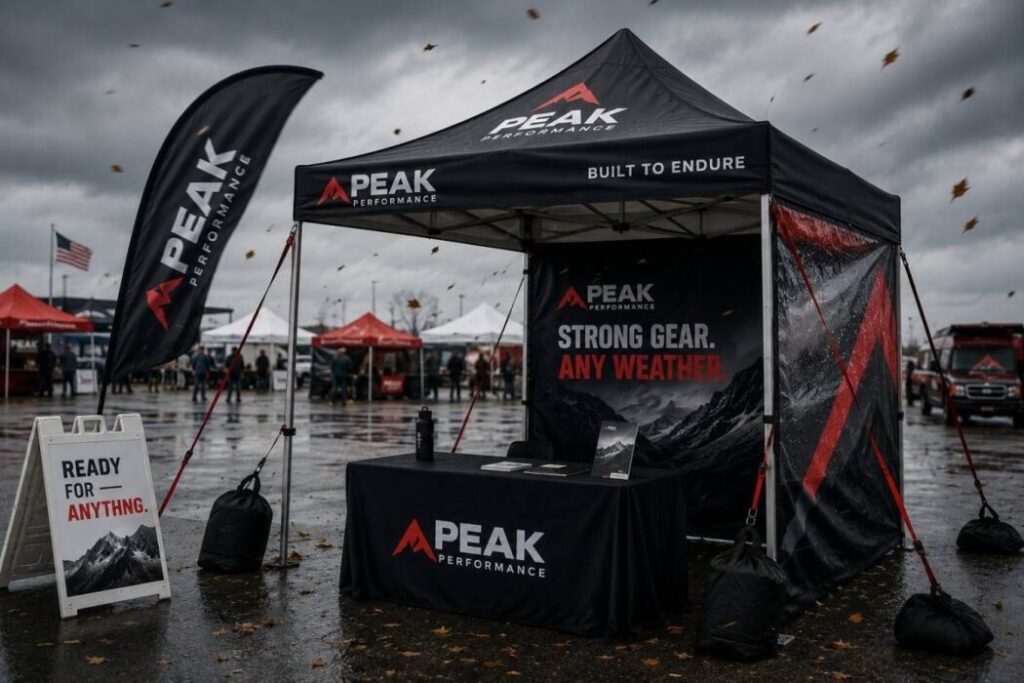
Surprises pop up fast when you’re outside. Calm turns shaky, flags snap, tents lean, and paper flies every which way. When setups wiggle without warning, companies at fairs, markets, games, or parades feel the strain. Wind shifts from background noise to a real problem.
Most groups focus on visuals, stand design, or how items are placed long before any event kicks off. Still, planning for rain, wind, or heat usually waits till clouds roll in. When heavy winds hit support beams, banners, or roof covers, solid-looking booths or custom event tents might start swaying within minutes.
Out there, where the wind picks up, lightweight stages can wobble unless anchored well. When teams think ahead, they sidestep broken gear, late starts, and shaky platforms, especially when skies turn rough.
Keeping Event Displays Steady in Wind During Outdoor Events and Unpredictable Weather
1. Secure Fastening Stops Sudden Shifts
Out of nowhere, the wind pushes harder than most think it will. When breezes come sideways or in bursts later on, flimsy setups may start creeping even if they stood firm at first.
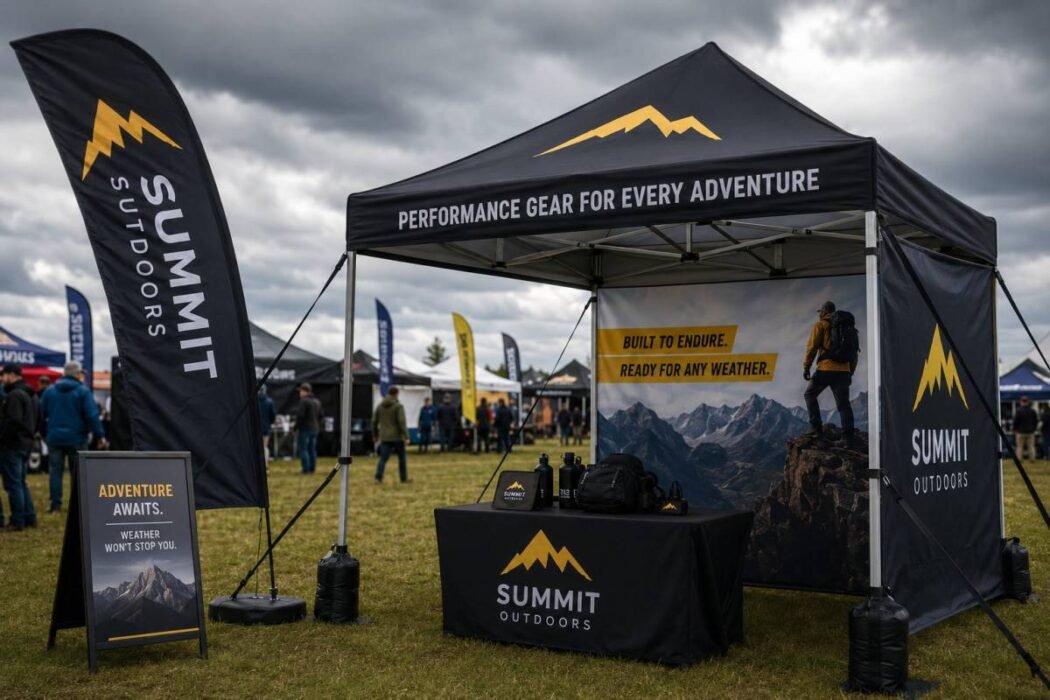
When winds shift, anchoring setups prevent things from moving around. Heavy weights work well on hard ground, while sandbags suit softer terrain instead. Water-filled drums add balance where space allows, whereas stakes dig into soil to hold firm. Each method fits different outdoor conditions and site needs.
Most people working outside discover fast that how you pin down the edges is as crucial as how it looks. When things are tied tight, there’s less shifting, which keeps work flowing even when crowds get heavy.
2. Frame Quality Impacts How Well It Resists Wind
A few display frames struggle when placed outside. Though lighter builds make moving easier, flimsier ones often twist in strong winds. Weather tends to expose what seemed strong at first.
When it comes to lasting performance, heavier-duty aluminum setups often come out ahead, mainly thanks to beefier corners and sturdier beams that distribute force more evenly without weak spots. Whether you want a sturdy custom food booth or a canopy tent setup for a brand awareness event, they can be a reliable option. Shaky movement tends to fade too, especially when structures stand tall through extended backyard gatherings.
When companies join many outdoor events, tough materials matter because they keep things looking good while staying safe and working well over time.
3. Sidewalls Alter Wind Flow Near Displays
Most vendors tack on sidewalls, thinking only of logos, shelter, or blocking views, rarely noticing how that extra fabric catches air like a sail. When gusts slam into solid sections head-on, force piles up fast along the frame.
Open sides let air move through, which can ease pressure on the structure. When winds shift, certain designs change where walls sit to stay effective.
Besides cooling things down, smooth air movement keeps screens sitting straighter. Less pressure builds up on supports, plus links between parts stay looser all afternoon.
4. Set up Positioning to Reduce Exposure
Most folks underestimate how much spot choice sways steadiness. Corners left bare, broad driveways, and spots squeezed between structures can whip up gust channels, piling force onto temporary builds.
Most teams check what’s around their walls and fences, and how the wind moves, before deciding exactly where to set up. When setups sit close to sheltered spots, they’re less likely to take a hit if storms roll through.
A shift by just a little can hold things steady much better as time passes during the activity. Sometimes it’s not about big changes but how they settle in over hours.
5. Quick Reactions Help When Things Shift
When skies change fast outside, being caught off guard gets easier. Spotting those shifts early helps some companies act to stop little hiccups from growing.
When straps get tighter, canopy tops drop lower, wobbly signs come down, or walls shift ahead of time, machines tend to stay safe around custom canopies. Those groups who prepare themselves beforehand find chaos rare when gusts grow rough.
Out of nowhere, a tiny shift might show up when the gear starts acting up outside. Since big breakdowns usually come after little hints, reacting fast makes sense.
End Point
When the wind picks up, staying upright outdoors depends on how well structures handle air pressure. Solid ground ties matter just as much as sturdy skeletons holding everything together. Letting breezes move through gaps keeps signs from catching gusts like sails. Where you place each piece changes how forces act across the whole layout. Quick fixes when skies shift mean less risk of damage later.
The weather can shift fast. Still, teams that hit events often know their gear must hold up without a fuss. When setups stand firm through wind or crowd bumps, everything runs more easily. Confidence grows when banners stay put, and frames resist wobbling. Rain or shine, clean looks stick around if the structure does its job. Reliability hides behind every smooth moment guests notice.
