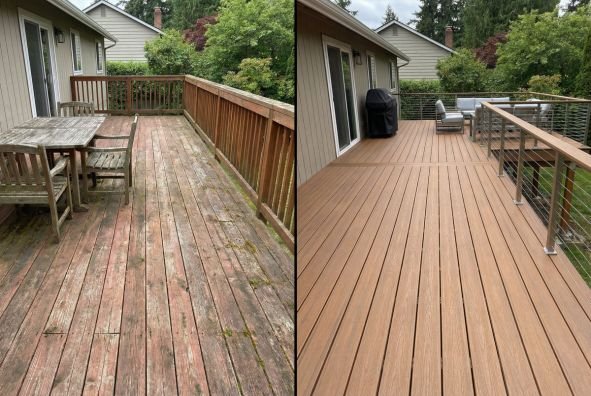
Composite decking consistently outlasts traditional wood decking, with an average lifespan of 25-30 years compared to wood’s 10-15 years, primarily due to its engineered resistance to environmental degradation and pests.
Understanding Wood Deck Lifespan and Maintenance
Wood decks typically last 10-15 years, requiring significant annual maintenance like cleaning, staining, and sealing to prevent rot and warping. The longevity of a wood deck is influenced by several factors, including the local climate, the frequency and quality of maintenance, the amount of foot traffic it endures, and the inherent quality of the wood species used. Harsh weather conditions, such as heavy rain, intense sun, or extreme temperature fluctuations, can accelerate deterioration says Intersection Real Estate team. Regular cleaning, staining, and sealing are crucial to protect the wood from moisture absorption, which can lead to warping, rotting, and splintering.
Common areas where wood decks first show signs of rot are at the connection points between boards and the substructure. The ledger board, which attaches the deck to the house, is particularly vulnerable to moisture damage if not properly flashed and maintained. Similarly, joists and beams within the substructure can rot if not adequately treated or ventilated, potentially causing structural instability. According to the International Association of Certified Home Inspectors (InterNACHI) (2024), pressure-treated pine deck boards generally last 10 to 15 years [1].
The Durability of Composite Decking
Composite decks can last 25-50 years with minimal maintenance, offering superior resistance to rot, insects, and weathering due to their engineered composition. These decking materials are typically made from a blend of recycled plastics and wood fibers, encapsulated in a protective shell. This advanced construction provides inherent resistance to common issues that plague wood, such as moisture absorption, insect infestation, and fungal growth. Unlike wood, composite decking does not require sanding, staining, or sealing, significantly reducing long-term upkeep efforts and costs.
Leading manufacturers often provide extensive warranties that underscore the durability of their products. For instance, Trex offers warranties ranging from 25 years for its Enhance® line to an industry-leading 50 years for its Transcend® and Signature® collections. These warranties reflect the material’s ability to resist fading, staining, and mold, ensuring the deck maintains its aesthetic appeal and structural integrity for decades. The protective shell on modern composite boards is designed to seamlessly fuse with the core material, preventing separation and enhancing overall resilience against environmental stressors.
Wood vs. Composite: A Long-Term Cost Comparison
While wood decks have lower initial costs, composite decks prove more cost-effective over 25 years due to significantly reduced maintenance and repair expenses. The upfront investment for a composite deck is typically higher than for a wood deck. However, this initial cost is often offset by the substantial savings in maintenance and repair over the lifespan of the deck. Wood decks require annual expenses for cleaning, staining, and sealing, which can accumulate to thousands of dollars over two decades. Additionally, wood decks are more prone to needing board replacements and structural repairs due to rot, warping, or insect damage.
| Cost Factor | Wood Deck (25 Years) | Composite Deck (25 Years) |
|---|---|---|
| Initial Installation | Lower | Higher |
| Annual Maintenance | $400 (estimated) | Less than $20 (estimated) |
| Total Maintenance & Repairs | $15,000 – $43,000 | Approximately $5,000 |
Beyond financial considerations, safety is a critical factor.Approximately 2,900 injuries and two deaths were associated with collapses or failures of decks, balconies, and porches. The structural integrity and consistent performance of composite materials can contribute to a safer outdoor living space over time.

Factors Shortening Deck Lifespan and How to Maximize Longevity
Harsh weather, poor construction, and neglected maintenance are primary factors that shorten a deck’s lifespan; choosing quality materials and proper installation are crucial for maximizing durability. Environmental elements such as high humidity, prolonged moisture from rain or snow, intense UV exposure, and extreme temperature fluctuations are significant contributors to deck degradation. While composite materials are engineered to better withstand these conditions, wood is particularly susceptible to their damaging effects.
The quality of materials and construction practices also profoundly impacts a deck’s longevity. Poor-quality wood can warp, splinter, and fade prematurely, posing safety hazards and diminishing aesthetic appeal. Construction errors, such as inadequate flashing on ledger boards, neglecting joist tape, using untreated wood in ground contact, or insufficient drainage, can lead to structural problems that even diligent maintenance cannot fully rectify. To maximize a deck’s lifespan, it is essential to invest in high-quality materials and ensure professional installation that adheres to best practices, potentially incorporating design elements like roofs for weather protection or elevated construction for better ventilation.
FAQ
Is composite decking truly maintenance-free?
While composite decking requires significantly less maintenance than wood, it is not entirely maintenance-free. It still benefits from occasional cleaning with soap and water to remove dirt, debris, and prevent potential staining, ensuring its appearance is preserved over time.
How does the initial cost of wood compare to composite?
The initial installation cost for a wood deck is generally lower than that of a composite deck. However, this lower upfront cost for wood is typically offset by higher long-term maintenance and repair expenses, making composite more cost-effective over its entire lifespan.
Can I replace my wood deck with composite on the existing substructure?
It is generally recommended to inspect and potentially replace the existing substructure when upgrading from wood to composite decking. Composite materials are heavier, and the existing wood substructure may have hidden damage or not meet the structural requirements for composite, potentially compromising safety and longevity.
Conclusion
Choosing between wood and composite decking involves weighing initial costs against long-term durability, maintenance, and overall value. While wood offers a traditional aesthetic at a lower upfront price, its susceptibility to environmental damage and high maintenance demands often result in greater lifetime expenses and a shorter lifespan. Composite decking, with its engineered resilience and minimal upkeep, presents a more durable and cost-effective solution over several decades, providing homeowners with a lasting, low-maintenance outdoor living space.
References
[1] International Association of Certified Home Inspectors (InterNACHI). (2024). Estimated Life Expectancy Chart for Common Residential Building Components. https://www.nachi.org/life-expectancy.htm
