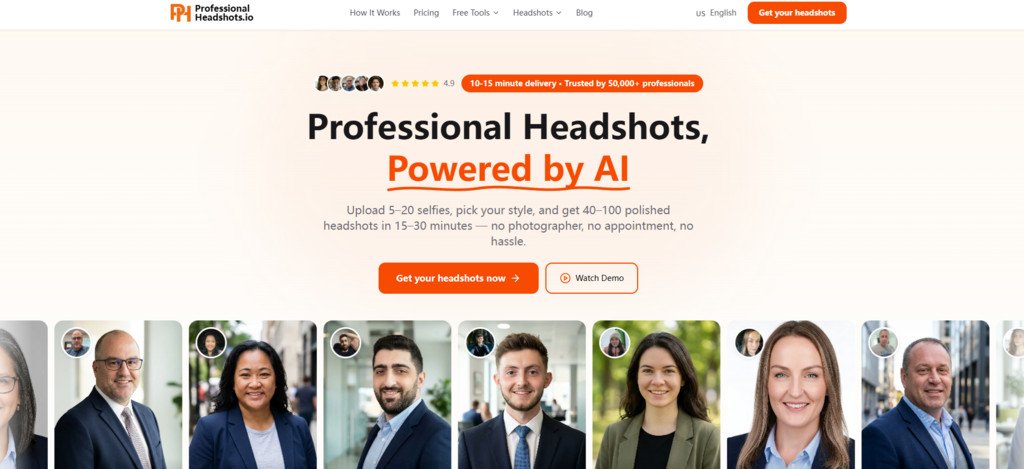
The question used to be whether AI could generate a convincing human face. That debate is largely settled. The harder question now is whether AI can generate a convincing *you*—a portrait that captures your specific features, not a generic approximation of what a professional should look like. This distinction matters because the entire point of a headshot is recognition. If the image doesn’t look like you, it defeats the purpose. This is the challenge that AI professional headshot services have had to solve, and the approach one platform has taken is worth examining closely.
The Personalization Problem: Why Generic AI Faces Won’t Work for Professionals
Most AI image generators produce faces that look plausible but generic. They’re composites of training data, not representations of specific individuals. For a professional headshot, that’s a fatal flaw. The image needs to be recognizable as you—not a stylized version, not an approximation, not someone who vaguely resembles you.
The LoRA Approach to Facial Recognition
Training a Model That Actually Knows You
ProfessionalHeadshot.io addresses this by fine-tuning a personalized LoRA model for each user. Instead of applying a generic AI to your photos, the system learns your specific facial structure from your uploads. The result is headshots that retain your unique features rather than defaulting to a generic AI face.
Why Five Photos Isn’t Enough
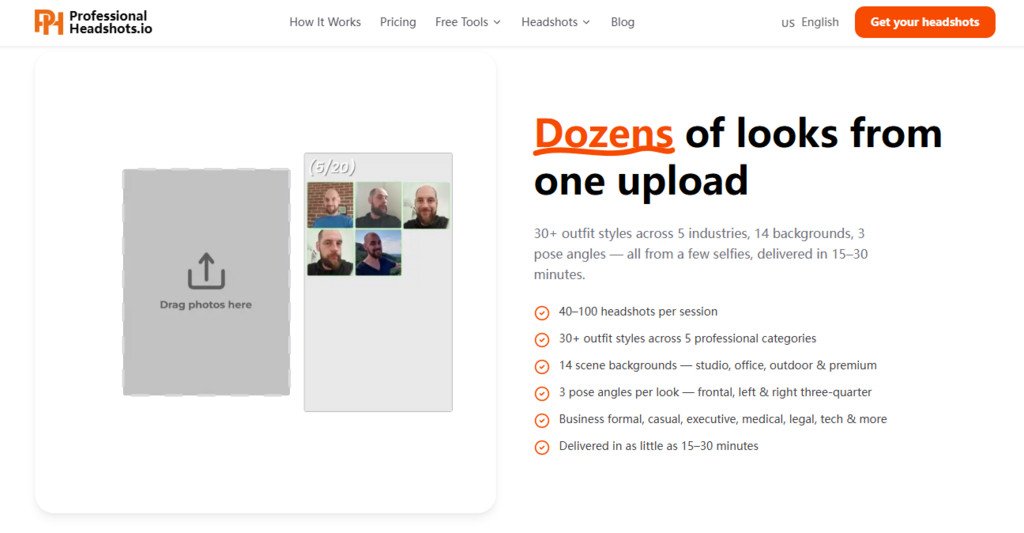
The platform asks for five to twenty photos, not just one or two. This isn’t arbitrary—the AI needs multiple angles, lighting conditions, and expressions to understand how your face looks in different contexts. A single photo doesn’t provide enough data; twenty gives the model a comprehensive understanding of your facial geometry.
The Validation Step That Prevents Bad Results
Catching Problems Before They Waste Your Time
One of the more thoughtful features is the photo validation step that runs before training begins. This checks that your uploads meet minimum quality standards. It’s a practical acknowledgment that garbage in, garbage out applies to AI as much as anything else. Instead of waiting twenty minutes only to discover your photos were problematic, you get immediate feedback.
The Realness Score: Quantifying What Your Eyes Already Know
The platform assigns each generated headshot a Realness Score from zero to one hundred. This is an attempt to quantify something that’s traditionally subjective: how natural does this image look?
What the Score Actually Measures
The score reflects how closely the generated image matches natural human facial features—proportions, skin texture, lighting consistency, the subtle details that distinguish a real photograph from an AI composite. It’s not a perfect metric, but it’s a useful filter for sorting through dozens of images.
How to Use the Score in Practice
In testing, the scores correlated reasonably well with perceived quality. Images scoring above eighty generally looked natural; those below sixty often had visible artifacts or inconsistencies. That said, the score shouldn’t be treated as absolute truth. It’s a helpful starting point, not a definitive verdict. Your subjective judgment still matters more than any algorithm’s assessment.
The Style Customization: More Than Just Outfit Changes
The platform offers thirty outfit styles and fourteen background scenes. But the real value isn’t just the number of options—it’s how those options combine with the personalized model to produce varied but consistent results.
Industry-Specific Styling
Users select from five industries: business, legal, medical, tech, and executive. Each category adjusts the styling cues to match professional norms within that field. A tech professional gets more approachable, modern options; a legal professional receives formal, authoritative looks. This isn’t cosmetic—it reflects real differences in how different industries expect professionals to present themselves.
The Three-Angle Output
Each style and background combination generates three pose angles: frontal, left three-quarter, and right three-quarter. This provides variety without requiring additional input from the user. You’re not choosing poses; the system generates them automatically based on your facial model.
Commercial Usage Rights
All generated headshots include full commercial usage rights. You can use them for LinkedIn, resumes, company websites, press releases, speaker bios, email signatures—anywhere you need a professional image. No additional licensing fees, no restrictions on usage.
The Privacy Question: What Happens to Your Photos
Given the sensitivity of facial data, the platform’s privacy approach is worth understanding.
Automatic Deletion After Thirty Days
Uploaded photos and generated headshots are automatically deleted from servers after thirty days. This isn’t a feature you need to enable; it’s the default behavior. The platform doesn’t store your images indefinitely.
No Data Sharing or Model Training
The service explicitly does not sell, share, or use user photos to train other AI models. Your uploads are used solely to generate your headshots, then deleted. This is a meaningful distinction from services that use user data to improve their general models.
Encrypted Upload and Storage
Uploads and storage are encrypted. The platform is GDPR and CCPA compliant, which provides regulatory backing for its privacy claims.
Where the Approach Falls Short
The personalization model has real strengths, but it’s not without limitations.
Input Quality Still Determines Output Quality
The AI can only work with what you give it. If your uploaded selfies are all similar angles with poor lighting, the results will reflect that limitation. The validation step helps, but it can’t compensate for insufficient variety in your uploads.
Not Every Generation Is Perfect
In practice, some generated images require regeneration to get a satisfactory result. The platform includes regeneration credits with every plan, which is a practical acknowledgment that AI generation sometimes needs iteration. It’s not a one-shot guarantee; it’s a process that may require refinement.
The Styling Is Template-Based
While there are thirty outfit styles and fourteen backgrounds, these are templates—not custom designs. If you need something highly specific that isn’t in the catalog, you’re out of luck. The platform offers breadth within its defined options, not infinite customization.
Who Benefits Most from This Approach
The personalized model approach is particularly valuable for specific user groups.
Professionals Who Need to Be Recognizable
If your headshot needs to be clearly identifiable as you—for client meetings, conferences, or any context where people might recognize you from your photo—the personalization matters. A generic AI face won’t work. The platform’s approach is designed specifically for this use case.
People Who Need Multiple Looks
LinkedIn headshot needs are just one use case. If you need different looks for different platforms—a formal one for your company bio, a more approachable one for your portfolio, something in between for speaking engagements—the platform’s variety of styles and backgrounds provides options that a single studio session can’t match.
Remote Workers Without Studio Access
For professionals who work remotely or live in areas without easy access to professional photography, the platform provides a practical alternative. No travel, no scheduling, no need to find a photographer in your area.
Teams Needing Consistency
Marketing managers and team leads can generate consistent headshots for entire departments. The personalized model ensures each team member looks like themselves while maintaining visual uniformity across the set.
A Practical Tool With Clear Boundaries
ProfessionalHeadshot.io isn’t trying to replace every use case for professional photography. What it offers is a practical solution for a specific problem: getting a credible, recognizable professional headshot without the time, cost, and hassle of a studio session.
The personalization approach—training a unique model for each user—addresses the fundamental challenge of AI headshots: making sure the result actually looks like you. The Realness Score provides a useful quality filter. The privacy protections address legitimate concerns about facial data.
The limitations are real and worth understanding: results depend on input quality, not every generation is perfect, and the styling options are template-based rather than fully custom. But for the majority of professionals who need a credible headshot and don’t have the budget or time for traditional photography, this approach offers a genuinely useful alternative. It won’t make you look like someone else. It will make you look like you, just more polished.
