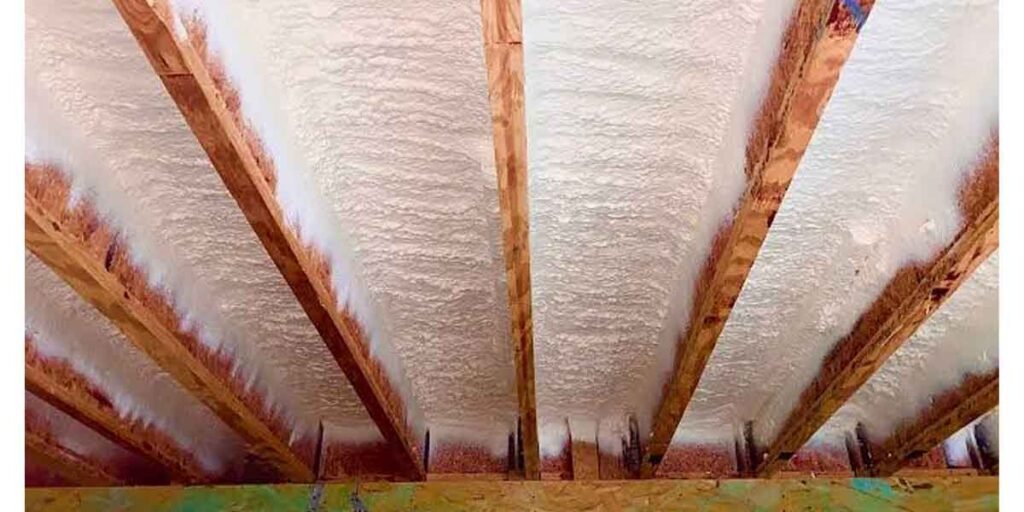
Four entries decide nearly every crawl space insulation estimate: area covered, clearance, the moisture state of the ground, and material choice. Published per-square-foot rates answer the last of those and leave the other three to you.
Water decides how much the rest of the arithmetic matters. Insulation laid over damp soil, or under a floor that has already taken water, loses R-value, sags off the joists, and feeds mold on the framing above it.
Angi and HomeAdvisor both put full encapsulation near $5,500 for an average house, with most projects landing between $5,000 and $15,000. Their per-square-foot spread of $2 to $10 tracks scope more than geography, which makes those two surveys a reasonable sanity check on a single bid.
What a crawl space insulation cost calculator needs
Five entries set the total: covered area, clearance, vent state, moisture condition, and the target R-value with its material. Anything else a calculator asks about is a detail inside one of those five.
| Input | How you measure it | Typical reading | What it moves |
|---|---|---|---|
| Area to cover | Length times width above, plus perimeter wall length times wall height | Roughly 800 to 2,500 sq ft of floor in a typical house, plus 100 to 300 sq ft of wall | Material, sheeting, and hours |
| Clearance | Soil to the underside of the joists, measured at the lowest point | 18 to 48 in is common in older crawls | Labor; clearance under about 24 in is where a bid climbs |
| Vent state | Count foundation vents, then check whether board or foam was later installed over them | Vented, sealed, or sealed long after the house was built | Which surface gets insulated |
| Moisture condition | Look for standing water, damp soil, and white mineral staining on the foundation | Dry, damp, or wet | Drainage, ground cover, dehumidification |
| Target R-value and material | ENERGY STAR’s retrofit table for your climate zone, then material choice | R-13 to R-19 cavity on sealed walls | The material rate and the labor rate that goes with it |
Vent state is the entry homeowners get wrong, because it decides which surface gets the material. Batt across the floor joists belongs in a vented crawl space, where the area beneath the subfloor sits outside the home’s thermal envelope. Wall insulation belongs in a sealed crawl space, and DOE pairs that approach with an uninsulated floor above; doing both wastes material and can trap moisture between the two surfaces.
R-value targets come from climate zone. ENERGY STAR’s retrofit table, drawn from the 2021 IECC, recommends R-5 continuous or R-13 cavity insulation on crawl space walls in zone 3, R-10 or R-13 in zones 4A and 4B, and R-15 or R-19 in zones 4C and 5 through 8.
Vented and sealed crawl spaces take different insulation
Count the vents, then look for sealing work that was added after construction, because a crawl space closed off quietly a decade ago changes the plan. DOE’s Building America program credits a sealed and conditioned crawl with up to about a 20% cut in heating and cooling energy, provided the space also has a continuous ground cover, insulated perimeter walls, and some form of conditioning.
Why two estimates for one crawl space land far apart
The gap between crawl space insulation bids is scope. Labor accounts for 50% to 70% of a crawl space project’s cost in Angi’s figures, and two contractors rarely draw the same boundary around what the work includes.
Angi’s material breakdown shows the same split from the other direction. Ground sheeting alone costs $1,000 to $3,000 installed, while a full encapsulation with lined walls and mechanical drying lands at $2 to $4 per square foot for a basic job and $3 to $10 for extensive work.
The lines that move a total the most, from the same surveys:
- Mold or rot remediation at $1,000 to $3,500, inside one bid and missing from the other.
- Pest removal from $500 to $10,000, a band that wide because it covers a single treatment at one end and a rebuilt floor section at the other.
- Dehumidifier at $800 to $1,200 for the equipment, plus a power source and a condensate drain.
- Permits at $50 to $250, small at the time and awkward at resale when nobody pulled one.
- Hauling contaminated batt, sheeting, and debris up through the hatch, priced by weight at the landfill.
Preparation that decides whether the insulation ever works
Water leaves before crawl space insulation arrives. Grade soil away from the foundation, extend downspouts, add a sump if the crawl takes on water, lay a sealed ground sheet, let the space dry, and insulate last.
DOE’s weatherization guidance treats 6-mil as the minimum for that ground cover, with a perm rating of 0.1 or lower, seams lapped at least 12 inches, and the sheet carried at least 6 inches up walls and piers. Sealing the seams is required in an unvented crawl space, where the cover doubles as the vapor retarder.
Drying follows a schedule. EPA guidance puts clean drying inside 24 to 48 hours and recommends holding relative humidity below 60%, with 30% to 50% as the target for conditioned space. Where mold covers more than about 10 square feet, or where a floor has taken real water damage, EPA points homeowners toward professional remediation, and cleaning without fixing the water source brings the growth back.
A crawl space is a small-space logistics problem before it is an insulation problem: settle the access path, the drying window, and where sheet goods sit while the ground is prepared. The effective strategies for maximizing small space functionality that make a narrow closet usable carry over here, with one path in, one path out, and materials staged where they get used.
Air sealing and rodent exclusion belong in the same visit, since both get harder once sheeting is taped down. CDC’s rodent guidance names the gaps worth closing: a quarter inch for mice and half an inch for rats.
Where a homeowner should stop
Crawl space insulation work happens in a confined space by NIOSH’s definition, and more than a third of confined-space deaths involve untrained people who went in to rescue someone else. That figure sets the boundary on what one person with a work light should take on.
CDC’s cleanup protocol for rodent droppings is a fair test of whether you should be down there at all. Ventilate the space for 30 minutes and stay out while it airs, never sweep or vacuum droppings, wear gloves, soak everything with an EPA-registered disinfectant or a fresh bleach solution of about 1.5 cups per gallon, leave it five minutes, wipe up with paper towels, and double-bag the waste. A heavy infestation calls for a NIOSH-approved respirator with N-100 or HEPA filters, plus medical clearance and fit testing that most homeowners do not have.
Stop and call a licensed trade for sewage, cloudy water with an odor, vermiculite insulation in an older house, damaged wrap on ducts, gas or electrical equipment mounted below the floor, or any plan to close foundation vents when a furnace or water heater sits down there. Sealing a crawl space changes the air supply available to a combustion appliance, and that decision belongs to someone who holds the license for it.
Where labor and material costs really diverge
Material prices differ by a few dollars per square foot. Labor differs by how long a person can stay bent under a floor carrying sheet goods.
On the material side, Angi separates thickness from format: 6-mil sheeting at $0.10 to $0.25 per square foot, 12-mil at $0.25 to $0.50, and 20-mil at $0.50 to $0.70. Insulation spans a wider range, from fiberglass batts that a careful homeowner can cut and fit, through rigid foam boards, to closed-cell spray foam that needs licensed application and equipment.
The labor drivers are physical. Clearance under 24 inches raises the cost sharply, a hatch too narrow for full sheets forces the liner to be cut and taped in place, and a long carry from the hatch adds trips more than it adds material. Pulling out old, wet batt costs more than installing new material over a clean surface, because every bag leaves by hand. Any crawl space insulation bid can be checked against these numbers with no crawl space experience. Multiply the quoted rate by the covered area to see whether the total lines up, then ask how much of the total is labor. On a moisture-heavy project the normal share is 50% to 70%, and a bid well under that usually means the water work was left out.
Overruns you can see coming before you sign
Most overruns come from work that was visible on day one: water, debris, and a scope line somebody left out of the bid.
Installing crawl space insulation before the drainage is fixed is the expensive one, because it comes back out. A crawl space that floods once a year will flood behind new sheeting, and the second visit costs more than the first once the material has to be stripped and the framing checked for growth.
Change orders are the second pattern. When mold remediation, pest treatment, or hauling sits outside the written scope, the work still has to happen, and it arrives as a separate line at full price with nothing left to compare it against. Putting those three items inside the original bid, even as a rough allowance, keeps the numbers comparable.
Equipment that gets boxed in is the third. A dehumidifier in a sealed crawl space needs power, a condensate path, and service clearance, and a unit walled off behind new sheeting gets abandoned instead of serviced.
Permits are the smallest line and the longest memory. Fifty to a few hundred dollars at the time of the work becomes a disclosure problem at the time of a sale.
What every bidder should be given in writing
Hand the same written brief to every contractor and the bids become comparable, because each price then covers the same surfaces, the same moisture work, and the same disposal. Seven items do it.
- Covered area, split by surface: floor footage and perimeter wall footage separately, with clearance measured at the lowest point.
- Vent state, stated as vented or sealed, with a note on any vents closed after construction.
- Target R-value for the climate zone, and the material you expect to be quoted.
- Moisture scope: drainage, ground cover thickness and perm rating, minimum dry time before the material goes down, dehumidification, and whether mold removal is inside the bid.
- Removal and disposal: who carries the old material out, and where it ends up.
- Permits and inspection, with the permit holder identified.
- Completion check: the moisture reading taken before installation, and who returns if the crawl takes water again.
Straight answers on crawl space insulation
What is the best type of insulation for a crawl space?
Rigid foam or closed-cell spray foam on sealed perimeter walls lasts longest, with fiberglass batt reserved for a dry, vented crawl space where it goes between the floor joists.
Batt is cheap and easy to fit, and it also holds water against wood when a crawl stays damp, which is where most of the failures with it come from. Boards and foam resist water uptake far better and cost more per square foot. Keeping the crawl dry matters more than the material chosen for it.
Is it worth it to insulate a crawl space?
Yes in a drained crawl space, where DOE’s Building America program credits a sealed and conditioned crawl with up to about a 20% reduction in heating and cooling energy.
The same program is explicit about the conditions: a continuous ground cover, insulated perimeter walls, and some form of conditioning. Crawl space insulation laid over wet ground saves little and puts the framing at risk.
Is R-19 insulation good for a crawl space?
R-19 cavity insulation meets ENERGY STAR’s crawl space wall recommendation in climate zones 4C and 5 through 8, and exceeds what zones 3, 4A, and 4B call for.
Climate zone sets the target, so the same crawl space legitimately needs R-13 cavity insulation in zone 3 and R-19 in zone 6. A thicker product is not automatically the better one where a board’s perm rating or a wall’s drying direction decides the outcome.
What is the cheapest way to insulate a crawl space?
A sealed ground sheet under fiberglass batt between the floor joists is the least expensive route: $1,000 to $3,000 installed for the sheeting in Angi’s data, plus the batt and a dry crawl space to put it in.
That route stops being cheap in a wet crawl space, where drainage and drying come before any material. Batt that gets wet under a leaking downspout is replaced, not dried back into service. Removing the water work from the scope saves money on paper and returns as a second project.
Leave the path to the sump, the shutoff valve, and the dehumidifier drain open when the sheeting goes down.
