
Choosing between a fixed-rate and a variable-rate mortgage is one of the most significant financial decisions a homeowner or prospective buyer faces. Both options come with distinct advantages and disadvantages, particularly concerning stability, potential savings, and risk exposure. Understanding these differences is crucial for making an informed choice that aligns with your financial goals and risk tolerance, explains Orange County Management. A fixed-rate mortgage offers predictable monthly payments for the entire loan term, shielding borrowers from interest rate fluctuations. In contrast, a variable-rate mortgage, often tied to a benchmark like the prime rate, can see its interest rate and thus monthly payments change over time. This article will delve into the characteristics of each, helping you determine which mortgage type provides greater security for your unique financial situation in the U.S. market.
Understanding Fixed-Rate Mortgages
A fixed-rate mortgage is characterized by an interest rate that remains constant throughout the life of the loan. This means your principal and interest payments will never change, providing a high degree of predictability and stability in your monthly housing expenses. Common fixed-rate terms in the U.S. include 15-year and 30-year mortgages. For example, if you secure a 30-year fixed-rate mortgage at 6.5%, that rate will apply for all 360 payments. This stability is particularly appealing during periods of rising interest rates, as borrowers are insulated from increased costs. The primary benefit is budgeting certainty; homeowners know exactly what their largest monthly expense will be, making long-term financial planning much simpler. This can be a significant advantage for those with stable incomes or who prefer to avoid financial surprises. However, if market interest rates fall significantly, fixed-rate borrowers will not benefit from lower payments unless they refinance, which incurs additional costs.
Understanding Variable-Rate Mortgages (ARMs)
Variable-rate mortgages, often referred to as Adjustable-Rate Mortgages (ARMs), feature an interest rate that can change periodically based on an underlying index, such as the Secured Overnight Financing Rate (SOFR) or the Prime Rate. ARMs typically begin with an initial fixed-rate period, often 3, 5, 7, or 10 years, during which the interest rate remains constant. After this initial period, the rate adjusts at predetermined intervals, usually annually. For instance, a 5/1 ARM would have a fixed rate for the first five years, then adjust annually thereafter. These adjustments are subject to caps, which limit how much the interest rate can change in a single adjustment period and over the lifetime of the loan. While ARMs often start with a lower interest rate than fixed-rate mortgages, offering lower initial monthly payments, they introduce interest rate risk. If the underlying index rises, your monthly payments will increase, potentially straining your budget. Conversely, if rates fall, your payments could decrease, leading to savings.
Key Differences and Risk Assessment
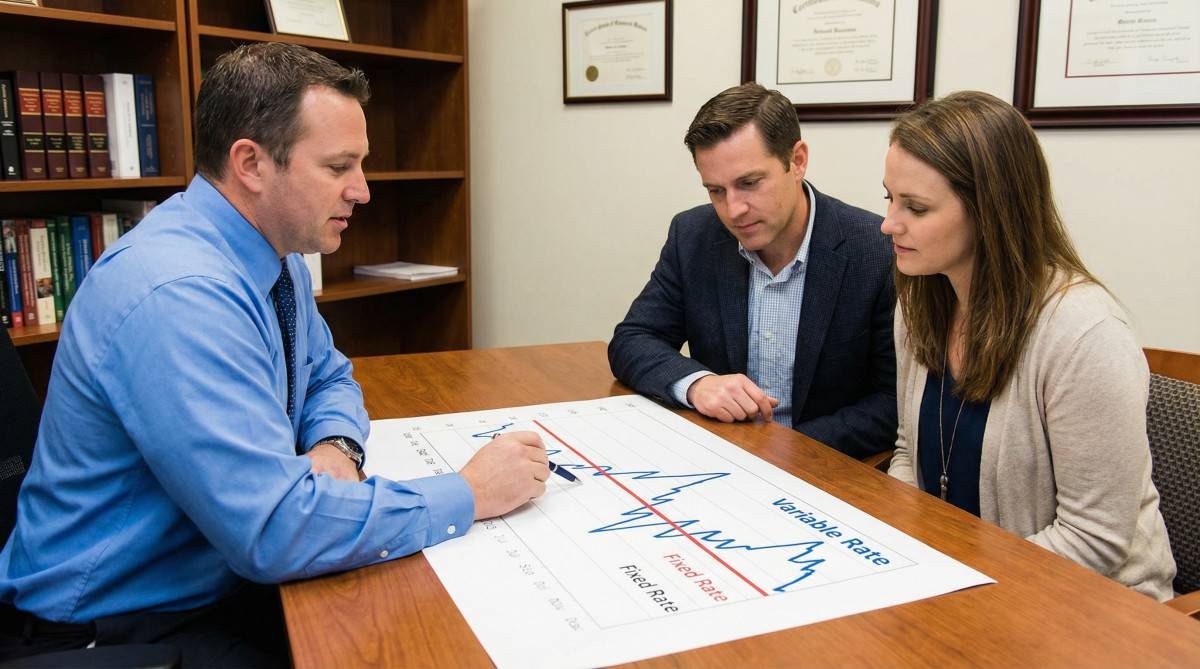
The fundamental difference between fixed and variable-rate mortgages lies in their interest rate stability and associated risk. Fixed-rate mortgages offer unparalleled predictability, making them “safer” in terms of budgeting and protection against rising rates. This security comes at a cost, as their initial interest rates are often slightly higher than those of ARMs. Variable-rate mortgages, while potentially offering lower initial payments and savings if rates fall, expose borrowers to the risk of increased payments if rates rise. This interest rate risk is the primary concern for ARM holders. The safety of each option largely depends on the borrower’s financial situation, market outlook, and risk tolerance. For someone planning to stay in their home for a long time (e.g., 10+ years) and prioritizing payment stability, a fixed-rate mortgage is generally considered safer. For those who anticipate selling or refinancing before the ARM adjusts, or who are comfortable with market fluctuations and can absorb potential payment increases, an ARM might be a viable option.
When is a Fixed-Rate Mortgage Safer?
A fixed-rate mortgage is generally considered the safer choice for borrowers who prioritize long-term financial stability and predictability. This option is ideal if you plan to stay in your home for an extended period, typically 7-10 years or more. With a fixed rate, your monthly principal and interest payments remain constant, regardless of market fluctuations. This provides peace of mind and simplifies budgeting, as you are protected from potential interest rate hikes. For example, if you lock in a 30-year fixed rate at 7%, you know exactly what that portion of your housing cost will be for the next three decades. This stability is particularly valuable for households with fixed incomes or those who prefer to avoid any uncertainty in their largest monthly expense. It removes the guesswork and stress associated with potential payment increases, making it a robust choice in an unpredictable economic environment.
When is a Variable-Rate Mortgage (ARM) Potentially Beneficial?
While often perceived as riskier, a variable-rate mortgage can be beneficial in specific scenarios. ARMs typically offer a lower initial interest rate compared to fixed-rate mortgages, which translates to lower monthly payments during the introductory period. This can be advantageous for borrowers who anticipate selling their home or refinancing before the fixed-rate period ends. For instance, if you plan to move in five years, a 5/1 ARM might offer significant savings over a fixed-rate mortgage during that initial period. ARMs can also be attractive in a declining interest rate environment, as your payments could decrease with market rates. However, it’s crucial to understand the adjustment caps and your capacity to absorb potential payment increases. If you have a high-income growth potential or a substantial emergency fund, you might be better positioned to manage the inherent risks of an ARM. It’s less about “safer” and more about “suitable” for a particular financial strategy and market outlook.
Comparison Table: Fixed-Rate vs. Variable-Rate Mortgages
| Feature | Fixed-Rate Mortgage | Variable-Rate Mortgage (ARM) |
|---|---|---|
| Interest Rate | Constant for the entire loan term | Changes periodically after an initial fixed period |
| Monthly Payments | Predictable and stable | Can fluctuate (up or down) |
| Initial Interest Rate | Often slightly higher than ARMs | Often lower than fixed rates |
| Risk of Rate Increases | None | High (after initial fixed period) |
| Benefit from Rate Decreases | Only through refinancing | Automatic (after initial fixed period) |
| Budgeting Certainty | High | Lower |
| Ideal For | Long-term homeowners, risk-averse borrowers | Short-term homeowners, those expecting rate drops, higher risk tolerance |
FAQ: Fixed-Rate vs. Variable-Rate Mortgages
What is the main advantage of a fixed-rate mortgage?
The main advantage of a fixed-rate mortgage is the predictability of your monthly principal and interest payments. Your interest rate remains constant for the entire loan term, providing stability and making long-term budgeting straightforward, regardless of market fluctuations.
How often can a variable-rate mortgage (ARM) adjust?
After the initial fixed-rate period (e.g., 3, 5, 7, or 10 years), a variable-rate mortgage typically adjusts annually. The adjustment frequency is specified in your loan agreement, and there are usually caps on how much the rate can change in each adjustment period and over the life of the loan.
Are variable-rate mortgages always riskier than fixed-rate mortgages?
Variable-rate mortgages carry more interest rate risk than fixed-rate mortgages because payments can increase if market rates rise. However, they are not inherently “always riskier” for every borrower. For those planning to sell or refinance before the rate adjusts, or who can comfortably absorb payment increases, an ARM might align better with their financial strategy.
Can I convert a variable-rate mortgage to a fixed-rate mortgage?
Many variable-rate mortgages, particularly ARMs, offer a conversion option that allows you to switch to a fixed-rate mortgage during a specified window, often before the first adjustment. This conversion usually comes with a fee and the new fixed rate will be based on prevailing market rates at the time of conversion.
Which mortgage type is better for a first-time homebuyer?
For most first-time homebuyers, a fixed-rate mortgage is often recommended due to its payment stability and predictability. This helps new homeowners budget effectively and reduces the stress of potential payment increases, especially when managing other new homeownership expenses. However, individual financial situations and market conditions should always be considered.
Conclusion
The choice between a fixed-rate and a variable-rate mortgage ultimately hinges on your personal financial situation, risk tolerance, and outlook on future interest rate movements. A fixed-rate mortgage offers unparalleled security through predictable payments, making it the safer option for those seeking long-term stability and protection against rising rates. It is particularly well-suited for homeowners planning to stay in their property for many years. Conversely, a variable-rate mortgage, while potentially offering lower initial payments, introduces an element of risk due to fluctuating interest rates. It can be a strategic choice for borrowers with a shorter time horizon for their homeownership or those who are comfortable with market volatility and have the financial flexibility to absorb potential payment increases. Before making a decision, carefully assess your financial health, consider the current interest rate environment, and consult with a qualified mortgage professional to determine which option provides the most appropriate level of security and financial advantage for your unique circumstances.
