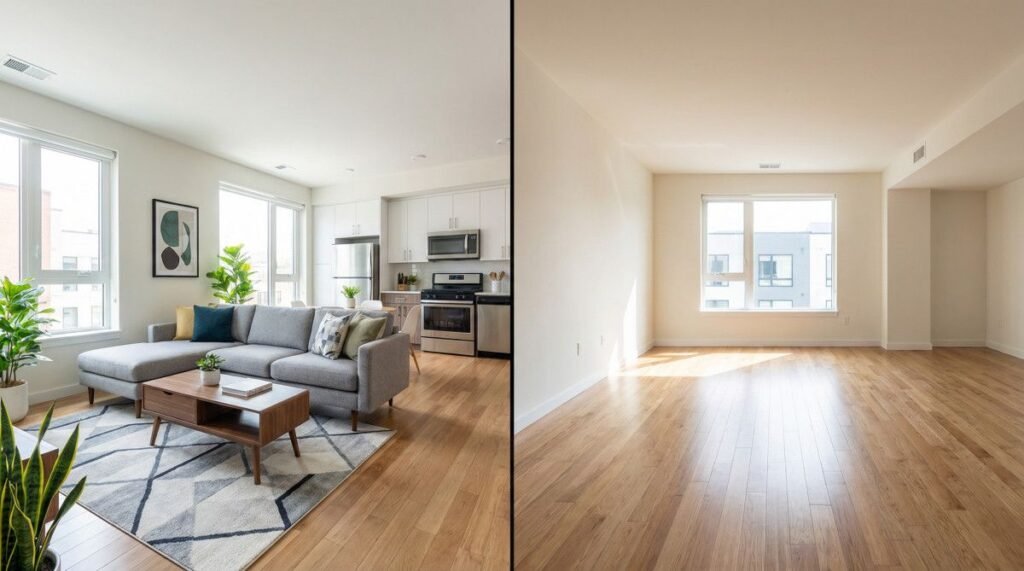
Deciding whether to offer a rental property as furnished or unfurnished is a critical decision for landlords and real estate investors that directly influences rental income, tenant appeal, and operational workload. An unfurnished unit provides a blank slate for long-term tenants to make a home, while a furnished property offers move-in-ready convenience that attracts a different market segment, often at a premium. This choice impacts everything from initial investment and marketing strategy to tenant turnover and maintenance demands. A comprehensive understanding of the financial trade-offs, market dynamics, and management responsibilities is essential for maximizing profitability. This guide provides a detailed analysis of furnished versus unfurnished rentals, examining the key factors that determine which strategy will yield a higher return on investment for your specific property and goals, notes Crown Luxury Property Management team.
Understanding Rental Market Dynamics and Tenant Profiles
The optimal rental strategy depends heavily on the target market. Unfurnished rentals are the standard for the majority of the long-term rental market. They appeal to tenants who plan to stay for a year or more and have their own furniture, including individuals, couples, and families seeking stability. This leads to lower turnover, reduced vacancy costs, and a more predictable income stream for landlords. In contrast, furnished rentals cater to a niche market of tenants who prioritize convenience and have shorter-term housing needs. This demographic includes corporate transferees, traveling nurses, students, and individuals in transition. These tenants are often willing to pay a 15-50% rent premium for the convenience of a move-in-ready home, but they typically sign shorter leases, leading to higher turnover.
Financial Analysis: Income, Expenses, and ROI
While furnished rentals generate higher gross rent, they also come with significant upfront and ongoing costs. The initial investment to furnish a property can range from a few thousand dollars for a basic setup to tens of thousands for a luxury unit. These furnishings are assets that depreciate, and landlords can claim this depreciation on their taxes, typically over a 5-year period for furniture. However, landlords are also responsible for the maintenance, repair, and eventual replacement of these items. This increases operating expenses and management complexity. Insurance costs may also be higher to cover the contents. To determine the true profitability, landlords must conduct a detailed return on investment (ROI) analysis that accounts for the higher income, initial outlay, furnishing depreciation, increased maintenance, and potentially higher vacancy rates associated with furnished units.

Comparative Cost-Benefit Analysis
A direct comparison reveals the distinct financial trade-offs between the two rental types. An unfurnished property has a lower initial investment, simpler management, and attracts tenants who are more likely to stay long-term, ensuring consistent cash flow. A furnished property requires a substantial capital investment in furniture and housewares but offers the potential for significantly higher monthly rental income. The key is to accurately project the net income after accounting for all associated costs. The table below provides a clear comparison of the key financial and operational differences that landlords must consider.
| Feature | Furnished Rental | Unfurnished Rental |
|---|---|---|
| Monthly Rent Potential | Higher (15-50% premium) | Standard market rate |
| Initial Investment | Significant (furniture, appliances) | Lower (basic fixtures) |
| Tenant Turnover | Higher (shorter lease terms) | Lower (longer lease terms) |
| Vacancy Rate | Potentially higher | Generally lower |
| Maintenance & Repairs | Higher (furniture, appliances) | Lower (structural, basic fixtures) |
| Target Tenant | Short-term, corporate, students | Long-term, families, permanent residents |
| Management Complexity | Higher (inventory, frequent cleaning) | Lower |
| Tax Benefits | Depreciation of furnishings | Standard property deductions |
Legal and Management Responsibilities
Managing a furnished rental involves greater legal and administrative complexity. The lease agreement must be more detailed, including a comprehensive inventory list of all furnishings and their condition. This inventory is essential for security deposit deductions and disputes over damages. Speaking of security deposits, landlords may need to collect a higher amount for furnished units to cover the increased risk, but they must comply with state laws that cap security deposit amounts. In the U.S., these laws vary by state, and there is no single federal standard. The higher tenant turnover also means more frequent showings, cleanings, and administrative work. Many landlords with furnished properties opt for professional property management, which adds to the operating costs but can save significant time and effort.
Making the Right Choice for Your Property
The decision to furnish a rental property should be a strategic one based on location, property type, and target tenant demographic. In areas with high demand from students, tourists, or corporate clients—such as near universities, hospitals, or major business centers—a furnished rental is more likely to be a profitable venture. For a single-family home in a suburban neighborhood, an unfurnished model that attracts long-term families is almost always the better financial choice. Landlords should research their local market, analyze the competition, and calculate the potential ROI for both scenarios. The most successful investors tailor their offering to meet the specific demands of their market to maximize occupancy and rental income.
Frequently Asked Questions (FAQ)
Do furnished rentals always earn more net income?
Not necessarily. While furnished rentals command higher gross rents, they also have higher expenses for furnishings, maintenance, and potentially higher vacancy rates. After subtracting these additional costs, the net income may not be higher than that of a stable, long-term unfurnished rental. A detailed financial analysis is crucial.
What is the typical lease term for a furnished rental?
Lease terms for furnished rentals are typically shorter and more flexible than for unfurnished properties. They can range from one month to a year, with three- to six-month leases being very common, especially for corporate housing or students.
How do I handle security deposits for furnished rentals?
You can and should charge a higher security deposit for a furnished rental to cover potential damage to the furniture and housewares. However, you must comply with your state’s laws on the maximum allowable security deposit. Always document the condition of the furnishings with a detailed inventory and photos before the tenant moves in.
Are there specific insurance requirements for furnished rentals?
Yes, you will need a landlord insurance policy that includes coverage for the personal property (the furnishings) you provide. This is different from a standard landlord policy that only covers the structure. The cost will be slightly higher, but it is essential protection for your investment.
Can I write off the cost of furniture for my rental?
Yes, the cost of furniture and appliances for a rental property is a tax-deductible expense. Under IRS rules, these items are typically depreciated as assets over a five-year period. This depreciation can provide significant tax benefits, but you should consult with a tax professional to ensure you are complying with all regulations.
Conclusion
The choice between a furnished and unfurnished rental is a complex one with no single right answer. The path to higher earnings depends on a landlord’s specific market, financial situation, and management capacity. Furnished rentals offer the potential for higher rental premiums but come with greater upfront costs, higher turnover, and more intensive management. Unfurnished rentals provide stability, lower costs, and a more passive investment experience. By carefully analyzing local demand, calculating the potential net income of both options, and aligning the strategy with their investment goals, landlords can make an informed decision that maximizes their property’s earning potential and ensures a successful real estate investment.
