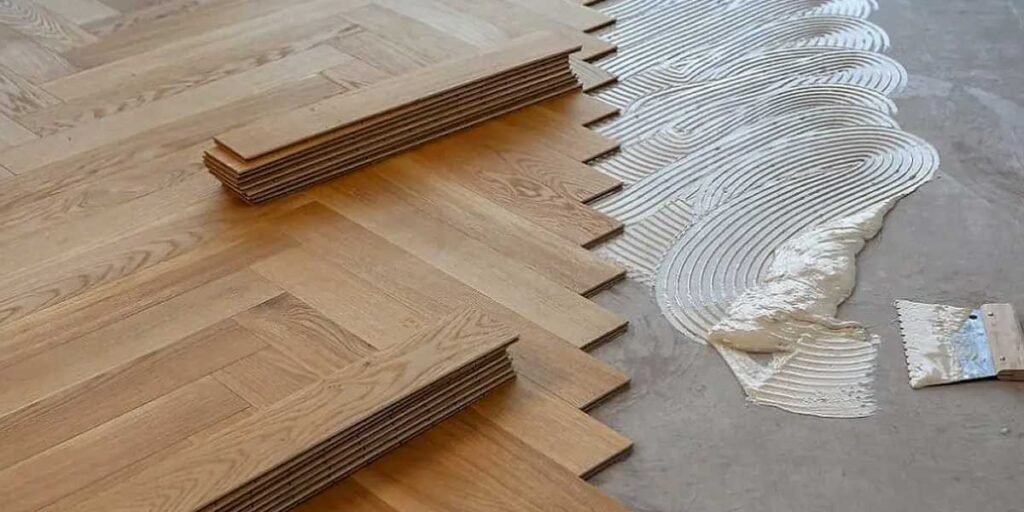
The honest hardwood flooring cost for a typical project lands around $6 to $25 per square foot installed, with a common mid-range around $13 to $17, and the total is built from a wood material cost a little larger than the labor, plus underlayment, fasteners, and any removal. A May 2026 estimate from Homewyse put a basic solid-wood install at about $13.36 to $16.95 per square foot, and the species and whether you choose solid or engineered move the number. You can usually cover a 12-by-12 room for about $2,000 to $2,500 installed, and a whole 1,000-square-foot floor for roughly $13,000 to $17,000, before hidden lines and region.
Hardwood is one of the few flooring upgrades a seller can often recoup, with a National Association of Realtors estimate that new wood flooring returns about 118 percent of its cost at resale, so the better question is not only the price but whether the floor fits how you will use it. The price splits cleanly between material and labor, and a good budget separates the two, highlights the Spartan Property Management team.
Below is how the cost is built, what each species costs, a worked example you can reuse, and the hidden lines that surprise a budget.
How hardwood flooring cost is really built
Hardwood cost splits into a material price a little larger than the labor plus underlayment, fasteners, and equipment, with removal and disposal on top. The wood is the biggest line, the skilled labor to lay it is close behind, and the species and the grade drive the total more than the installer.
| Cost line | What it covers | Share of an installed floor | Why it varies |
|---|---|---|---|
| Wood flooring (materials) | The planks themselves | Largest, a bit above labor | Species, grade, plank width, finish |
| Installation labor | Acclimate, level, blind-nail or glue | Close behind material | Rooms, layout, subfloor condition |
| Underlayment, fasteners, equipment | Underlay, nails, adhesives, nailer rental | Small | Subfloor and method |
| Removal and disposal | Take out old floor, haul waste | Small to medium | Old floor, condition |
Homewyse, which itemizes wood-floor cost line by line, shows a solid-wood install split into the flooring material, a labor line close behind, underlayment and fasteners, an equipment allowance, and an optional removal line, and its May 2026 example runs $1,606 to $2,038 for about 120 square feet, or $13.36 to $16.95 per square foot. That the material tends to run slightly ahead of the labor is the useful fact, because it means the species you choose shapes your budget at least as much as the install, and it points where the savings are, the material, not the labor, for a careful buyer.
Hardwood flooring cost by wood species
Choose the species by the look you want and the wear it will take, and price the material by the wood: oak is the durable, affordable classic, maple lasts and is moderate, hickory is the hardest for heavy traffic, and Brazilian walnut is the premium, toughest, priciest option. The material alone for most species runs roughly $4 to $15 per square foot, and the installed total ranges from a budget $6 to $12 to a premium $13 to $25 or more.
| Wood species | Material (per sq ft) | Character | Best for |
|---|---|---|---|
| Maple | $4-$15 | Long-lasting, affordable | Bright, even living spaces |
| Red oak | $5-$11 | Signature grain, tough | High traffic, classic homes |
| White oak | $5-$12 | Flexible, water-resistant | Near moisture, versatile |
| Hickory | $6-$14 | Strong, hard, resilient | Kids, pets, heavy wear |
| White ash | $6-$14 | Flexible, tough | Busy households |
| Brazilian walnut | $9-$15 | Tough, dense, exotic | Premium, long-lasting |
These material ranges come from Bankrate’s hardwood cost guide, which prices the wood by species and flat is the material only, not the install. The installed total adds the labor, and the floor’s upper end, exotic species and premium clear grades in complex patterns, can run higher, which the budget-end and premium bands of the installed range reflect. Oak, maple, and hickory are the value standbys for most homes, and a premium species earns its price only where the look and the longevity justify it.
A worked example you can reuse
For a common home, plan on roughly $13 to $17 per square foot installed for a standard oak or maple solid floor, and multiply that by your area. A 12-by-12 room comes to about $2,000 to $2,500, a 1,000-square-foot main level to about $13,000 to $17,000, and a larger 1,500 or 2,000 square feet to $20,000-plus, before hidden lines.
| Area | Square feet | Planning range | What it assumes |
|---|---|---|---|
| A 12×12 room | 144 | $2,000-$2,500 | Standard oak or maple, installed |
| A main level | 1,000 | $13,000-$17,000 | Mid-grade solid, installed |
| A larger home | 1,500 | $20,000-$25,000 | Volume can soften the per-square-foot rate |
| A big open plan | 2,000 | $27,000-$34,000 | Whole-floor, varying species |
These are planning ranges in the mid-band, not quotes, and they widen with species, grade, and region. The per-square-foot math, material plus labor, scales directly, and a larger area often earns a small volume break on the rate. The honest next step is three itemized quotes for your exact area and species, comparing the material and the labor lines separately, and the hardwood flooring how to install: step by step guide covers what the install itself involves.
Hidden costs and regional variability
Regional labor and a list of hidden lines move the total as much as the species. Acclimation time, subfloor leveling or repair, removal of the old floor, disposal, underlayment and fasteners, waste, moving the furniture, and any permit or tax are all real lines a bare per-square-foot price omits.
The hidden items are worth naming before you compare quotes. Wood must acclimate in the room, the subfloor has to be clean and level or it needs prep or repair, and the old flooring may need removal and disposal, which Homewyse prices as a separate line. Waste runs a few percent of the planks for cuts, fixtures, and a few spares, underlayment and the fasteners an installer’s nailer and supplies add a little, and moving furniture, a permit where local rules want one, and sales tax land in the bill. Labor rates also shift by region, which is why a cost estimate from one state won’t hold in another, and the honest comparison asks each installer for the same itemized scope rather than a per-square-foot headline. Where a large project uses a general contractor, its overhead can add a further margin, and a floor over a failing subfloor is a prep-for-a-pro call, not a hidden savings.
Solid vs engineered: the value decision
Choose solid hardwood where the floor is supported and stable, and engineered where moisture or a slab makes a floating or glue-down install the safer choice. Solid is a solid plank you can sand and refinish over time, while engineered has a real wood surface over layered backing and handles basements and concrete slabs that a solid plank would not.
The value comes from matching the floor to the room. Solid hardwood suits above-grade floors with a wood or plywood subfloor and rewards you by being refinishable over its long life, while engineered hardwood, often a little less per square foot, works over concrete slabs and in below-grade rooms where solid would warp or fail.
DIY or professional: the threshold
Install a floating or click-lock engineered floor yourself if you are comfortable with the prep and a straight layout, and hire a professional for solid nail-down hardwood, a large or complex room, or any subfloor work, because a solid plank’s blind-nailing and a bad seam can cost more than the labor saved. The labor is close to the material, so DIY on a simple engineered floor saves real money, but the risk rises fast.
The threshold is honest. A floating engineered floor that clicks together is the DIY-able case, and a careful homeowner on a simple, level room can save the labor. Solid hardwood’s nail-down method, plus leveling a subfloor or negotiating seams, doors, and a large layout, is the professional’s call, and the warranty and the even result a pro brings protect the expensive material. Where the subfloor needs repair or the room has unusual geometry or several levels, hiring is the value, and the same judgment that guides a types of vinyl flooring choice applies to whether you install it yourself.
Frequently asked questions
How much does it cost to install 1000 square feet of hardwood? Installing about 1,000 square feet of hardwood runs roughly $13,000 to $17,000 for a standard oak or maple solid floor, before any subfloor prep, removal, or regional differences. Multiply your area by the mid-band of the installed per-square-foot range.
How much does 2000 square feet of hardwood flooring cost? A 2,000-square-foot hardwood floor typically runs roughly $27,000 to $34,000 in the mid-band, varying with the species, the grade, and the region. Larger projects may earn a small volume break on the per-square-foot rate.
How much would it cost to hardwood a 12×12 room? Hardwood for a 12-by-12 room, about 144 square feet, typically runs roughly $2,000 to $2,500 installed for a standard oak or maple floor, plus any removal or subfloor work. The material and the labor are the main lines.
Is hardwood worth the cost? For many homeowners, yes, because a National Association of Realtors estimate found new wood flooring returns about 118 percent of its cost at resale, and the floor adds value above its price. It is worth weighing the up-front cost against whether the floor fits how the room is used and how long you will stay.
Why is hardwood so much more than laminate or vinyl? Hardwood is a natural, long-lasting material you can refinish, unlike laminate or vinyl that wear or replace sooner, and it carries the strongest resale value of the common floors.
Let the area, the species, and the value decide
Estimate the hardwood flooring cost by splitting the installed price into its material and labor halves, pricing the species you want, multiplying your area, and adding the hidden lines, and the number becomes one you can defend before you call anyone. There is no single national price, so compare the value, the refinishability, and the resale against the budget, and let the area and the species rather than a per-square-foot headline drive the decision. The rest of the floor’s work and its alternatives stays in the Home Improvement guides.
