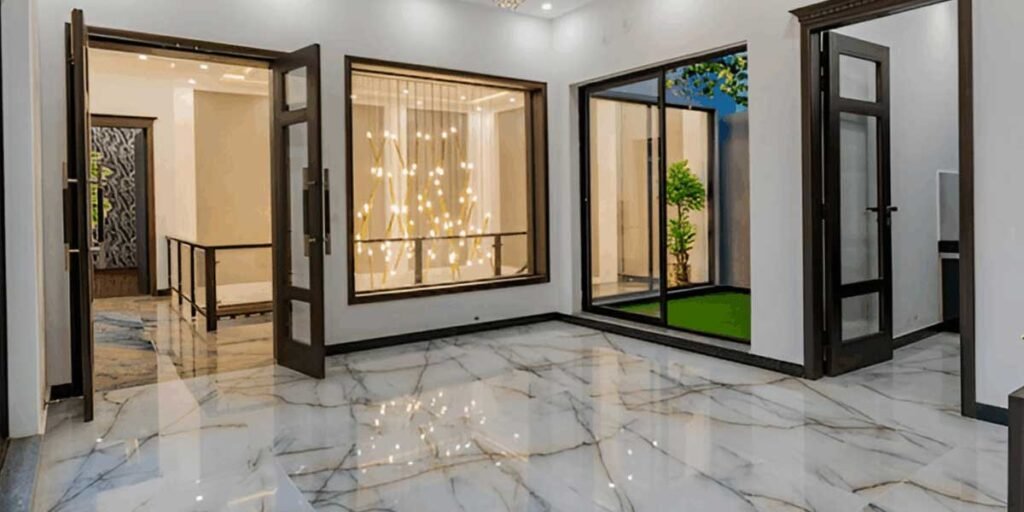
The best tile flooring for homes is the type that fits the room and how it is used, and for most households porcelain is the safest all-round pick, while ceramic suits a tighter budget and natural stone is the premium, low-traffic option that needs more upkeep. Porcelain is the most durable and does not absorb water, which makes it the best tile for bathrooms, kitchens, and entryways, ceramic is affordable and varied for moderate traffic, and natural stone is beautiful but demands sealing and gentler care. There is no single best, only the right match, and the cost of the tile materials runs roughly $1 to $15 for ceramic, $3 to $25 for porcelain, and $10 to $50-plus for natural stone per square foot, before install.
Tile earns its place where water, dirt, and heavy use meet, and the two questions that decide are what the room exposes the floor to and who walks on it. Match the type to those, and the “best” becomes obvious.
Below is a type-by-type matrix, the tile for each room and lifestyle, the durability and slip ratings that matter, and a checklist for different homeowners.
Best tile flooring for homes by tile type
Compare the four common tile families across durability, water resistance, upkeep, and cost, and the right one for a room shows up in the matrix, notes the Good Neighbor Property Management team. Porcelain leads on toughness and water, ceramic trades a little durability for price and variety, natural stone brings an unmatched look with more care, and a wood-look porcelain gives the timber style with tile’s strength.
| Tile type | Durability | Water | Upkeep | Material (per sq ft) | Best for |
|---|---|---|---|---|---|
| Ceramic | Good | Glazed helps | Low | $1-$15 | Moderate-traffic rooms, budget |
| Porcelain | Highest | Impervious | Very low | $3-$25 | Bathrooms, kitchens, entryways |
| Natural stone | High, but soft | Needs sealing | Higher | $10-$50+ | Low-traffic, luxury looks |
| Wood-look porcelain | High | Impervious | Low | $3-$8+ | Timber style, moisture rooms |
The matrix is the honest starting point. Ceramic, made from clay fired at high heat, is affordable and comes in countless textures and finishes and is easy to maintain, porcelain is a denser, tougher ceramic that resists water completely, which is why it is the tile the Tile Council of North America, the tile industry’s standards organization, rates for the exacting uses, and natural stone such as travertine or marble is beautiful but porous and softer, so it needs sealing and gentler traffic. A wood-look porcelain puts a timber pattern on a water-proof tile for the best of both.
Best tile by room and by lifestyle
Choose porcelain for the wet and high-traffic rooms, ceramic for the moderate rooms, and stone only where you can give it the care it needs. A bathroom or shower floor wants porcelain for its water resistance and a smaller, textured tile for grip, a kitchen or entryway wants the toughest porcelain, and a bedroom or a low-traffic study can carry ceramic or even stone.
The room sets the type. In a bathroom, porcelain handles the water and a small mosaic tile on the shower floor makes the floor safer, since the extra grout lines give the foot more grip, a point the selecting-floor-tile guidance from manufacturers such as Dal-Tile makes clear. A kitchen or a front entry sees dirt, heavy use, and sometimes moisture, so the impervious, hardest porcelain is the top pick there. Ceramic does fine in a laundry, mudroom, or a moderate-traffic room and saves money, and a wood-look porcelain brings timber warmth to a moisture-prone space. Stone suits a dining or a low-traffic entry where you enjoy it and keep it sealed, and the same judgment that guides types of vinyl flooring and best laminate flooring for homes rounds out the alternatives when tile is not the fit.
Durability, slip, and the ratings that matter
Look at a tile’s durability and slip ratings, not just its look: a PEI rating tells you how much foot traffic it can take, a glazed or through-body porcelain resists wear and water, and the slip coefficient matters on a wet floor. A textured or smaller tile with more grout gives the grip a bathroom or a door needs.
The useful numbers are simple to read. A higher wear rating on glazed tile means it takes more traffic without showing wear, porcelain’s water absorption, near zero, makes it the only one an MS International tile guide would point a homeowner to for a wet area without a second thought, and the slip resistance of a floor tile, or its coefficient of friction, matters most where water lands, so a bathroom or entry wants a tile with texture rather than a glossy one. Larger, glossy tiles read elegant but can be slick when wet, which is why a small mosaic or a textured surface serves a shower or a porch where grip outweighs polish. The MS International tile and stone resource is a solid place to compare what each type and rating actually means before you buy.
Installed cost and the failure risks
Budget the installed tile by adding labor and supplies to the material price, and weigh the failure risks before you bring the stone or the glossy tile home. Ceramic is the budget material, porcelain costs more but lasts, and stone is the high-cost, higher-maintenance option, with cracked grout, a poor slope, or an unsealed stone the risks that show up later.
The installed price stacks the material, the tile labor, the grout and supplies, and any subfloor prep on top of the per-square-foot ranges, and the tile flooring cost per square foot: average prices guide details the whole number. The risks are mostly in the weak points: a grout that cracks stains and lets water through, a shower floor without a proper slope that pools water, unsealed natural stone that absorbs a red-wine or a coffee stain, and a glossy tile on a wet bathroom that is a slip waiting to happen. Each is avoided by choosing the right type for the room, sealing the stone, and letting a professional set the slope and the grout where the floor matters.
2026 tile looks worth considering
The 2026 tile palette leans large, muted, and wood-like, with big-format slabs, wood-look porcelain, and soft neutral matte finishes the current trends, but the classic porcelain and stone still hold their worth, and what is most popular in new construction is not always tile. Choose a trend that fits the room rather than chasing it.
Floor-tile trends in 2026 favor large-format tiles that read as clean slabs with fewer grout lines, wood-look porcelain that brings the timber feel to wet and hard-wearing rooms, and soft, matte, neutral tones over bold glossy color. A large neutral porcelain is easy to live with and to resell, a wood-look handles a kitchen or a bath with the strength of tile, and a busy or glossy trend is the one that can look dated or too slick to live with. It is also worth noting that the single most popular flooring in new construction is not tile at all, which sets the expectation that tile is a deliberate, room-specific choice rather than the default throughout.
A decision checklist by homeowner profile
Match the tile to the room, the traffic, and the budget you can live with. Name the room and the moisture, pick the durability and slip you need, price the material and add install, and weigh the upkeep and the failure risk before you buy.
- Budget-minded. Ceramic in moderate rooms, porcelain only where it must endure.
- Families with kids and pets. Textured, slip-resistant porcelain that cleans and takes the wear.
- Wet-room and bathroom owners. Impervious porcelain plus a small or textured shower tile for grip.
- High-traffic entryways. Hard-wearing porcelain over the budget ceramic or the soft stone.
- Luxury or low-traffic lovers. Natural stone, sealed and cared for, where you can enjoy it.
A first-time homeowner on a budget wins with ceramic in moderate rooms and porcelain only where it is needed, a family in a high-traffic home bets on textured porcelain, and a homeowner who wants the warmth of wood without the moisture worries chooses the wood-look porcelain. The choice is the least you need for the room, not the most expensive tile, and the tile flooring cost per square foot: average prices number anchors it. The same room and budget logic applies to the rest of the house, from the ac repair cost calculator to the ac repair how much does it cost questions when the cooling needs attention too.
Frequently asked questions
What type of floor tile is best for my home? Porcelain is the best all-round choice for most homes, since it is the most durable and does not absorb water, and it suits bathrooms, kitchens, and entryways. Ceramic is the budget pick for moderate rooms, and natural stone is the premium low-traffic option with more upkeep.
What are the floor tile trends for 2026? The 2026 trends favor large-format slabs, wood-look porcelain, and soft neutral matte finishes. A large neutral porcelain is easy to live with, and a wood-look porcelain brings the timber style to wet rooms.
What is the most popular flooring in new homes? The most popular new-home flooring is generally a vinyl plank, not tile, because it is affordable and versatile. Tile remains the deliberate room-specific choice for the wet and hard-wearing places where its strength pays off.
Which type of floor tile is the most durable? Porcelain is the most durable common tile, being denser and impervious to water, which makes it the top pick for high-traffic and wet rooms. It is tougher than ceramic and far tougher than a soft natural stone.
Is tile flooring expensive to install? The tile material runs about $1 to $25 per square foot for ceramic and porcelain and $10 to $50-plus for natural stone, and labor and supplies add more. A porcelain or ceramic floor is often cost-effective over its long life and low upkeep.
Let the room, the traffic, and the upkeep decide
Choose the best tile flooring for your home by matching porcelain, ceramic, or stone to the room, the people who walk on it, and the upkeep you can give it, and no single tile wins for everyone. Porcelain is the safe all-round bet, ceramic saves the budget in moderate rooms, and stone rewards the homeowner who can care for it, with the slip, water, and grout risks weighed before you buy. Match the tile to the room and the traffic, and the floor earns its place in the Home Improvement guides.
