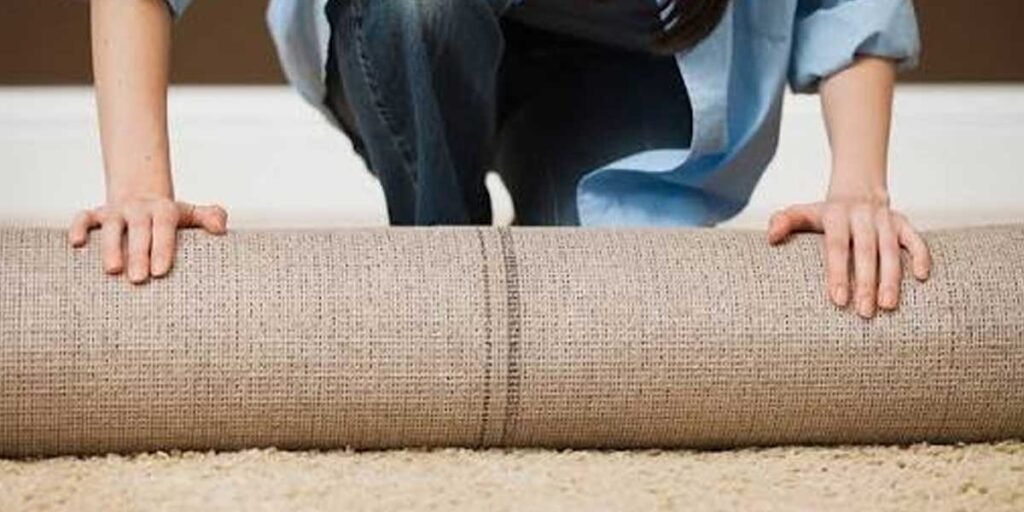
The carpet installation cost calculator for a typical home land on about $5 to $8 per square foot installed, with a national mid-range around $5.27 to $7.72, and the carpet material is the biggest line, roughly three to four times the labor. A May 2026 estimate from Homewyse put a basic install at $5.27 to $7.72 per square foot, with the carpet and padding dominating and the labor a smaller part. A 12-by-12 room comes to about $600 to $1,100 installed, a 1,000-square-foot floor to roughly $5,300 to $7,700, and the fiber, the pile weight, and the padding move the number more than anything else, so budget by the material you choose.
Take the floor’s width times its length for the area, multiply by the mid-band of the installed rate, and add a line for any removal and subfloor work. That is the honest formula, and it is what this calculator page walks through room by room.
Below is how the cost is built, the easy calculation by room size, the material choices that drive the price, and the hidden lines to add.
How carpet installation cost is really built
The carpet itself is the largest cost, roughly three to four times the installation labor, with the padding, supplies, and any removal adding smaller lines. The fiber and the pile weight you choose drive the total more than the installer, so most of the saving is in the material, not the labor.
| Cost line | What it covers | Share of an installed floor | Why it varies |
|---|---|---|---|
| Carpet material | The carpet itself | Largest, about 3-4x the labor | Fiber, pile weight, style |
| Installation labor | Measure, seam, stretch, set | Small | Rooms, seams, layout |
| Padding and supplies | Underlayment, tack strip, seam tape | Small | Padding grade, subfloor |
| Removal and disposal | Take out old carpet, haul waste | Small to medium | Old carpet, condition |
Homewyse, which itemizes carpet cost line by line, splits a basic install into the carpet, a small labor line of a few hundred, padding and seam supplies, an equipment allowance, and an optional removal, and its May 2026 example runs $1,316 to $1,929 for about 250 square feet, or $5.27 to $7.72 per square foot. That the material is three to four times the labor is the honest fact, and it means a good carpet at a fair weight is where a budget is won or lost, not in negotiating the small labor charge.
Use the carpet installation cost calculator
Multiply your room’s width by its length for the square footage, times the mid-band of about $6.50 a square foot installed, and add a small allowance for removal and subfloor details, and you have a defensible budget. The table works the most common room sizes so you can read the number straight off it.
| Room | Square feet | Planning range | What it assumes |
|---|---|---|---|
| A 10×12 | 120 | $500-$950 | Mid-grade carpet, installed |
| A 12×12 | 144 | $650-$1,150 | Standard bedroom, installed |
| A 20×20 living area | 400 | $1,600-$2,900 | Mid-grade, open room |
| A whole upper floor | 1,000 | $5,300-$7,700 | Mid-band, varying rooms |
These are planning ranges in the mid-band, not quotes, and they scale with the fiber and the pile weight of the carpet you pick. The formula, area times the installed mid-band plus the hidden lines, gives a number you can carry to a quote, and the carpet installation cost per square foot: complete pricing guide sorts the detail of the unit price. For a fair comparison, ask each installer for an itemized total at your exact area, since a mid-grade carpet in the 80-ounce-per-yard family and a budget olefin land far apart on the same room.
What moves the price: fiber, weight, and padding
Choose the carpet by the fiber, the pile weight, and the padding, because these drive both the feel and the price far more than the installer. Polyester is the affordable value, nylon lasts and costs more, and a heavier pile per yard is denser and pricier, with the padding underneath setting comfort and a little of the cost.
The carpet’s heart is its fiber and its weight. Olefin and a lighter polyester are the budget picks, a mid-weight polyester in the 75-ounce family is the common home standard, and nylon with a higher face weight costs more and holds a busy household’s traffic better. The padding, most often specified by its density and thickness, cushions the floor and adds a small per-square-foot line, and a thicker, denser pad makes the carpet feel richer. Pick the fiber and weight to fit the room’s traffic and your budget, and the price follows, because this is where the money goes, and the honest guidance is to spend on the weight and fiber that match how the room is used rather than on a brand.
Hidden costs and regional variability
Add the hidden and regional lines on top of the carpet price: removal of the old carpet, its disposal, a subfloor that needs repair or leveling, the padding and seam supplies, moving the furniture, and, where your locality requires it, a permit and sales tax. A bare per-square-foot price hides these, so an itemized quote tells you the real number.
The hidden items are worth naming before you compare. Removing and hauling the old carpet and pad adds a real line, as Homewyse prices it separately, and a subfloor that is uneven or damaged needs prep or repair before a carpet goes over it. The padding and the seam tape and tack strip are part of the install, moving furniture is often your job or an extra, and a permit and sales tax, where local rules add them, land in the bill. Labor rates and the carpet’s in-store price also shift by region, so a figure from one state will not hold in another, and the honest comparison gives each installer the same room and asks for the same itemized scope rather than a per-square-foot headline.
DIY or professional: the threshold
Hire a professional for most carpet installs, because seaming, stretching, and fitting the room and the doorways take experience, and rent or have the right tools, while a small, simple, seam-free room is the only case a confident DIYer might attempt. The labor is small, so DIY saves a little, but a poorly stretched or badly seamed carpet costs more than the savings.
The threshold is honest. Carpet is stretch-in work that demands a knee-kicker and a power stretcher, clean seams that do not show, and tucks at the walls and doorways, all of which have a learning curve, so the professional install is the rule. A professional also sets the padding, the tack strip, and the seams so the carpet lies flat and wears evenly. A tiny, simple room with no seams might be a DIY attempt for a careful homeowner who rents a stretcher and follows the method, but the labor saved is the small line, so it is one of the floors where hiring close to the norm usually wins on the result.
Frequently asked questions
How much does it cost to install carpet in a 12×12 room? Installing carpet in a 12-by-12 room, about 144 square feet, typically runs roughly $650 to $1,150 for a mid-grade carpet installed, plus any removal or subfloor work. Multiply the area by the mid-band of the installed rate.
How much does Lowe’s charge for carpet installation? Big-box installers price carpet much like any installer, by the carpet plus a labor charge per square foot, and a mid-grade carpet installed runs in the same $5 to $8 per square foot range as other retailers. Have the room measured and compare the itemized total.
How much is 1000 square feet of new carpet? About 1,000 square feet of new carpet typically runs roughly $5,300 to $7,700 installed for a mid-grade carpet, before any removal or subfloor work. The fiber and the pile weight move the number more than the installer.
How much to install 20×20 carpet? Installing carpet in a 20-by-20 room, about 400 square feet, typically runs roughly $1,600 to $2,900 for a mid-grade carpet installed. The area times the installed mid-band, plus hidden lines, gives the budget.
Is it worth installing carpet over a hard floor? It is worth it where you value warmth, quiet, and a soft feel, and where the carpet’s wear suits the room, but carpet costs more to keep clean and replaces sooner than tile or hardwood. Weigh the comfort and the lower per-square-foot price against the upkeep and the shorter life.
Let the area, the fiber, and the installation decide
Estimate the carpet installation cost by multiplying your floor’s area by the installed mid-band, priced by the fiber, weight, and padding you choose, and add the hidden lines, and you have a number you can defend. The carpet material, three to four times the labor, is where the budget lives, the professional install is usually the safe call for seaming and stretching, and the honest next step is three itemized quotes for your exact room. Match the carpet and the installation to how the room is used, and it fits in the rest of the home’s flooring work.
