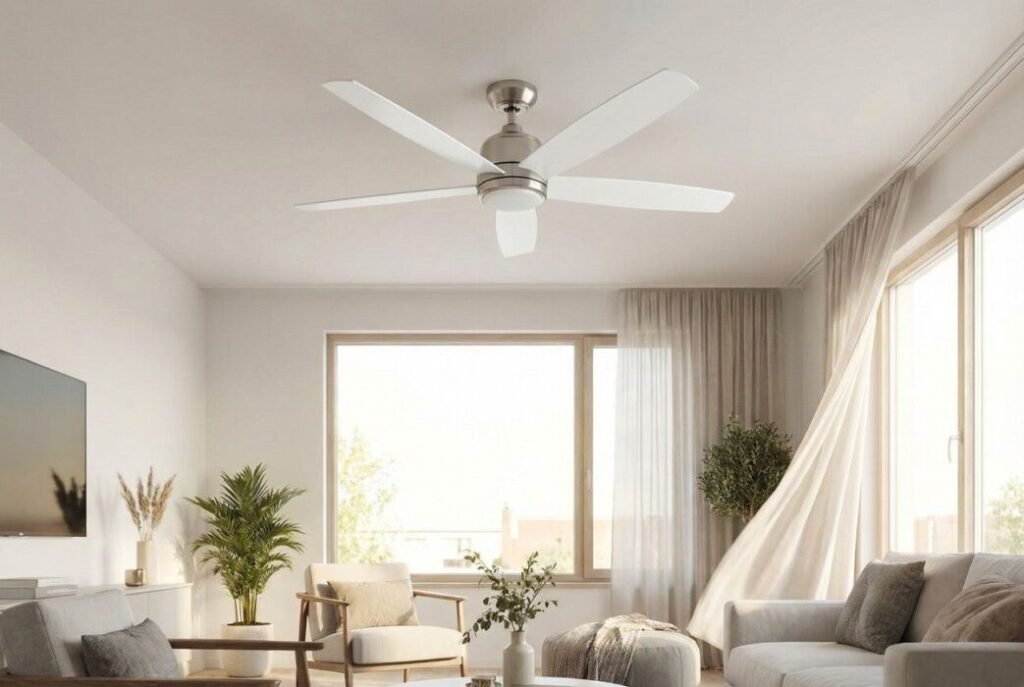
Leaving a ceiling fan on continuously is generally safe and can be an effective way to maintain air circulation and enhance comfort in a home, provided the fan is well-maintained and properly installed says Guerin Property Services.
Energy Consumption and Cost Implications
A typical ceiling fan consumes significantly less electricity than an air conditioning unit, making it a cost-effective option for cooling. Modern ceiling fans are designed with energy efficiency in mind, often using as little as 15-75 watts, depending on the speed setting and size.
According to EPB, a standard 48-inch ceiling fan uses about 75 watts per hour on average, costing approximately $0.01 per hour or $6 per month if operated continuously [1]. This minimal energy draw highlights their efficiency in comparison to other cooling methods.
Longevity and Maintenance of Ceiling Fans
The lifespan of a ceiling fan can be extended with proper installation and regular maintenance, even with continuous operation. High-quality fans are built to withstand prolonged use, but wear and tear on internal components can occur over time.
Signs of wear, such as persistent buzzing or grinding sounds, often indicate motor or bearing issues, as noted by Dan’s Fan City [2]. Regular cleaning and checking for loose hardware can prevent premature failure and ensure safe operation. A maintenance checklist can help homeowners keep their fans in optimal condition [3].
Potential Safety Concerns and Best Practices
While generally safe, continuous operation of a ceiling fan can pose minor risks if the unit is old, damaged, or improperly installed. Overheating of the motor is a rare but possible concern, especially with older models or those with failing components.
Improperly installed or repaired fans can become loose or wobbly, creating a safety hazard, as highlighted by Triple O Today [4]. It is crucial to ensure professional installation and to address any unusual noises or wobbling promptly. Regular inspections can mitigate these risks.
Optimizing Ceiling Fan Usage for Comfort and Efficiency
To maximize comfort and energy savings, ceiling fans should be used strategically, primarily when people are present in the room. Fans cool people, not rooms, by creating a wind-chill effect, so leaving them on in an empty room is inefficient.
Adjusting fan speed according to room temperature and personal preference can enhance comfort. In warmer months, fans should rotate counter-clockwise to push air down, while in cooler months, they can rotate clockwise at a low speed to gently pull warm air down from the ceiling.
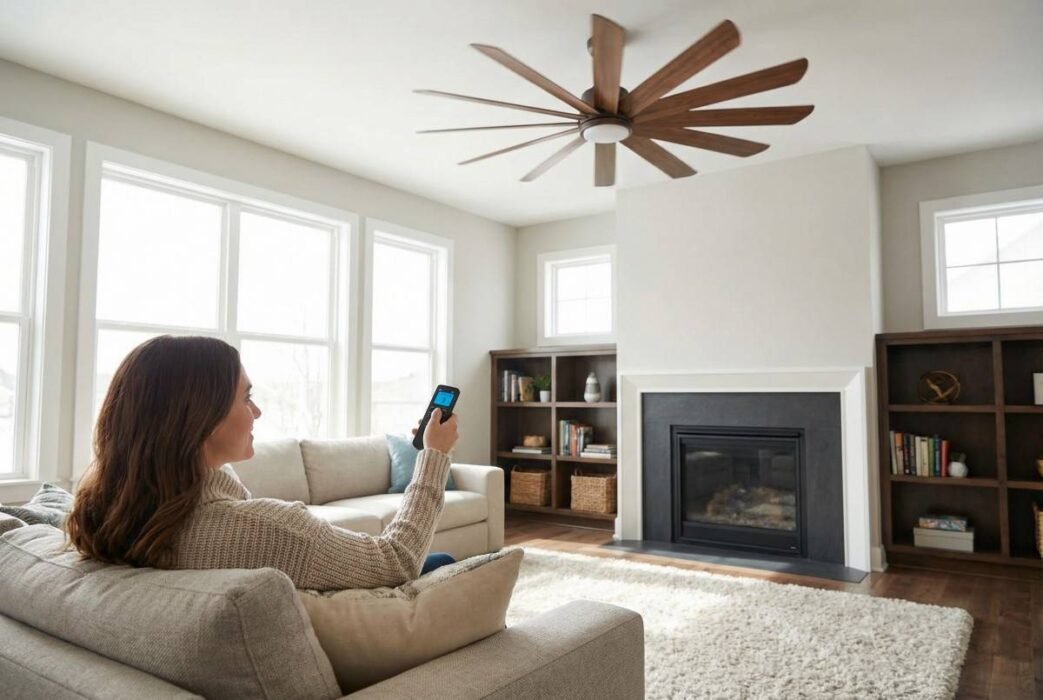
Differentiated Module 1: Ceiling Fan vs. Air Conditioning Energy Comparison
| Appliance | Average Wattage | Estimated Monthly Cost (24/7 use) |
|---|---|---|
| Ceiling Fan (Standard) | 15-75 W | $3 – $15 |
| Central Air Conditioner | 3000-5000 W | $100 – $300+ |
This comparison illustrates the significant energy savings associated with using ceiling fans as a primary cooling method or in conjunction with air conditioning to reduce overall energy consumption.
Differentiated Module 2: Steps for Basic Ceiling Fan Maintenance
- Turn off power: Always switch off the circuit breaker before performing any maintenance.
- Clean blades: Wipe down blades regularly to remove dust buildup, which can cause imbalance.
- Check screws: Ensure all screws on the blades, motor housing, and mounting bracket are tight.
- Lubricate motor: Some older models may require occasional lubrication; consult the owner’s manual.
- Balance blades: Use a balancing kit if the fan wobbles excessively.
Frequently Asked Questions
How long can a ceiling fan run continuously?
A well-maintained, quality ceiling fan can safely run continuously for extended periods, often for months without issues. Modern fans are designed for durability and prolonged operation.
Does leaving a ceiling fan on waste electricity?
Yes, leaving a ceiling fan on in an empty room wastes electricity because fans cool people, not spaces. They create a wind-chill effect on skin, so their benefit is only realized when someone is present.
What are the signs of a failing ceiling fan motor?
Signs of a failing motor include unusual noises like buzzing, grinding, or humming, reduced fan speed, or the fan struggling to start. These symptoms often indicate internal wear and tear.
Can a ceiling fan cause a fire?
While extremely rare, a ceiling fan can potentially cause a fire if it has a faulty motor, incorrect wiring, or is very old and poorly maintained. Regular inspection and professional installation minimize this risk.
How often should I clean my ceiling fan?
It is recommended to clean ceiling fan blades at least once a month, or more frequently in dusty environments, to prevent dust buildup and maintain optimal performance.
Conclusion
Leaving a ceiling fan on all day is generally safe and energy-efficient for enhancing comfort, provided the unit is properly installed and regularly maintained. While modern fans are built for continuous operation, occasional checks for wear and tear, along with strategic usage, ensure both safety and optimal performance. Prioritizing maintenance and understanding energy consumption helps homeowners make informed decisions about their cooling strategies.
References
[1] EPB. How Much Electricity Does a Fan Use? (Ceiling Fan or Box …). https://epb.com/get-connected/energy-tips/how-much-electricity-does-a-fan-use/
